
8 Smart Ideas to Integrate Pet Furniture Into Your Home
Pet beds, crates, litter boxes, toys, and bowls are part of everyday life but they don’t have to look like clutter. The most pet-friendly homes are the ones that treat pets like part of the design plan, not an afterthought. Below are eight smarts ideas to integrate pet furniture into your home, room by room, without sacrificing style.
With smart built-ins and furniture-style millwork, you can give your dog or cat a cozy “home base” while keeping your interiors clean, cohesive, and genuinely beautiful.
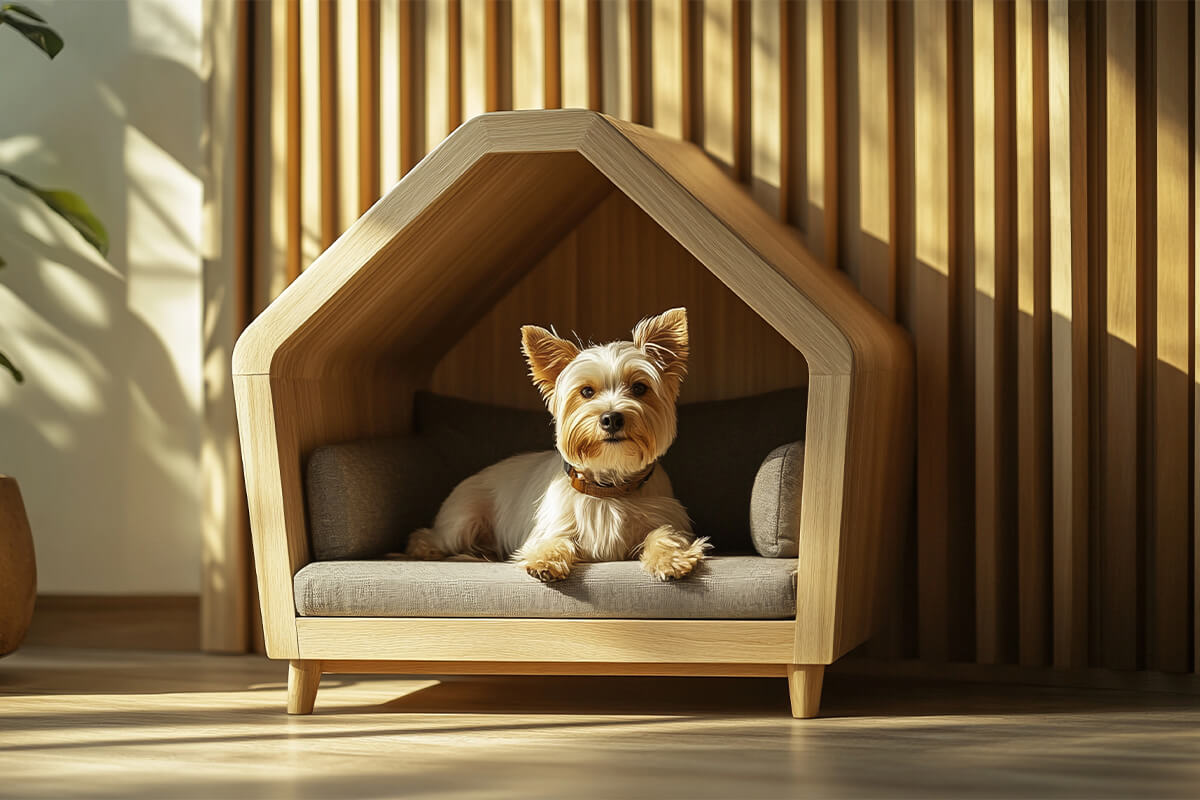
Why built-in pet furniture works better than “adding another bed”
A loose pet bed is easy, but it often becomes visual noise. It slides into walkways, clashes with your palette, and turns into “one more thing” you’re constantly moving around.
Built-in pet furniture solves that by giving your pet a consistent, defined space that feels like part of the home’s architecture, not an accessory.
It’s also a smarter use of square footage. Instead of dedicating floor space to a separate bed or bulky crate, you can integrate a pet nook into something you already need, like a bench, sideboard, media unit, or kitchen cabinetry.
The result is a calmer room, better flow, and a home that looks intentional even on a normal, lived-in day.
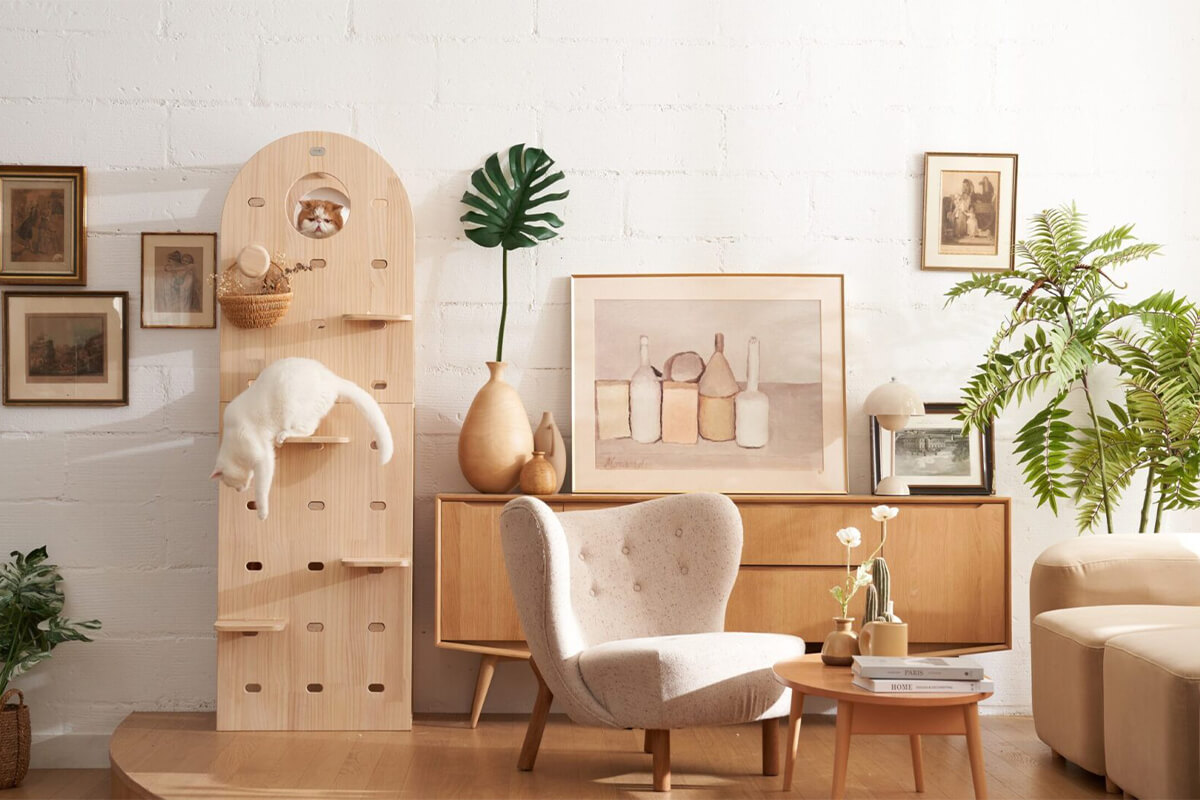
The design rules that make pet spaces look intentional
Place it near people, but out of traffic
Most pets want to stay close to where life happens. The sweet spot is a low-traffic zone within a high-use room, close enough to feel included, but not underfoot where they become a trip hazard.
Make it feel cozy and protected
Pets settle best in spaces that feel like a “den.” A cabinet run, or desk return often works better than a bed placed in the open, especially for dogs that like boundaries and routine.
Match the home’s style on purpose
If the pet area shares your cabinetry style, paint/stain, and hardware, it instantly reads as part of the design. A custom-fit cushion in a coordinated fabric seals the deal.
Build in function, not just a spot to sleep
The most successful pet integrations solve multiple needs, sleeping space plus storage, feeding stations, hidden litter areas, or paw-clean zones, so the design works harder for the home.
Prioritize cleanability
Use removable, washable covers, durable surfaces, and thoughtful placement away from splash zones. A beautiful pet nook is only “beautiful” long-term if it’s easy to maintain.
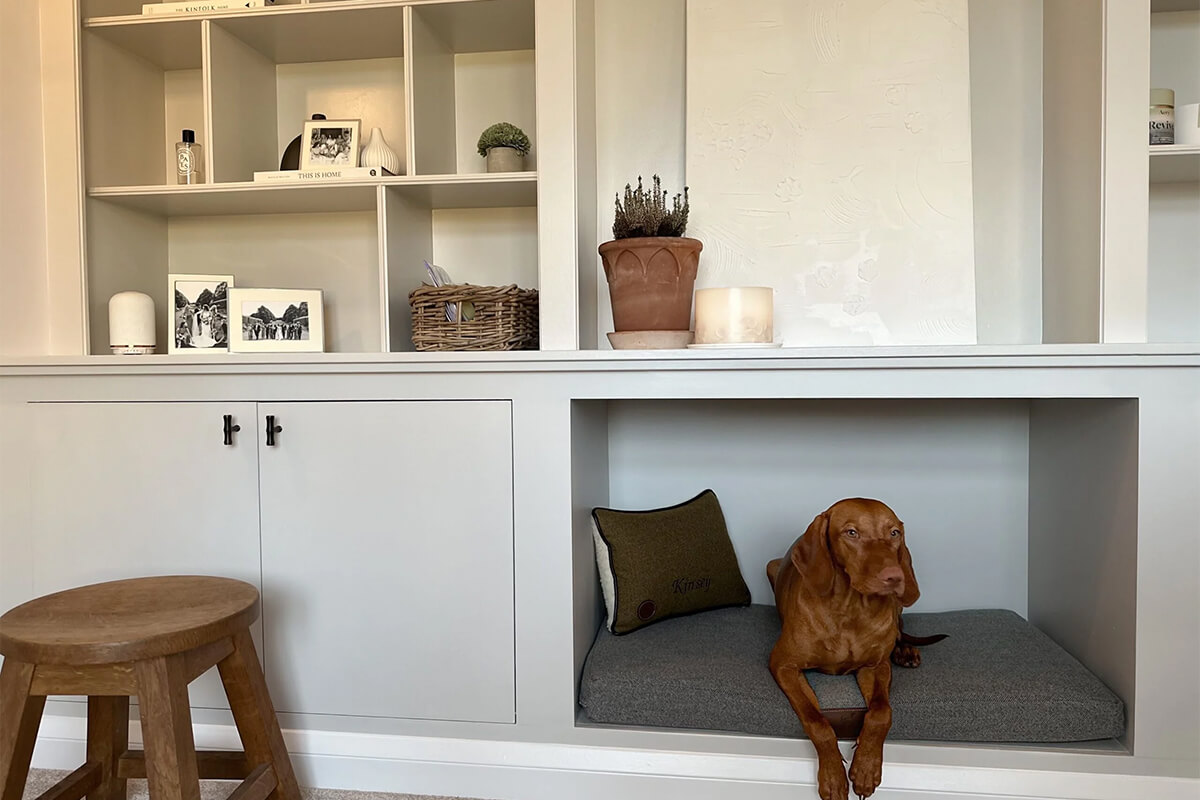
Smart ideas to integrate pet furniture into your home
1) Build a pet bed into the kitchen island or base cabinetry
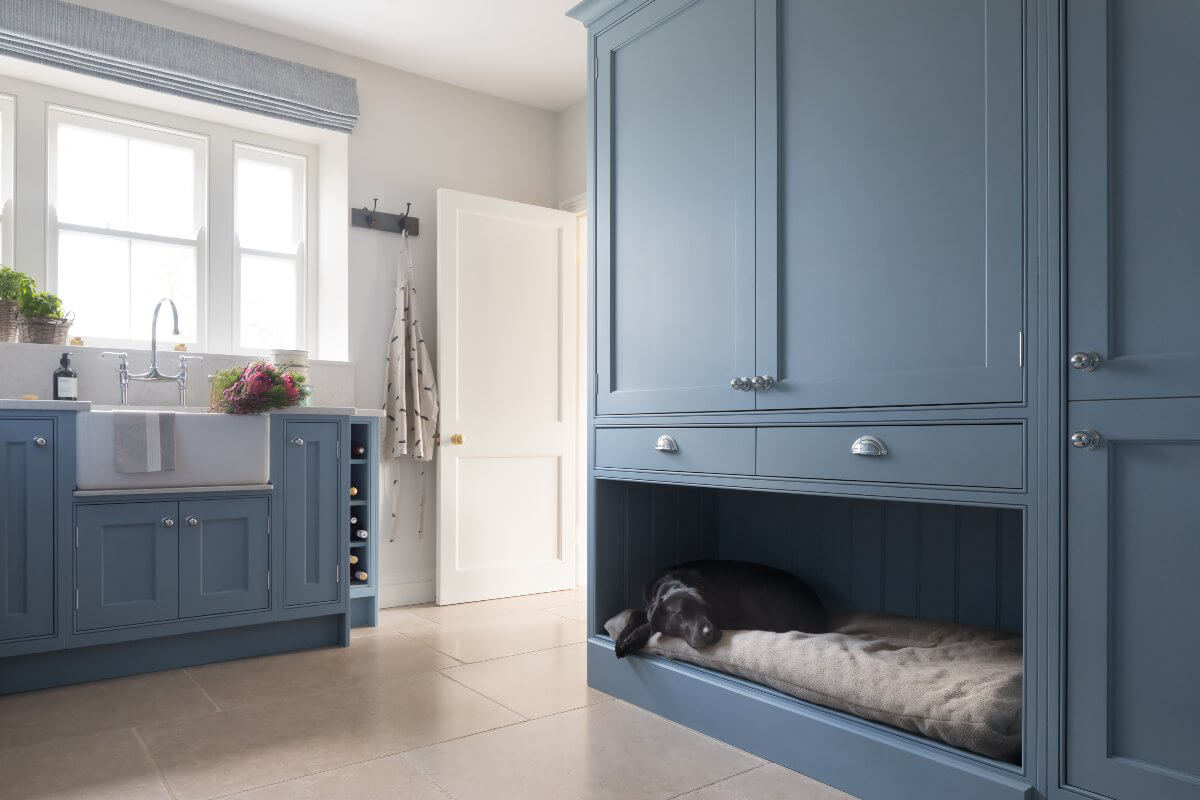
The kitchen is the heart of the home, and it’s where pets naturally want to be. A built-in bed niche in a kitchen island, breakfast bar, or lower cabinet run keeps your dog close to the action but out of the main traffic flow. For an extra polished result, choose a cushion that matches your palette and add a tailored, washable cover that looks like part of the décor.
2) Turn a media unit or sideboard into a hidden lounge spot
Living rooms are where pets settle while the household winds down. Instead of placing a bed in the middle of the room, integrate it into a media console, sideboard, or built-in cabinetry. A dedicated pet nook gives your dog a clear place to rest while keeping the room uncluttered and calm, especially helpful in open-plan layouts.
3) Use under-stairs space for a cozy, den-like pet nook
The space under the stairs is one of the best opportunities for built-in pet furniture because it naturally feels enclosed. With custom millwork, you can create a sleeping nook and add drawers or cupboards nearby for leashes, treats, grooming tools, and toys. It’s one of the smartest ways to turn “dead space” into something both charming and functional.
4) Add a built-in pet bed to an entry bench or hallway cabinet
Hallways and entryways are perfect for pet integration because they often have unused wall space. A bench with a built-in bed underneath creates a tidy landing zone for shoes, bags, and pet essentials, while giving your pet a cozy place to rest near the front of the home. Pair it with durable mats and you’ve also created a cleaner transition for wet paws and muddy days.
5) Create a dedicated pet space in the home office
If you work from home, pets will want to be close. A custom desk, credenza, or lower cabinet run can include a built-in bed niche so your dog can relax nearby without ending up under your chair during calls. It keeps the office feeling professional and organized while supporting your pet’s comfort.
6) Integrate pet sleeping space into bedroom furniture
Bedrooms are meant to feel calm, not crowded with crates and loose beds. If your pet sleeps near you, consider building a dedicated nook into a nightstand, dresser, bedside bench, or under a bed platform. These solutions keep the room uncluttered and give your pet a defined, settled spot that supports nighttime routines.
7) Design cat-friendly vertical space that looks architectural
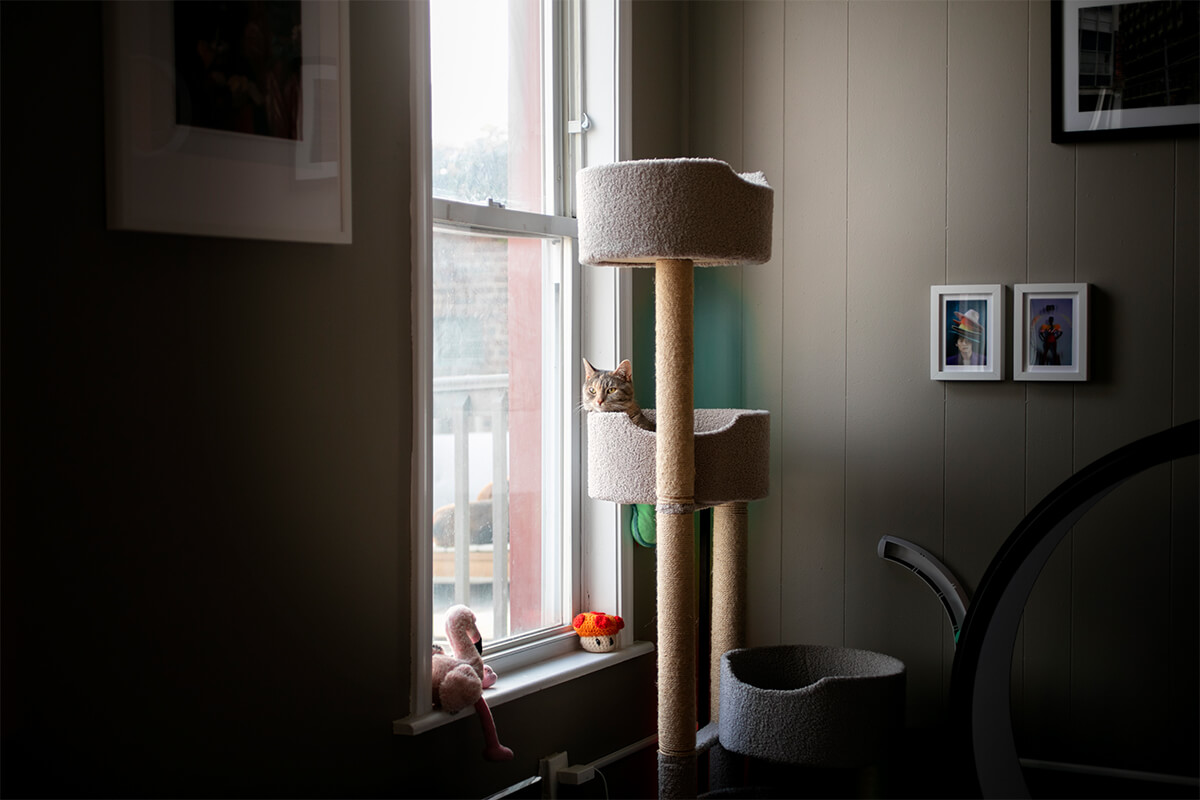
Cats don’t just want a bed. They want height, pathways, and vantage points. Instead of bulky cat towers, integrate minimalist floating shelves, ledges, or stepped platforms that match your trim or built-ins. A discreet “cat highway” near a window or around a bookcase can become a clean design feature while keeping cats active and less likely to scratch furniture out of boredom.
8) Hide the essentials: feeding stations, litter areas, and pet storage
Some of the most impactful pet-friendly upgrades are the ones you barely notice. A pull-out feeding drawer, a hidden litter cabinet with proper ventilation, or a built-in storage zone for food and toys can transform how your home feels day to day. These solutions reduce mess, help manage odor, and keep pet supplies from spilling into living spaces, especially in open-plan homes.
Ready to design pet-friendly millwork that fits your lifestyle?
If you want pet spaces that look intentional, built into your kitchen, living room, hallway, office, or bedroom, Scobis can help. We design custom millwork and built-ins that support real life with pets while keeping your home elevated, cohesive, and functional.
Contact Scobis to talk through your space, your pet’s routines, and the look you want to achieve. We’ll help you plan integrated pet beds, hidden storage, feeding stations, and custom solutions for awkward spaces, so your home feels designed for everyone who lives in it (including the four-legged ones).