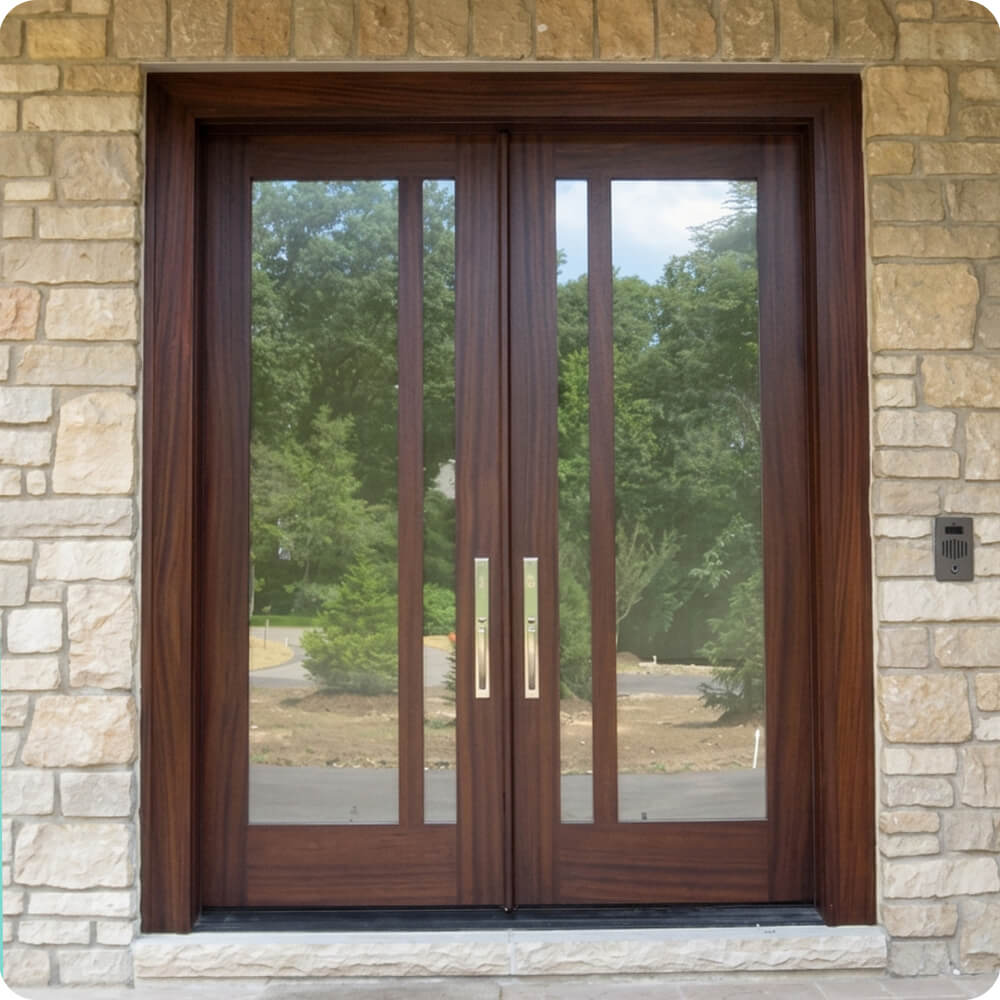
A rectangular stone-and-brick opening on a home still under construction, bare dirt yard, exposed utility conduit. This wasn't a replacement. It's a new entry built into a fresh opening as part of the home's original build.
Project Story
The thinking behind the work
The Starting Point
The Thinking
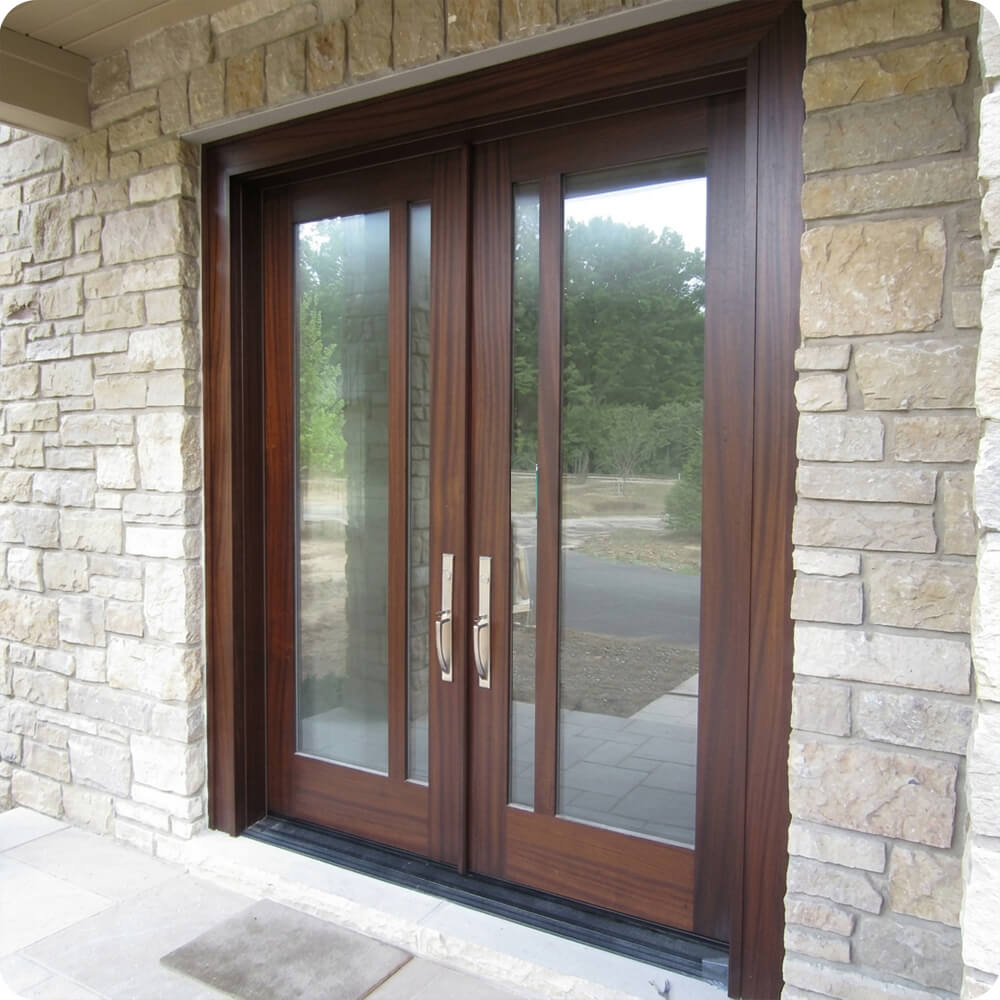
With a clean rectangular opening and no existing architecture to correct or match, the design leaned toward a simple, modern glazing pattern: full-height clear glass on each leaf, divided by a single vertical mullion, rather than a busier multi-pane grid or a solid lower panel. That keeps the glass area large and the sightlines minimal letting the stone surround and the wooded lot beyond do the visual work. Sapele was the species call, finished in a warm, even reddish-brown stain that reads rich against the tan stone.
The Execution
Built as a double door in sapele, square-headed, each leaf glazed full-height with two vertical clear glass lites split by a single center mullion, no upper/lower division, no solid panel, glass running essentially floor to head. Finished in an even, warm mahogany-tone stain. Hardware is a matched pair of straight pull handles in a satin nickel finish.
The Result
A clean, minimal glazed entry that reads as more glass than wood, letting the stone surround be the architectural statement while the doors stay quiet and functional.
Specification
Unit Size
6'-0" x 8'-0"
Panel Thickness
1¾"
Joinery
Mortise-and-tenon, no mechanical fasteners.
Glass
Full-height clear glass, two lites per leaf split by a single vertical mullion, square head.
Finish System
Marine-grade exterior stain finish, six sides.
Hardware
Matched pair of straight pull handles, satin nickel finish.
Installed By
Scobis
Common Questions
Why go with full-height glass and a simple mullion instead of a decorative panel pattern?
The opening was a clean, square-headed rectangle with no existing architecture to reference or match, this was a new build, not a replacement. A simple full-lite glazing pattern with one vertical mullion keeps the glass area maximized, so the stone surround and the view through the door do the visual work instead of a busier decorative grid.
Why leave the door square-headed instead of arched, given the stone surround?
The masonry opening itself is rectangular, not arched, so the door was built to match the actual shape of the opening rather than introducing a curve that wasn't there in the surrounding stonework. Matching the door's geometry to the opening keeps the whole entry looking intentional rather than like two mismatched shapes forced together.
Why sapele with satin nickel hardware rather than a darker bronze finish?
Sapele takes a warm, even reddish-brown stain that holds its own against tan stone without needing ornamentation to stand out. Pairing it with a cooler-toned satin nickel, rather than the dark bronze used on more traditional projects in this portfolio, keeps the hardware quiet and modern, consistent with the door's clean, minimal glazing design.
More Projects Like This