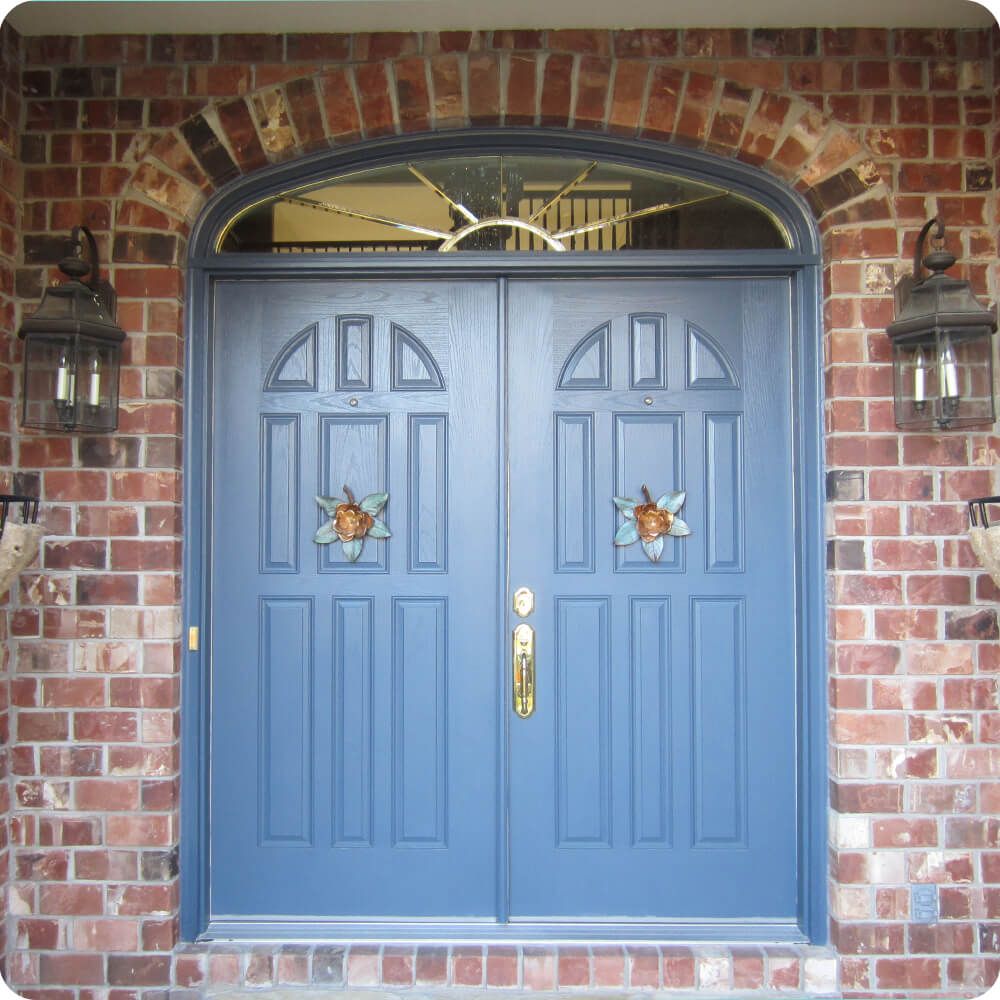
The original doors were a stock fiberglass/composite unit in a painted slate-blue finish, six raised panel sections per leaf with applied decorative floral hardware in place of real glazing, and a segmented fan-style leaded transom above. It's a perfectly serviceable builder-grade door, but there's no actual glass in the main door panels, the "lites" are solid panel with applied ornaments, so no light comes through the door itself, only through the transom. Set into a substantial brick archway with matching exterior sconces already in place, the door itself read as the least custom element of the entry.
Project Story
The thinking behind the work
The Starting Point
The Thinking
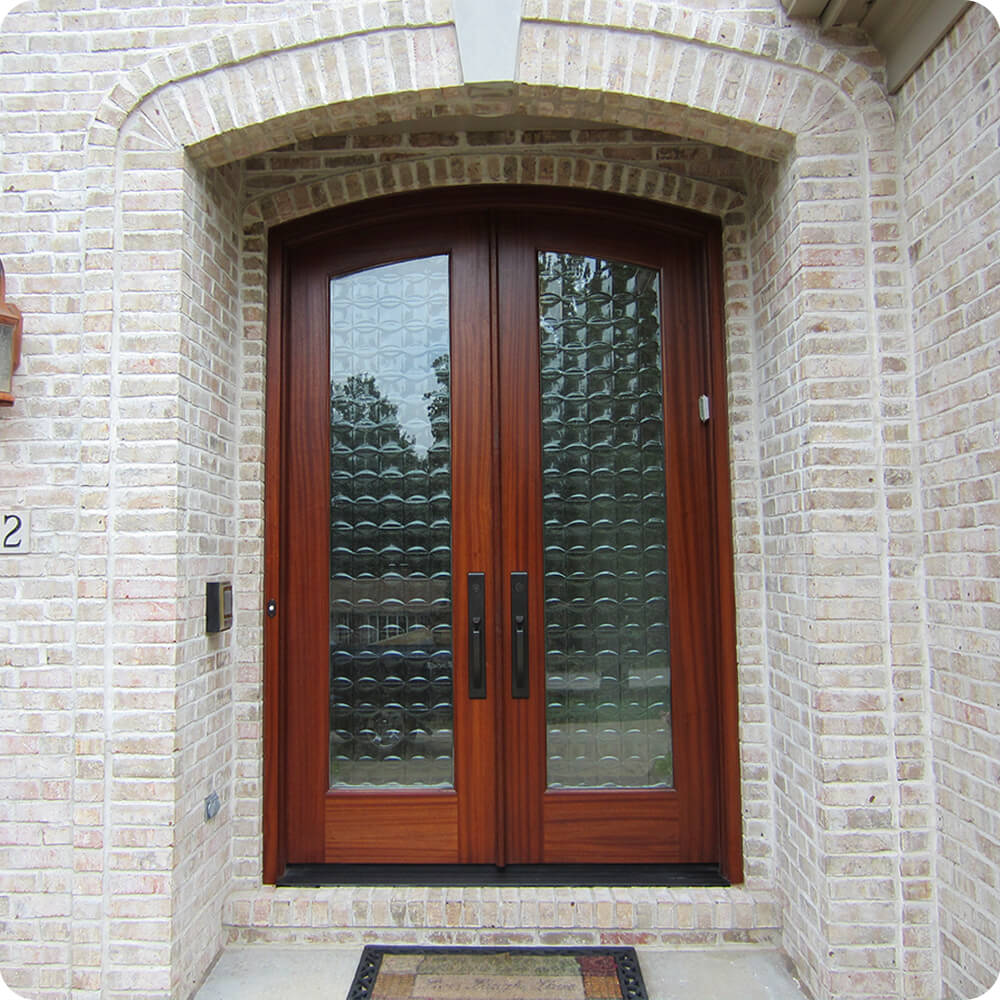
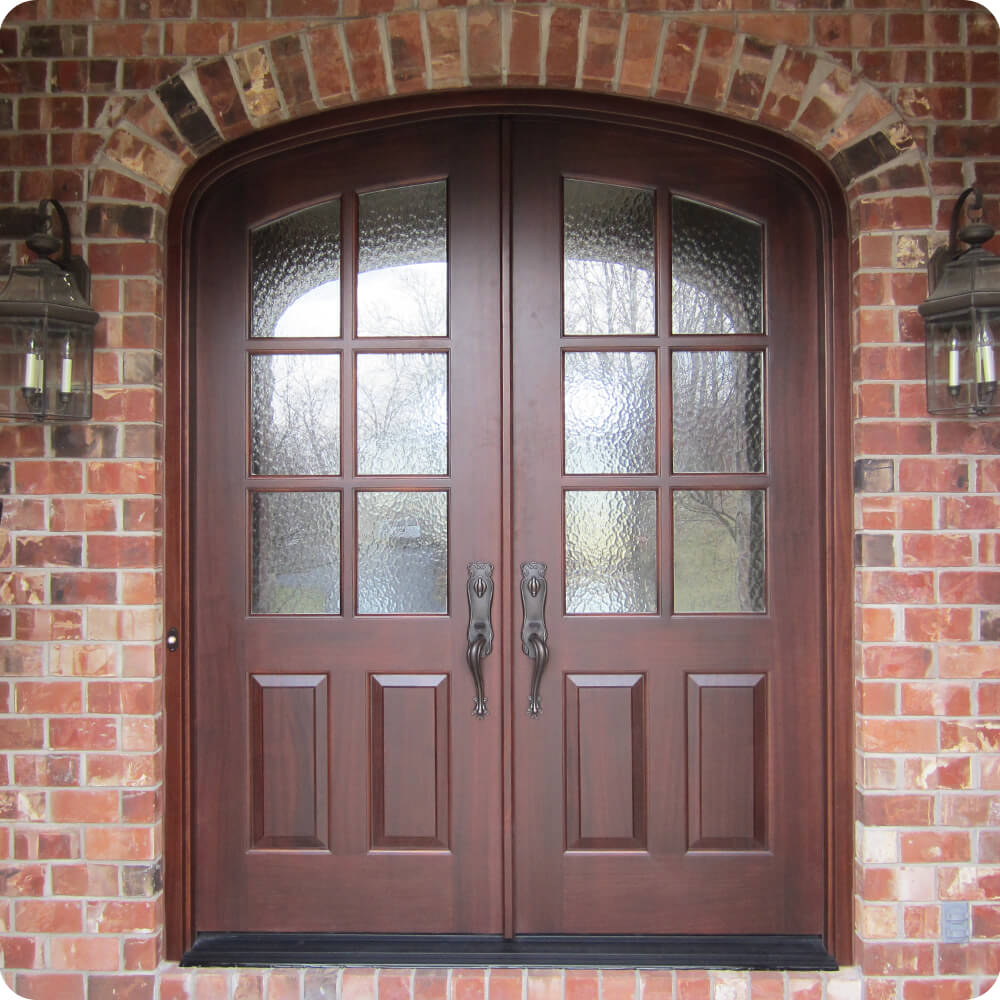
The brick arch and the existing sconces set a traditional, elevated tone that the stock blue door wasn't matching. Rather than another painted composite door, the direction moved to real wood with real full-height glass, replacing solid applied-panel "lites" with actual glazed openings so daylight comes through the doors themselves, not just the transom above. An elliptical arch-top glass pattern was chosen for both leaves, echoing the curve of the brick arch surrounding the whole opening. Sapele was the species call, paired with a rich reddish-brown stain that reads as substantially more custom than a painted finish, and traditional lever-style pull handles replaced the applied decorative florals and single knob.
The Execution
Rebuilt as a true double door with a sidelight on each side, roughly doubling the glazed width of the original opening. The standout feature is the circular glass insert: a large circle bisected down the center where the two door leaves meet, further quartered by a horizontal crossbar, glazed in the same textured/obscure glass as the sidelights so the geometry reads clearly without sacrificing privacy. Both leaves and both sidelights are finished in a deep, even dark walnut-brown stain. Hardware is a matched pair of curved stainless steel pull handles, one per leaf, replacing the single handle on the original door.
The Result
The entry now has genuine architectural presence, the circular motif functions almost like a piece of custom glasswork rather than a standard door lite, and the doubled width with matching sidelights brings the entry up to the scale of the brick facade and the sconces already flanking it. Where the before felt like a functional but modest opening, the after reads as a designed centerpiece.
Specification
Unit Size
6'-0" x 8'-6"
Panel Thickness
1¾"
Joinery
Mortise-and-tenon, no mechanical fasteners.
Glass
Full-lite, textured/obscure glass in a 3x3 grid per leaf within an elliptical arched head.
Finish System
Marine-grade exterior stain finish, six sides.
Hardware
Matched pair of ornate lever-style pull handles, dark bronze finish.
Installed By
Scobis
Common Questions
Why replace a fiberglass door that wasn't damaged?
The original door had no real glass in the main panels, the decorative florals sat over solid panel sections, so all the daylight came through a separate fan transom above rather than the door itself. Moving to full-lite mahogany doors brings actual glazing down into the door, so light comes through where you're standing, not just above your head.
Why an elliptical glass shape instead of a rectangular grid?
The brick opening around the door is itself a curved arch, and the original design split that curve off into a separate transom piece above a flat-topped door. Carrying the elliptical arch down into the doors' own glass line means the curve of the brick, the frame, and the glazing all read as one continuous shape instead of two stacked, disconnected pieces.
Why sapele instead of a painted composite door like the original?
A painted fiberglass door reads as a stock, builder-grade choice next to a substantial brick archway with wall sconces already in place. Sapele mahogany with a real wood stain gives the entry the material weight and craftsmanship the surrounding brickwork calls for, rather than a painted surface that can chip or fade over time.
More Projects Like This