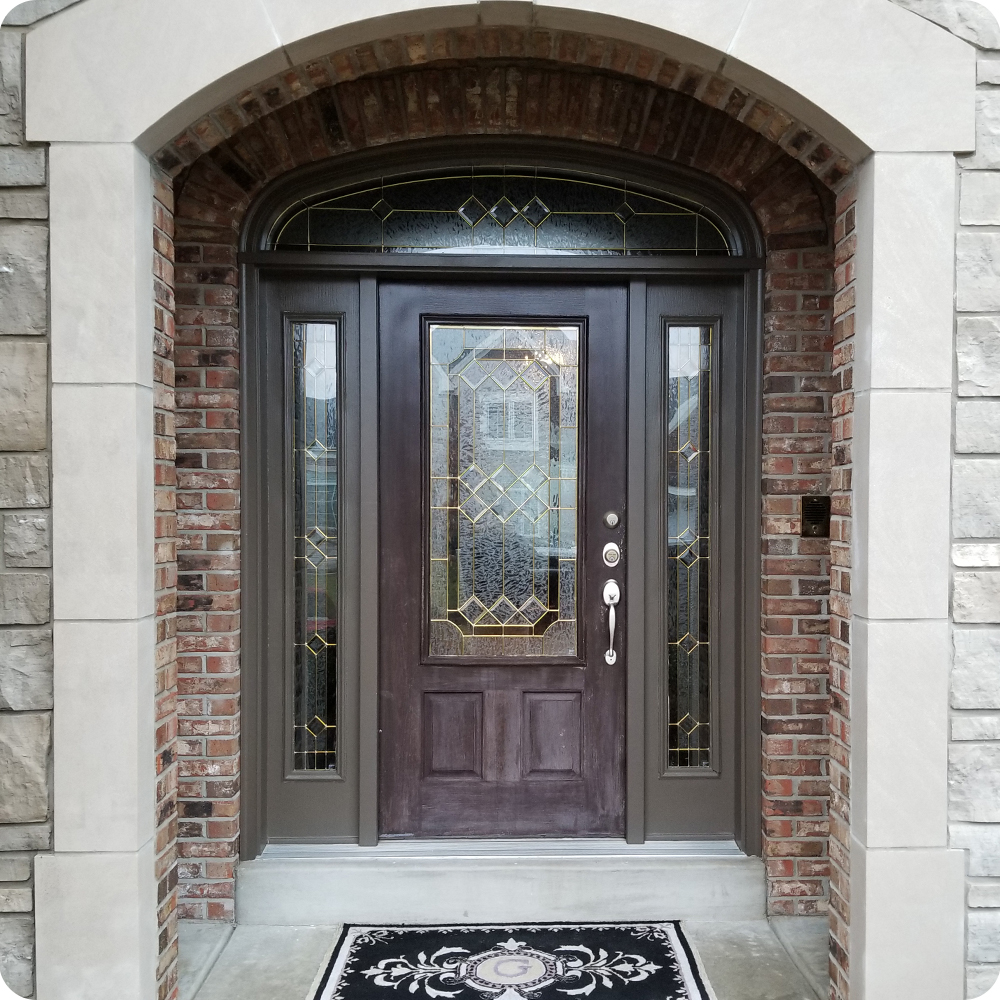
The original entry was a single door set into the brick archway, flanked by matching sidelights and topped with an arched transom, all glazed in an ornate diamond-lattice leaded glass with gold/brass caming. The stain reads as uneven and weathered — a purplish-grey cast rather than a clean, even wood tone — suggesting sun exposure or finish breakdown over time rather than a fresh coat. Hardware was a simple polished nickel lever and deadbolt. The brick archway and stone surround around it were already substantial; the door itself no longer matched that scale or held its finish.
Project Story
The thinking behind the work
The Starting Point
The Thinking
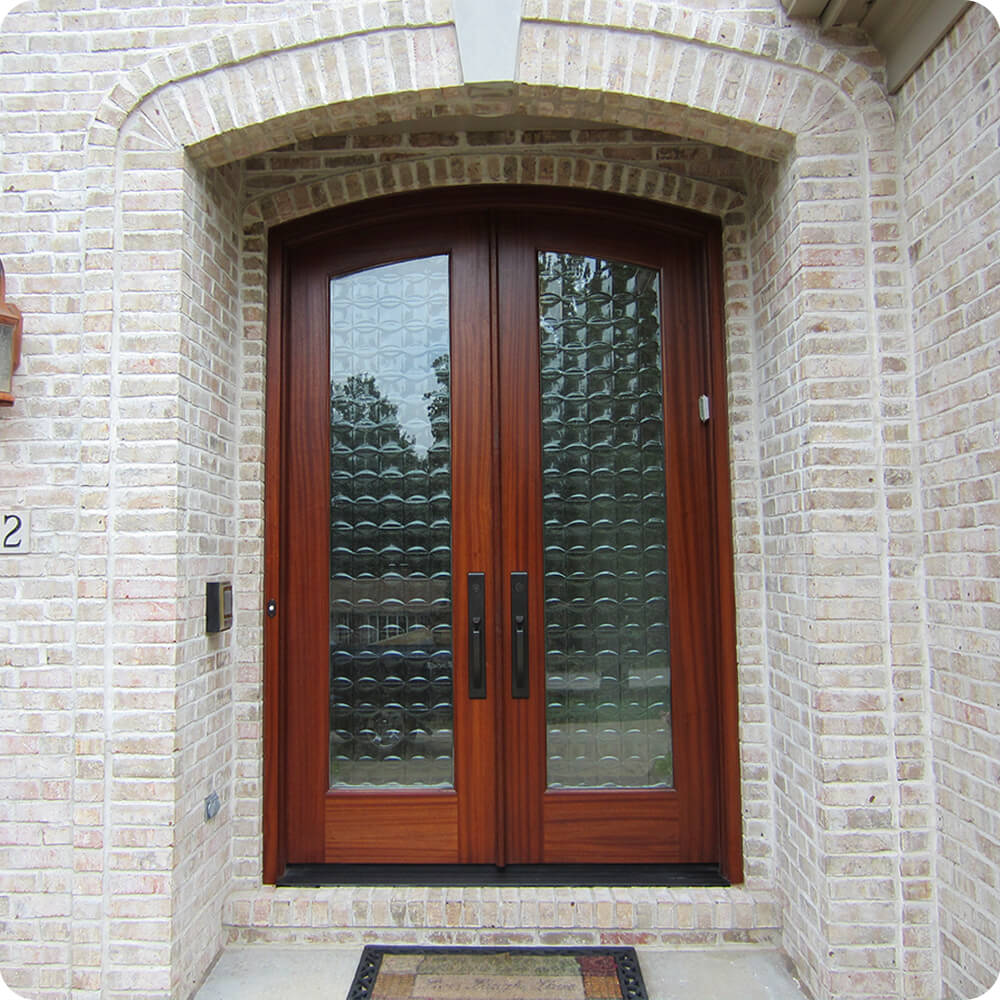
The arched masonry opening was the fixed asset worth designing around. Rather than a single door with separate sidelights and a separate transom piece (three components glazed differently), the new design fills the same arch with one continuous double-door unit whose glass carries the arch itself, simpler, more monumental, and easier to keep looking uniform over time. Decorative leaded diamond-pattern glass was dropped in favor of a clean divided-lite grid in textured (obscure) glass, trading ornamental detail for a more architectural, evenly-lit look. A deep, even mahogany-toned stain replaced the faded finish, and hardware moved from a single nickel lever to matching dark pull handles on both leaves, giving the door a coordinated, heavier presence.
The Execution
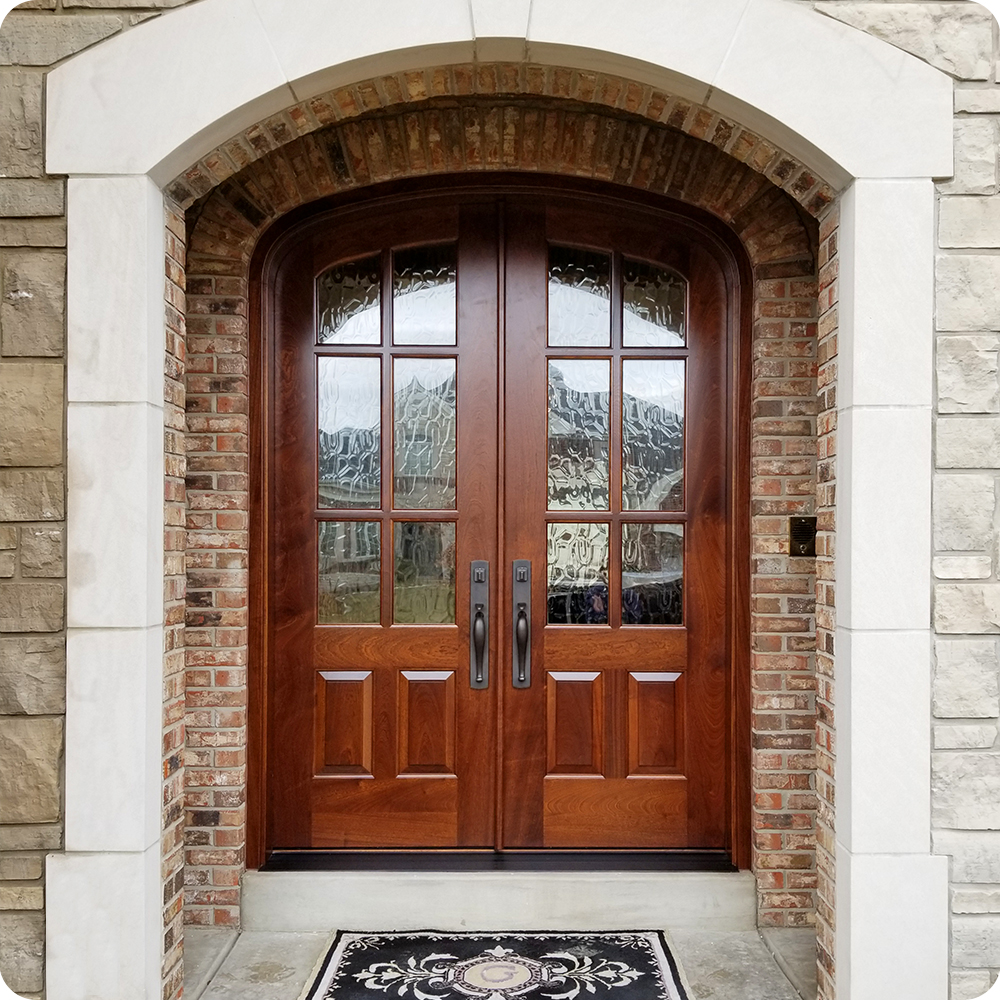
Rebuilt as a true double door filling the full brick archway, eliminating the separate sidelight-and-transom assembly. Each leaf carries an arched divided-lite glass panel, an 8-lite grid in textured/obscure glass, sitting above a solid lower raised panel. Finished in a rich, even reddish-brown stain consistent with mahogany. Hardware is a matched pair of dark pull handles with thumb-latch style hardware in an oil-rubbed bronze finish, replacing the original single nickel lever set.
The Result
The new door reads as one continuous element with the brick arch rather than three separate glazed components inside it. The even, richer stain and matched dark hardware give the entry a more monumental, more current presence, and the obscure divided-lite glass keeps privacy and texture without the busier leaded pattern of the original.
Specification
Unit Size
6'-6" x 8'-0"
Panel Thickness
1¾"
Joinery
Mortise-and-tenon, no mechanical fasteners
Glass
Textured glass, divided-lite arched grid
Finish System
Marine-grade exterior stain finish, six sides.
Hardware
Dual pull handles, oil-rubbed bronze finish, thumb-latch style.
Installed By
Scobis
Common Questions
Why replace a door-and-sidelights setup with a single double-door unit?
The original entry glazed three separate pieces like the door, two sidelights, and the arched transom above, each with its own leaded pattern. Building one continuous double-door unit that fills the same brick arch gives a simpler, more unified look and one finish to maintain over time, instead of three separate glazed components that can age or weather unevenly.
Why switch from decorative leaded glass to a divided-lite grid?
The original diamond-lattice pattern with brass caming is ornamental and busy at a glance. A clean divided-lite grid in textured glass still provides privacy and breaks up the glass visually, but reads as more architectural and current, letting more light through evenly rather than filtering it through a dense decorative pattern.
Why oil-rubbed bronze hardware instead of the original polished nickel?
Polished nickel reads bright and can look dated or mismatched as a home's palette shifts toward warmer, darker tones. Oil-rubbed bronze sits quietly against a mahogany stain instead of contrasting with it, and pairing matched pulls on both leaves (instead of a single lever on one door) gives the entry a more coordinated, heavier presence at the scale of that brick arch.
More Projects Like This