
Why Your Wood Door Warps and How to Fix It in St. Louis
St. Louis sits at one of the most demanding climate crossroads for wood in the country, brutal humidity in summer, bone-dry heated air in winter. If your front door sticks in July and rattles in January, your wood is reacting exactly as physics predicts. Here’s why your wood door warps and how to fix it in St. Louis, how to stop it, and what to do when the damage is already done.
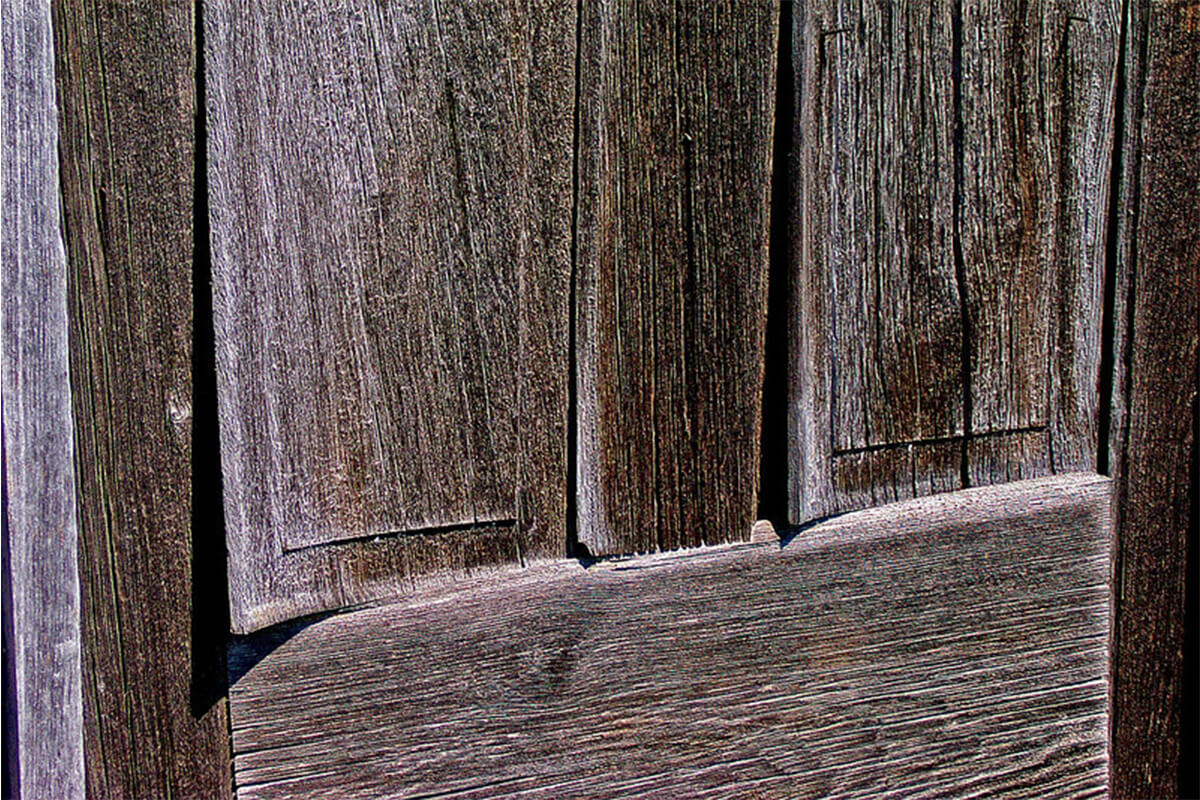
Why wood doors warp and why St. Louis is especially hard on them?
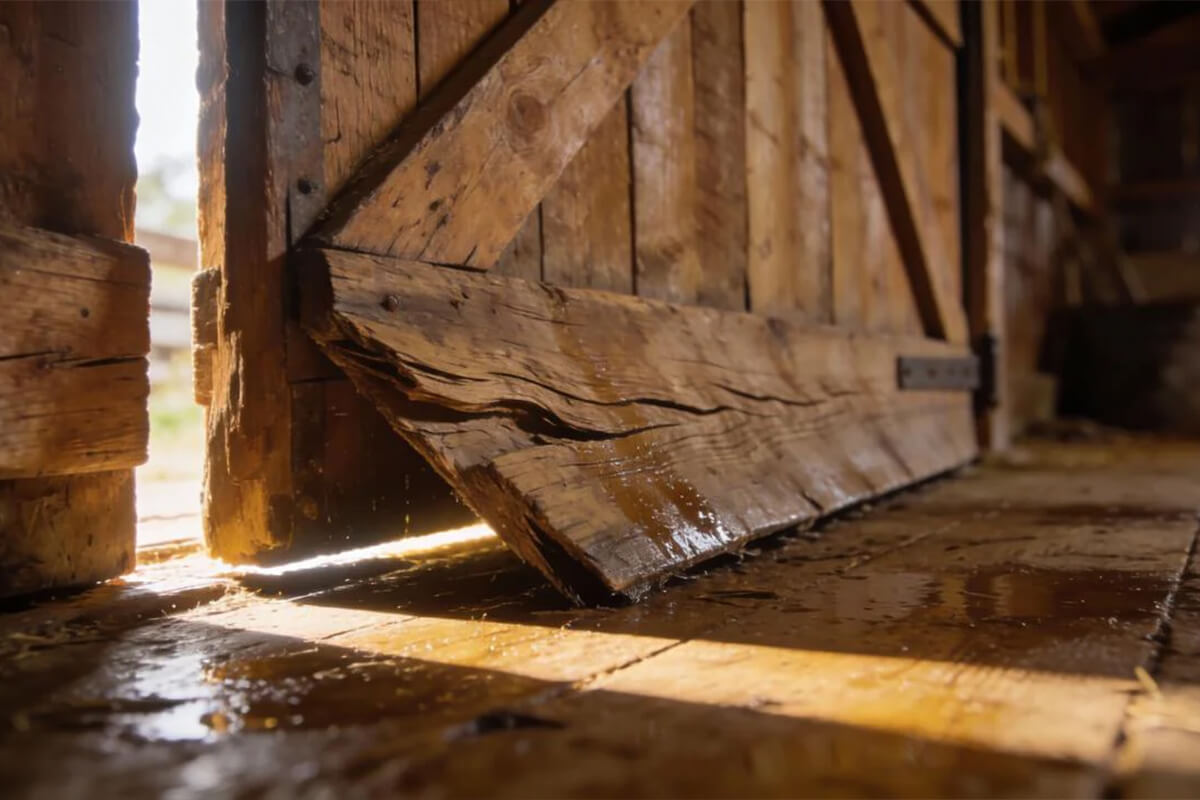
Every wood door is essentially a giant sponge made of millions of tiny fibers. Those fibers absorb moisture from the air when humidity rises, causing them to swell, and release it when conditions dry out, causing them to shrink. When one side of the door swings faster than the other, for example the exterior face bakes in the August sun while the interior stays cool and air-conditioned, the tension builds until the door bends, bows, or twists.
St. Louis makes this worse than almost anywhere else in the Midwest. Average summer relative humidity regularly exceeds 70%, while winter indoor air (heated by forced-air systems) can drop to 20–30% RH. That’s a swing of 40–50 percentage points your door experiences every year, sometimes within a single week during transitional seasons.
St. Louis climate fact
Missouri’s humidity swings between seasons are among the largest in the continental U.S. A wood door that isn’t properly finished on all six sides is constantly working against itself, expanding in June, contracting in January, and slowly losing the fight.
Beyond humidity, the following factors compound the problem specifically for St. Louis homeowners:
| Cause | What happens | St. Louis risk |
|---|---|---|
| Moisture imbalance | Exterior and interior faces absorb and lose moisture at different rates, pulling the door out of shape | High |
| Incomplete finishing | Unsealed top and bottom edges act as open moisture channels into the core of the door | High |
| Sun exposure | South- and west-facing doors absorb solar heat, drying one side faster than the other | High |
| Seasonal temperature swings | Wood expands in Missouri's humid summers and contracts in dry heated winters, repeatedly, every year | High |
| Poor wood species choice | High-movement species like maple and hickory absorb and shed moisture aggressively in changing climates | Medium |
| Improper installation | Misaligned frames create stress points that humidity and heat amplify into warping over time | Medium |
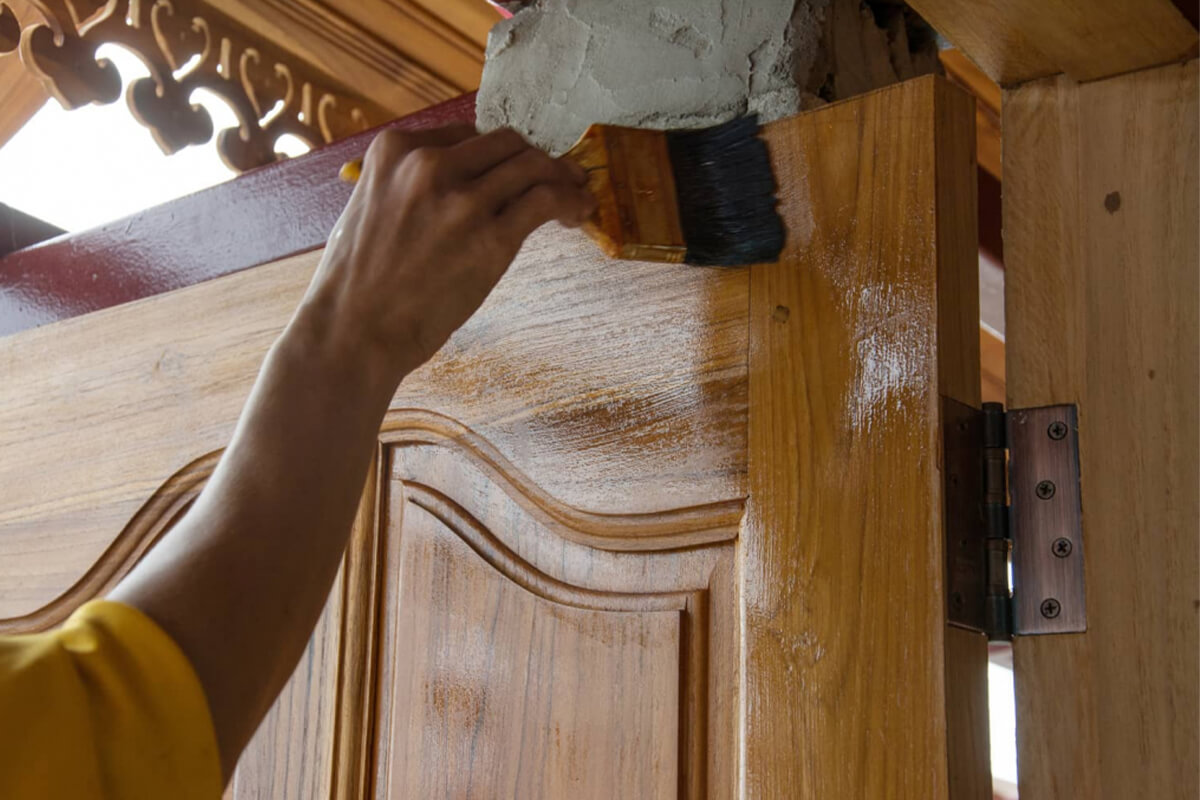
The four types of warp and how to spot them
Not all warping looks or behaves the same way. Identifying what you’re dealing with determines the right fix.
Bowing
The door curves along its length, like a banana. Hold a straightedge against the face and look for a gap at the center.
Twisting
Opposite corners go out of alignment. If your door's diagonal measurements differ, it's twisted, often from uneven frame stress.
Cupping
Edges sit higher or lower than the center, forming a dish shape. Usually a sign of moisture hitting one face harder than the other.
Crooking
One edge bends laterally. Less common, but often caused by localized moisture damage or structural issues in the frame.
Contact Our Team!
Whether your door needs a professional refinish or a full custom replacement, we’d love to take a look. Don’t hesitate in contacting us and one of our experts will be in touch shortly.
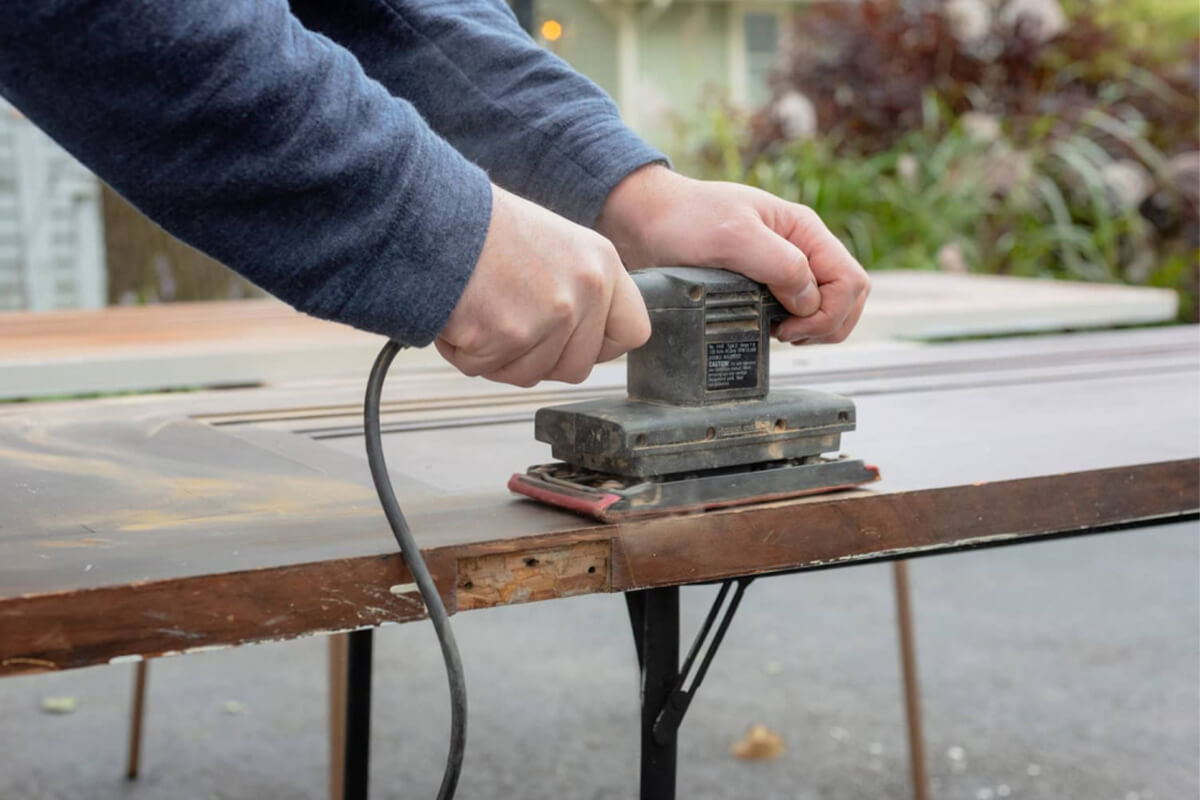
5 prevention habits that make a real difference
Prevention is far less expensive than repair. These five practices give a properly built wood door decades of stable life, even in St. Louis conditions.
Seal all six sides including the top and bottom
This is the single most overlooked rule. Moisture doesn't politely enter through the face of a door, it sneaks in from every unsealed edge. Both the top and bottom must be fully coated with a quality finish, especially before installation.
Maintain your finish before it fails, not after
A finish that's peeling or fading on one face causes uneven moisture absorption across the door. In Missouri, exterior wood surfaces should be inspected every 12–18 months. Refinish every 3–5 years depending on sun exposure.
Manage indoor humidity seasonally
Your HVAC system is your door's best friend. Aim for 40–50% relative humidity indoors year-round. A whole-home humidifier in winter and a dehumidifier in summer do more for your door's longevity than any finish product alone.
Give south- and west-facing doors some shade
A roof overhang of at least 12–18 inches reduces solar loading dramatically. The difference between a shaded and unshaded south-facing door in St. Louis can be 15+ years of added lifespan.
Choose the right wood species from the start
Some species simply handle Missouri's humidity swings better. White Oak and Sapele are dimensionally stable and naturally moisture-resistant. Maple and Hickory, while beautiful, are high-movement species better suited to interiors.
| Species | Moisture stability | Best use | Available at Scobis |
|---|---|---|---|
| White Oak | Excellent | Exterior entry doors, high-humidity zones | ✓ |
| Sapele | Excellent | Entry doors, statement pieces | ✓ |
| Mahogany | Very good | Exterior and interior entry | ✓ |
| Walnut | Good | Interior doors, covered exterior | ✓ |
| Cherry | Moderate | Protected interior applications | ✓ |
| Maple / Hickory | High movement | Interior only, avoid for St. Louis exteriors | ✓ |
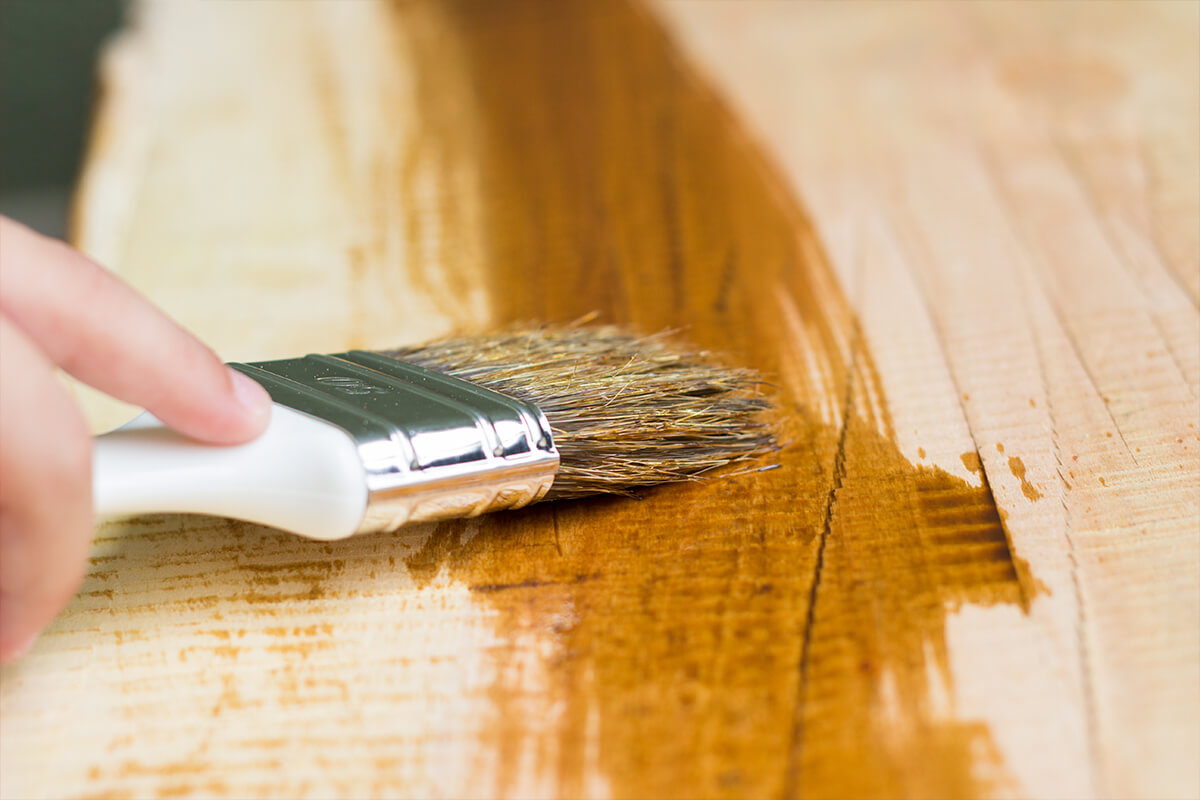
When it's already warped, should I refinish or replace?
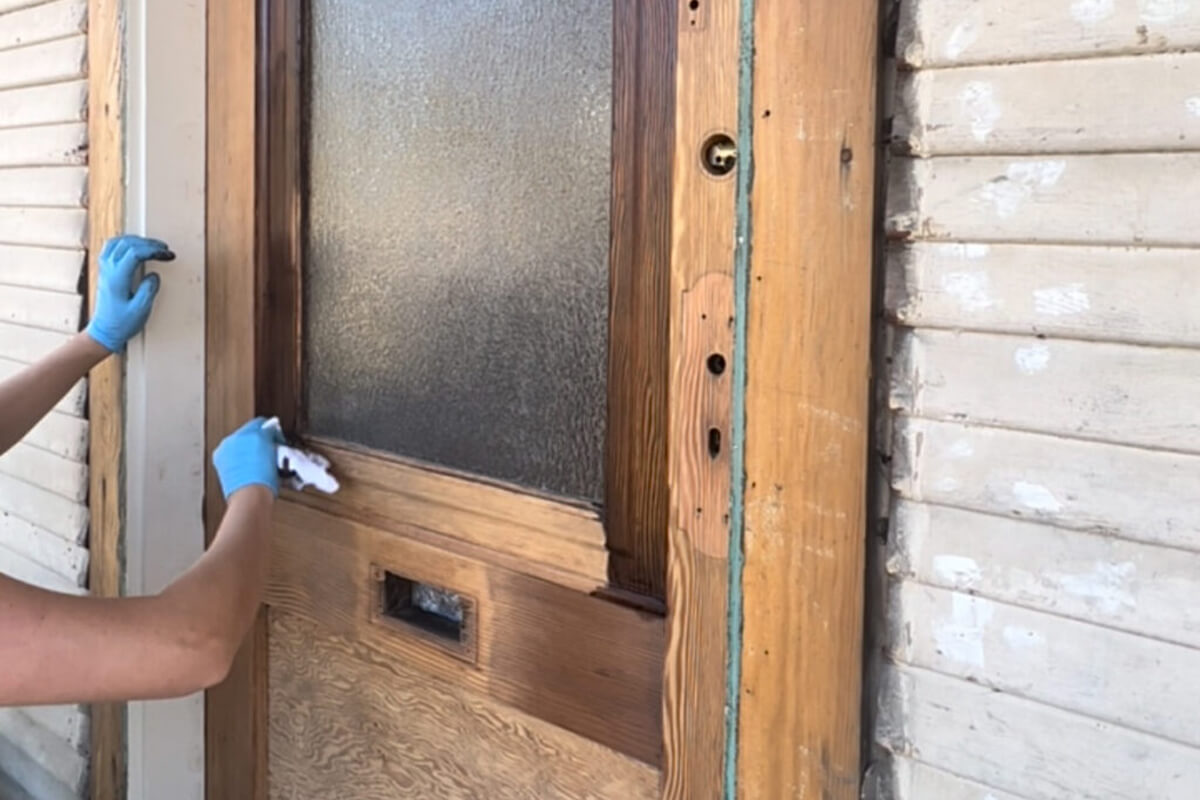
A professional refinishing service doesn’t just restore appearance, it restores protection. Multi-coat urethane topcoats applied to all six sides of a door create a moisture barrier that significantly slows the expansion-contraction cycle. At Scobis, our refinishing process includes surface preparation, stain or color matching, and multiple protective topcoat layers specifically formulated for Missouri’s exterior conditions.
For doors that have warped mildly, a skilled craftsman can use controlled pressure and clamping to reshape the panel before refinishing. The refinishing step that follows, sealing all surfaces with properly applied topcoats, is what prevents the warp from returning. Without it, the fix is temporary.
For severe cases, or doors that lack the structural integrity to hold a repair, Scobis builds replacement doors from kiln-dried hardwoods with moisture testing conducted before fabrication, the same standard we apply to every door that leaves our St. Louis facility.
Consider professional refinishing when:
- The warp is minor, sticking seasonally but still closing
- The finish is faded, peeling, or cracking
- The wood itself is structurally sound with no rot or splits
- Light gaps or draft appear around edges
- The door is custom or high-value and worth preserving
Consider replacement when:
- The warp is severe, door won't latch or close at all
- There is visible rot, splitting, or structural cracking
- Joinery is separating at the rails and stiles
- The door was originally low-quality or improperly finished
- You've repaired the same door multiple times already
Frequently asked questions
Why does my door stick in summer but close fine in winter?
This is classic seasonal wood movement. In summer, St. Louis humidity causes the wood to absorb moisture and swell, tightening the fit in the frame. In winter, heated indoor air dries the wood, causing it to contract and fit loosely again. If the cycle repeats without a good protective finish, the wood eventually stays deformed. A professional refinish, especially sealing the top and bottom edges, significantly reduces this movement.
How often should a wood exterior door be refinished in Missouri?
Every 3 to 5 years is a reasonable baseline, but south- or west-facing doors in full sun exposure may need attention every 2–3 years. The tell is the finish itself: if it looks faded, chalky, or is beginning to peel at the edges or top, that’s moisture finding its way in. Don’t wait for visible wood damage, once water has penetrated, the repair becomes significantly more involved.
Can a badly warped door be straightened without replacement?
Sometimes. Minor to moderate bowing or cupping can be addressed by a professional using controlled clamping and moisture management. However, if the door has twisted significantly, if the joints are separating, or if the wood has begun to rot, repair becomes unreliable. The best indicator is whether the door’s structural joinery is still intact, if it is, refinishing after reshaping can produce a result that lasts years. If the joinery has failed, replacement is more cost-effective long term.
What's the best finish for a wood door in St. Louis's climate?
Multi-coat exterior-grade urethane topcoats offer the best combination of UV protection and moisture resistance for Missouri conditions. Oil-based penetrating finishes provide good protection for doors in covered or shaded locations. Paint-grade finishes can work well but must be applied to all surfaces and maintained regularly.
Does a storm door help prevent warping?
Yes, meaningfully so. A storm door acts as a buffer between your wood door and direct rain, wind, and UV exposure. It’s particularly useful for south- or west-facing entries that lack an overhang. The added insulation layer also stabilizes the temperature differential between the door’s interior and exterior surfaces.
My door was installed recently and is already warping. What went wrong?
The most common culprits for early warping are: wood that wasn’t properly kiln-dried before fabrication, edges left unsealed during or after installation, and improper storage before hanging. If a door warps in the first year or two under normal conditions, it usually points to a material or finishing issue at the source, not something the homeowner caused.
St. Louis's wood door specialists, built locally.
Scobis Millwork + Design fabricates and finishes custom wood doors from our St. Louis facility — with every piece moisture-tested, hand-finished, and engineered for Missouri’s demanding climate. Whether your door needs a professional refinish or a full custom replacement, we’d love to take a look.