
The 5 Best Wood Types for your Front Door
(2026 Guide)
A front door has a tougher job than almost any other piece of wood on your home. It has to handle sun, rain, seasonal humidity swings, daily impacts, and still look beautiful up close. That’s why the “best” wood isn’t universal, it depends on your climate exposure, the finish you want, and the look you’re trying to achieve, so here we answer which wood type is best for a front door and exactly when to use each.
Below are five door-proven wood species with clear guidance on when each one makes sense, so you don’t overpay, underbuild, or end up refinishing every year.
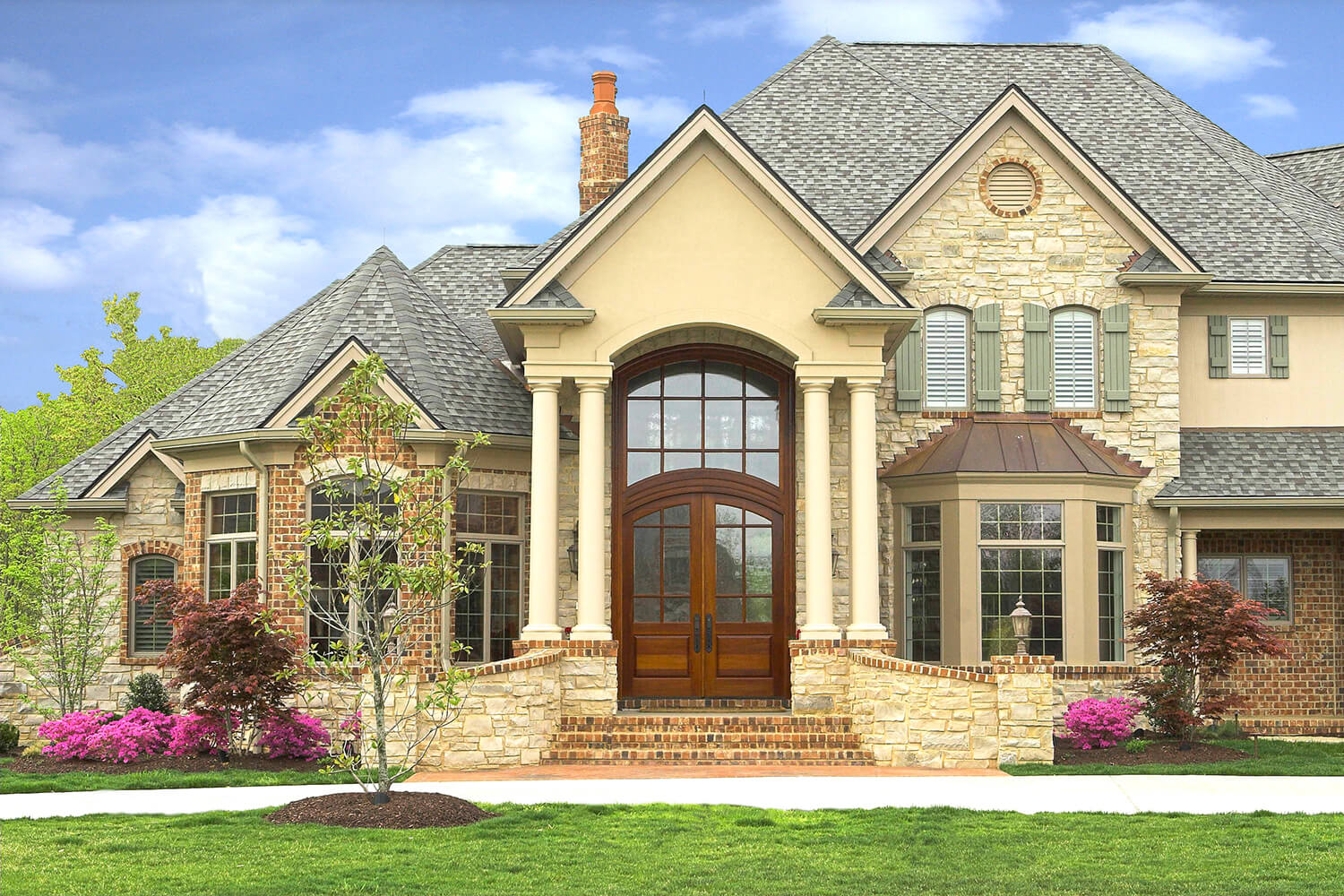
What Actually Makes a Front Door Last?
Durability outdoors comes from a combination of:
- Moisture resistance: How well it resists swelling, rot, and decay.
- Dimensional stability: How likely it is to warp, twist, or move with seasons.
- Grain structure: Tight/closed grain generally handles weather better than open grain.
- Finish strategy: Paint vs stain vs clear topcoat and how often it’ll need maintenance.
Also: Construction matters as much as species. A properly built door system with the right sealing, weatherstripping, and thresholds will outperform a “great wood” door installed like an interior slab.
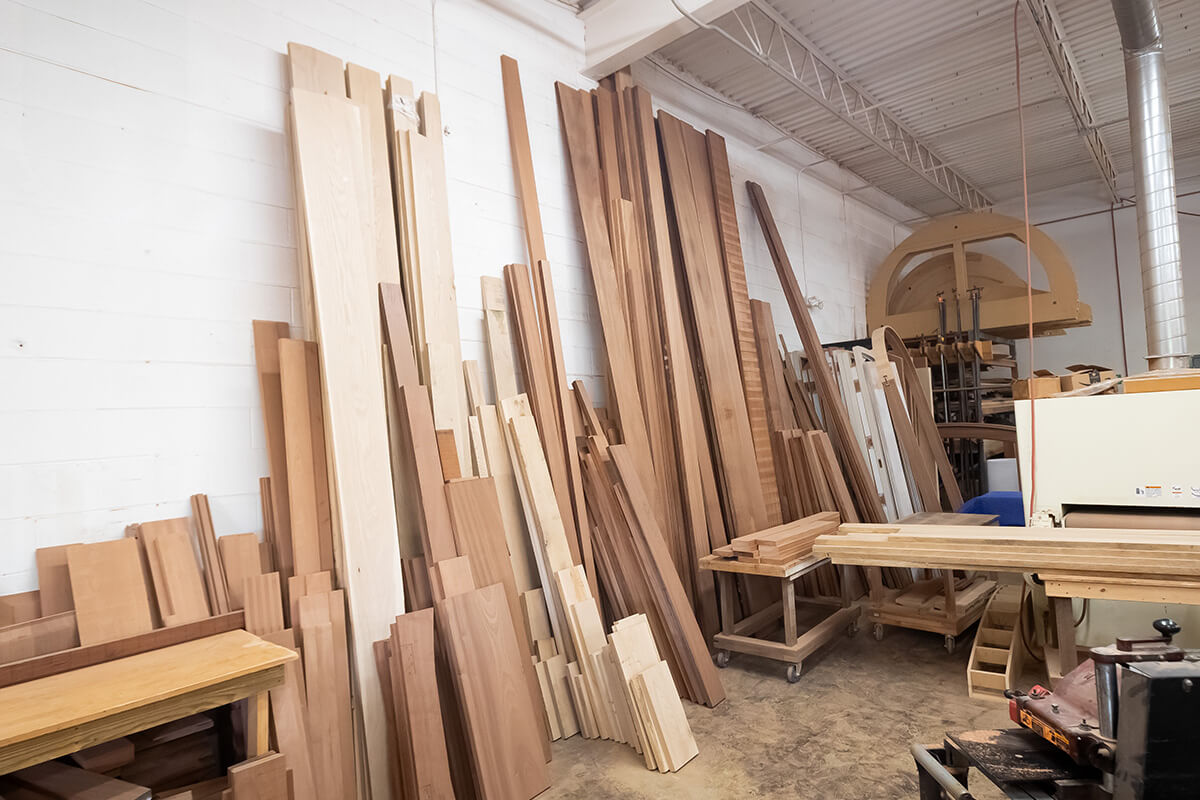
1. White Oak
This is the safe bet for tough weather and long-term stability. If you want the most dependable all-around exterior door wood, White Oak is the one that rarely disappoints.
Its grain structure is naturally more moisture-resistant than many other domestic hardwoods, and it’s a go-to when performance matters as much as looks. (It’s also one of Scobis’ highlighted premium species for durability and wear resistance.)
When to use White Oak?
- Your entry gets real weather exposure (rain, humidity swings, temperature changes)
- You want a classic, timeless grain that works on traditional or modern homes
- You’re building larger door panels or heavier systems and want stability
Finish notes: White oak looks incredible stained (light through dark). If you’re doing a lighter tone, it can lean modern and clean; darker stains can look dramatic without feeling trendy.
Avoid White Oak if: You’re trying to hit the lowest possible budget, there are cheaper species that look great, but they won’t match white oak’s overall balance.
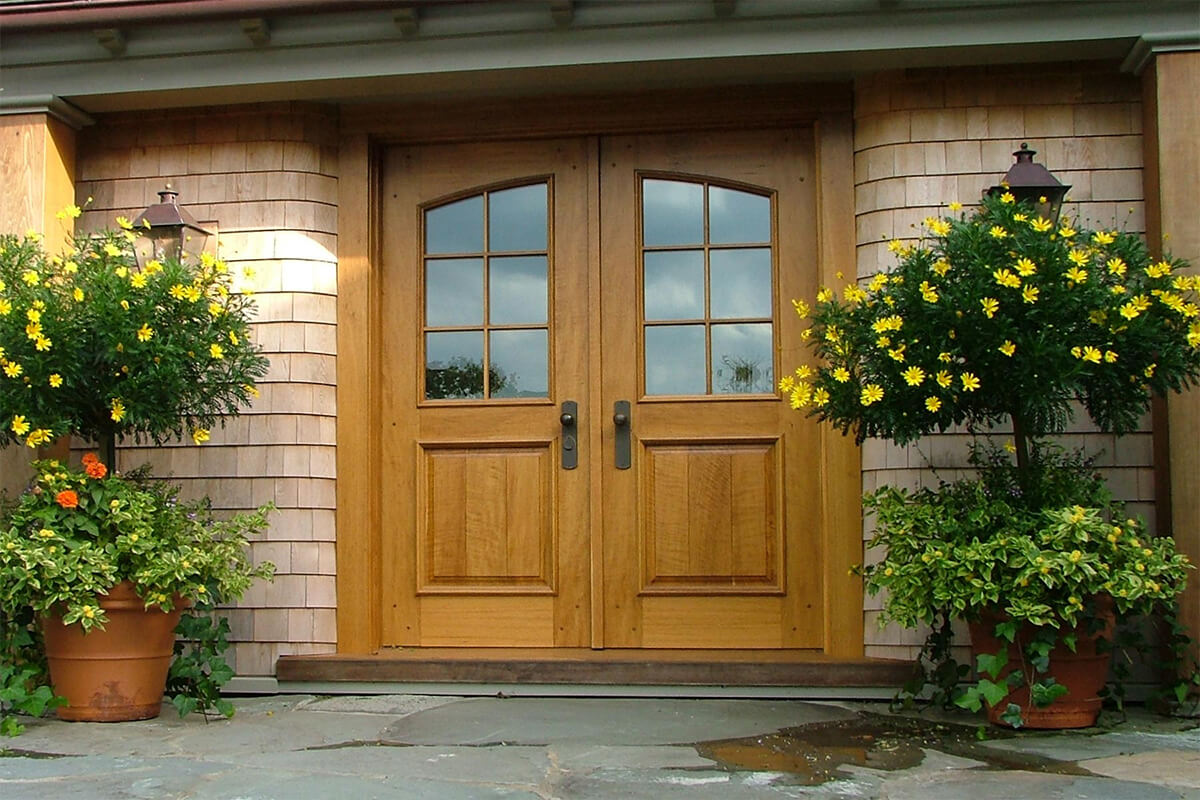
2. Sapele (Mahogany Family)
The luxury look that performs like it means it. Want the richness of mahogany with excellent stability and a high-end feel? Sapele is a favorite for premium entry doors because it combines a beautiful grain with strong exterior performance, especially when properly sealed and finished.
Scobis features multiple Sapele front-door projects specifically because it delivers that “statement entry” look while holding up to real-world conditions.
When to use Sapele?
- You want a luxury front door with warm depth and strong curb appeal
- Your design includes glass, arches, or a more custom profile (Sapele machines beautifully)
- You want a wood that feels architectural, not generic
Finish notes: Sapele is usually best as stain-grade (or clear plus tint). It shines when you let the color and chatoyance (that subtle shimmer) come through.
Avoid Sapele if: You want a bright, minimalist painted door. You can paint it, but it’s like buying a sports car to drive in first gear.
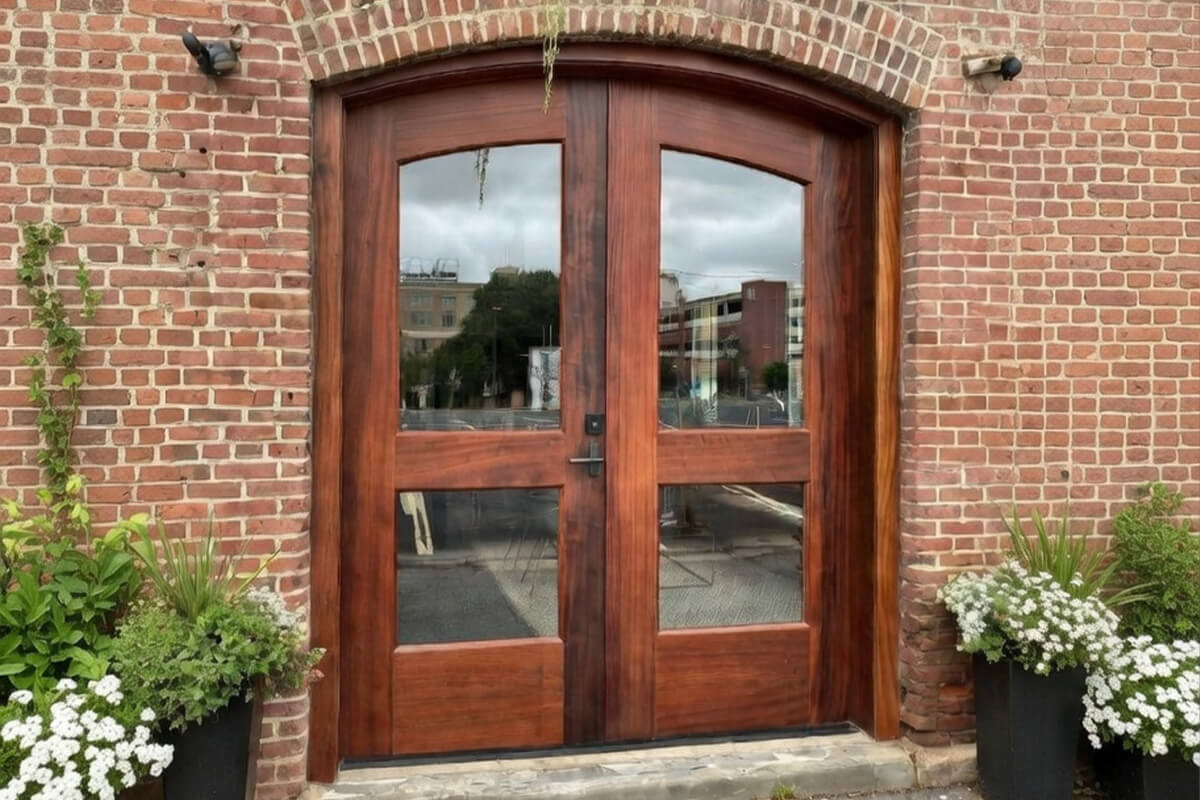
3. Western Red Cedar
This is the smart choice for harsh exposure and lower-maintenance protection. If your door faces strong sun, heavy rain, or you’re in a climate where rot resistance matters, Cedar earns its keep.
It’s known for natural resistance to decay and pests, and it can be a practical option for larger doors where weight matters too.
When to use Western Red Cedar?
- Your entry is high exposure (especially moisture-prone environments)
- You want a species that’s naturally more forgiving outdoors
- You like the look of wood that can feel warm, relaxed, and organic
Finish notes: Cedar works with stains and paints, but you’ll get the best long-term results with a system designed for UV and moisture protection,especially if the entry gets direct sun.
Avoid Cedar if: You expect the door to take a lot of daily impacts (kids, pets, heavy traffic) and you’re worried about dents, cedar can be softer than many hardwoods.
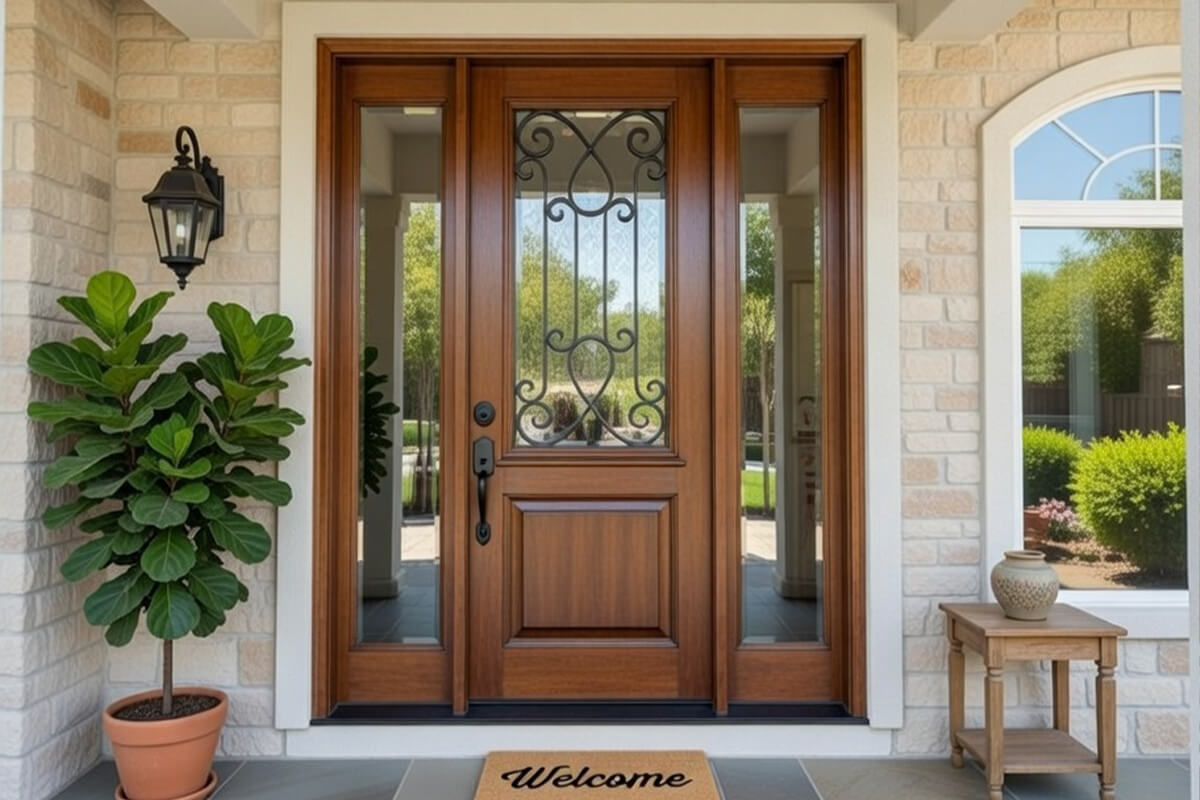
4. Walnut
This is the showstopper for high-end modern homes if your exposure is controlled. Walnut is often chosen for its deep, luxurious tone and upscale vibe. It can make a front door look like custom furniture.
The key is understanding that Walnut is a premium aesthetic choice first, and a performance choice second, so it’s best when the entry is partially protected (covered porch, recessed entry, or good overhang). Scobis highlights walnut as a premium wood option used for modern sophistication.
When to use Walnut?
- You want a modern, high-end look that stands apart from typical doors
- Your entry is covered or semi-protected
- You want a door that reads as a design feature, not just a component
Finish notes: Walnut is typically best with clear or lightly tinted finishes, let the natural color do the work.
Avoid Walnut if: Your entry gets relentless sun/rain and you don’t want regular upkeep. You can do it, but plan for maintenance like you would for a luxury exterior wood element.
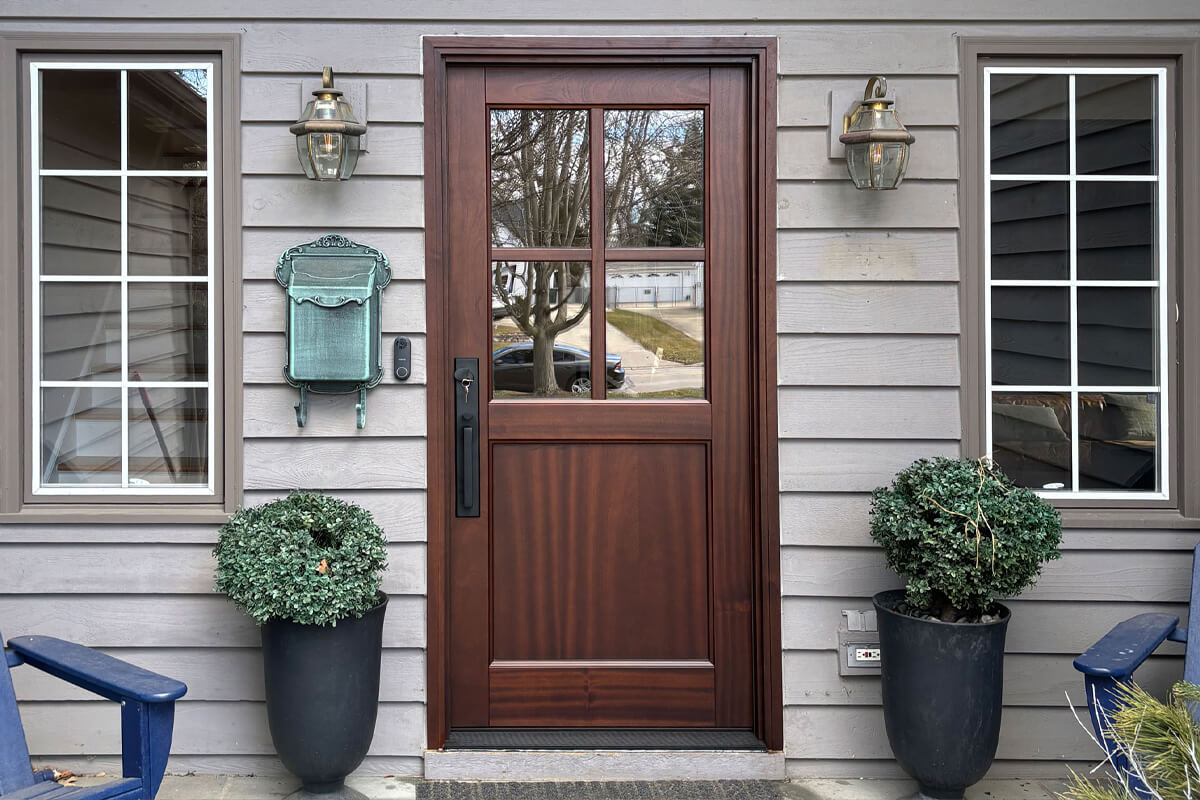
5. Knotty Alder
- You want rustic charm (knots, variation, personality)
- You’re staining (not painting) and want the grain to show
- You want a great look while staying more budget-aware than mahogany-family woods
Finish notes: Alder rewards good finishing. If the entry is exposed, the finish system matters a lot, use a high-quality exterior topcoat and stay on a maintenance schedule.
Avoid Knotty Alder if: You want a perfectly uniform “museum smooth” look or you want a painted finish with zero grain telegraphing.
When to use Knotty Alder?
- You want rustic charm (knots, variation, personality)
- You’re staining (not painting) and want the grain to show
- You want a great look while staying more budget-aware than mahogany-family woods
Finish notes: Alder rewards good finishing. If the entry is exposed, the finish system matters a lot, use a high-quality exterior topcoat and stay on a maintenance schedule.
Avoid Knotty Alder if: You want a perfectly uniform “museum smooth” look or you want a painted finish with zero grain telegraphing.
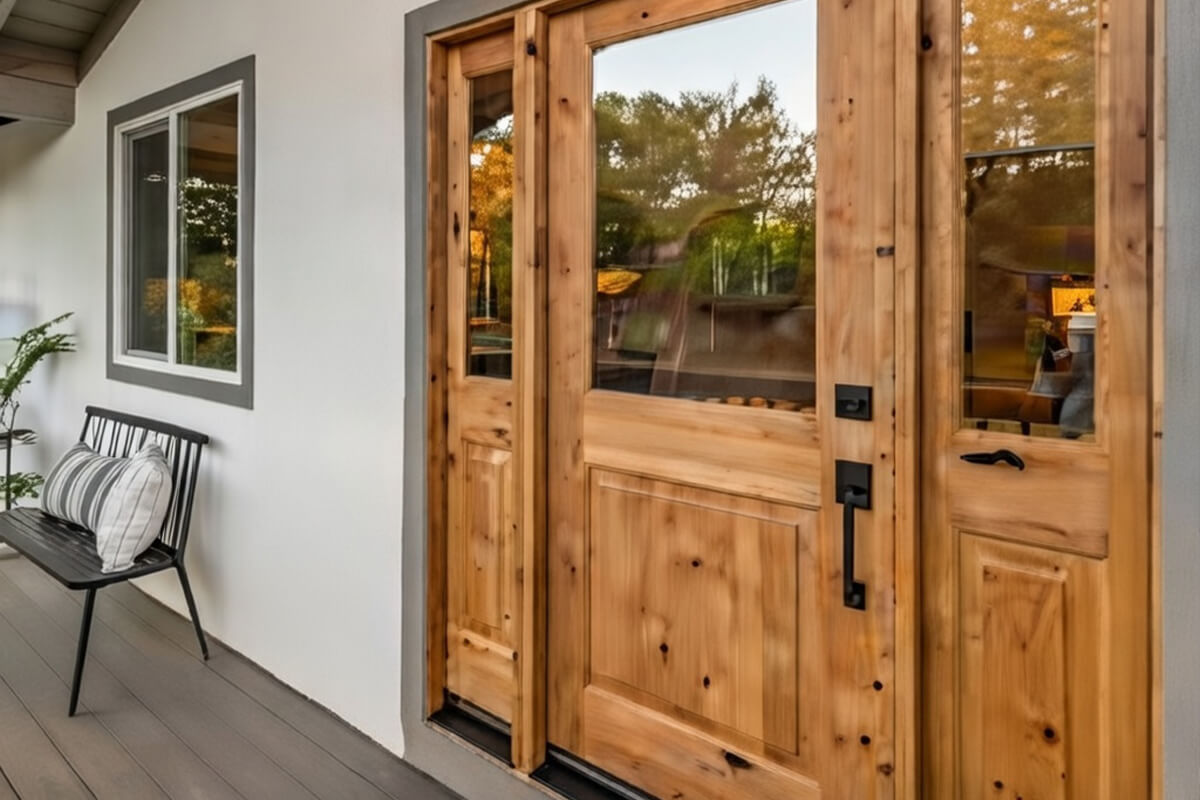
Which Wood Fits Your Door Goals?
If you’re choosing fast, here’s the simplest way to decide:
- Most weather-ready all-around: White Oak
- Luxury statement and great performance: Sapele
- Moisture/rot resistance, lighter weight: Cedar
- High-end modern wow look (with some protection): Walnut
- Rustic character and value (stain-grade): Knotty Alder
Choose the Right Wood and the Right Build with the Finish System
Even the best species can fail if it’s not dried, built, and finished correctly. For example, Scobis emphasizes kiln-dried woods to reduce moisture-related cracking, plus protective topcoats designed for weather and UV resistance.
That’s also why a front door should be treated like a system: slab + jamb + threshold + weatherseal + finish strategy, all engineered to work together.

Want Help Choosing the Best Species for Your Entry?
If you tell us your climate exposure (covered porch vs full sun/rain), your preferred look (modern, traditional, rustic), and whether you want paint or stain, we can recommend the best wood species and finish approach, and design a door that holds up long-term, not just on install day.
You can also reference Scobis’ materials and process details here: