
7 Things to Check Before Choosing a Custom Millwork Company
Custom millwork looks simple to compare until you actually have three quotes side by side. One includes installation, one doesn’t say. One names a wood species, one just says «hardwood.» One company builds everything in-house, another is quietly subbing out the fabrication. The differences that matter most are usually the ones that never show up on a website. So here’s the key things you should know on how to choose a custom millwork company.
This guide covers what to actually check before you hire someone for custom millwork or wood doors, plus a closer look at how that plays out among providers in the St. Louis market, if that’s where your project is.
What Millwork Actually Covers
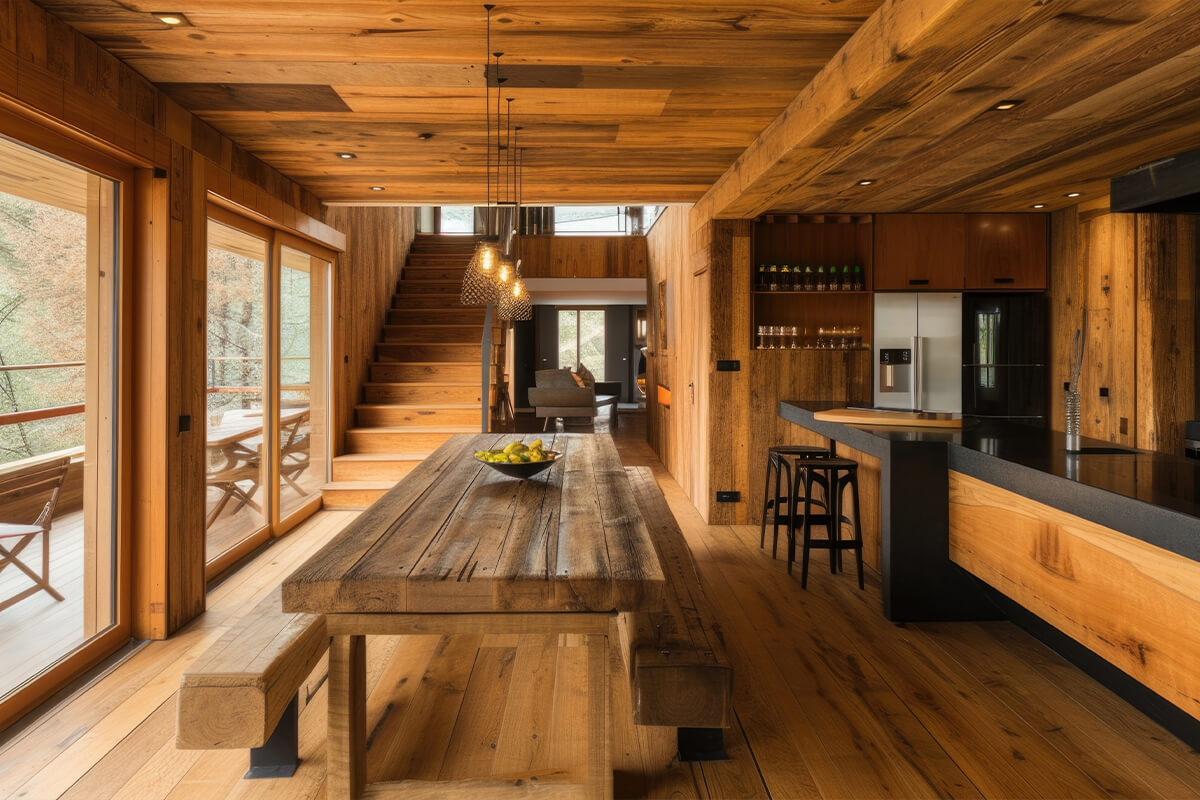
Millwork is custom wood fabricated in a shop and installed on site like an entry and interior doors, trim, casing, built-ins, stair parts, mantels, and architectural moulding. It’s different from big-box trim or stock cabinetry because it’s built to your specific opening, profile, or design rather than pulled off a shelf.
That’s also why the fabrication process matters so much, because a piece built to the wrong measurement or the wrong wood for its exposure doesn’t get fixed with a return label.
Have a project in mind?
Talk to us about custom doors and millwork for your home, business, or institution.
What to check before you hire a millwork company
1. Is it built in their shop, or subbed out?
Some companies design and sell millwork but outsource fabrication to a third party. That’s not automatically a problem, but you should know which one you’re hiring. When design, fabrication, and installation happen under one roof, there’s one point of accountability if something doesn’t fit, instead of a design firm pointing at a fabricator and a fabricator pointing at an installer.
2. Can you see work that's been installed for a few years, not just delivered last month?
Fresh installation photos tell you almost nothing about durability. Wood movement, finish failure, and joint separation show up over time, especially on exterior pieces exposed to sun, humidity, and freeze-thaw cycles. Ask to see, or visit, a project that’s two or more years old. A company confident in its work will have one to show you.
3. Do they recommend wood species, or just take your order?
Not every species performs the same on an exterior south-facing door versus an interior mantel. A company that asks about sun exposure, moisture, and how the piece will be used before recommending a species is doing real design work. One that just quotes whatever you name is treating millwork like a commodity.
4. What's actually included in the bid?
Installation, finishing, and hardware are sometimes bundled and sometimes billed separately, and this is where quotes that look similar on paper end up very different in practice. Ask for an itemized breakdown before comparing prices between companies.
5. Do they match existing profiles, or only build new?
If you’re working on an older home, a company that can match an existing moulding profile or historic door design is a different, and rarer, skill set than one that only does new-construction work. If historic matching matters to your project, ask directly and don’t assume every custom shop can do it.
6. What happens if your material choice is delayed or unavailable?
Lead times on certain hardwoods and hardware can shift. A company with a real answer for this such as giving substitute options, how they communicate a delay, what triggers a change order, is telling you how they handle problems before one happens on your project.
7. Who manages the project day to day?
On anything beyond a single door, you want a named point of contact, not someone from the shop will follow up. Ask who you’ll actually be talking to between the initial consultation and final installation.
Custom millwork companies in the St. Louis area
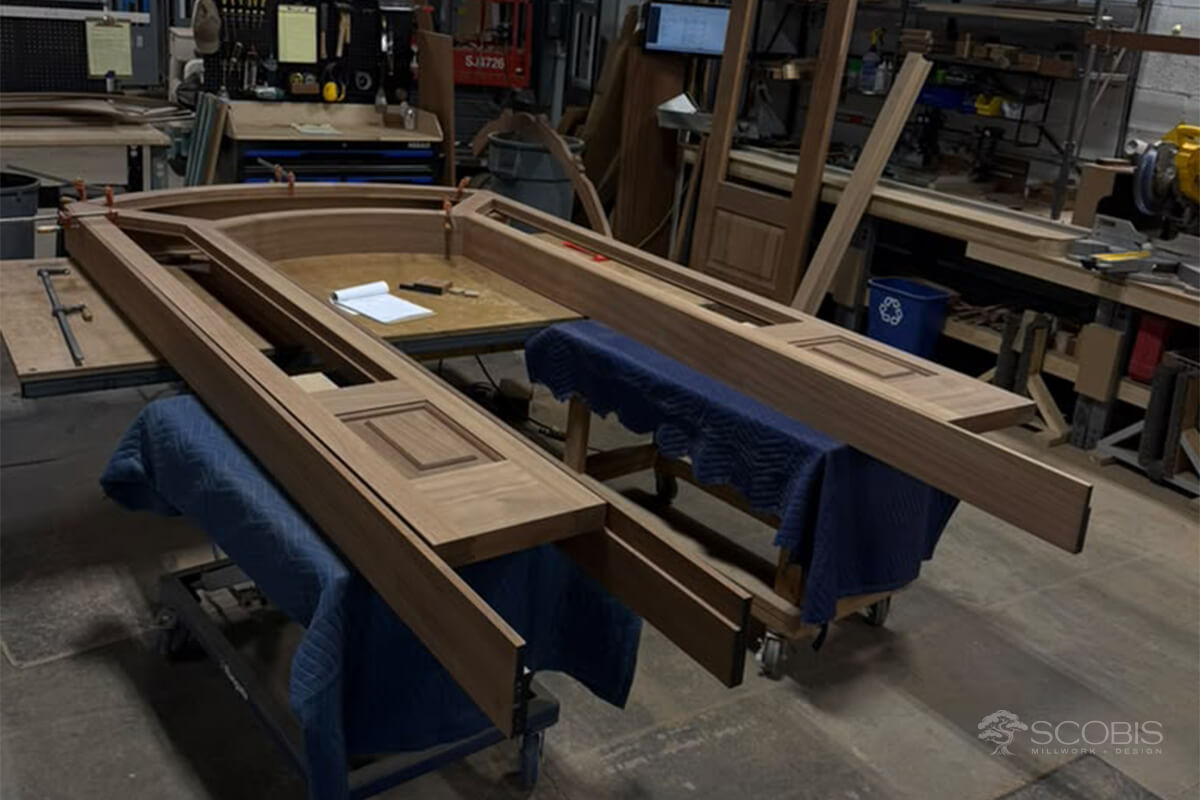
Scobis Millwork + Design
Works across the full range of millwork there is, from residential doors and trim, commercial buildouts, institutional and church projects, and historic restoration work, alongside new custom fabrication of any kind.
Design, fabrication, finishing, and installation are handled by one team, so there’s a single point of contact and a single point of accountability from the first consultation through final install, the who’s actually building this, and who do I call if something’s off questions above are answered by default rather than something you have to dig for. Because the shop takes on residential, commercial, and institutional work, it’s a reasonable starting call regardless of what kind of building the project is in
Other millwork providers
A few other names worth knowing, each with a narrower focus worth being aware of before you call:
- Kirkwood Stair & Millwork is known for custom moulding and stair work, with a wide stocking range of species, like a solid residential option, though its focus sits more on stairs and trim than doors or larger institutional projects.
- St. Louis Millwork (STL Sash Co.) specializes specifically in matching existing profiles and sash styles. It’s a strong pick if you’re restoring an older home and need a historic profile replicated, though it’s a narrower specialty than a full design-build shop covering doors, cabinetry, and new construction.
- Merric Millwork and Seating operates at commercial and hospitality scale like restaurants, hotels, casinos, and isn’t set up for residential projects, so it’s worth knowing about mainly if your project is commercial rather than a home.
- DH Schmidt Co. has built commercial casework and cabinetry in the region since 1966, similarly focused on commercial rather than residential work.
The right fit depends on your project type and scope. If it spans more than one category above, say, a home renovation that also touches a commercial or institutional space, a shop built to handle all of them, like Scobis, avoids having to coordinate between separate specialists.

How to verify a millwork company before you hire
A company’s own site is the least reliable place to evaluate it, of course it looks good. A few better sources:
- Google Business Profile reviews with photos, not just star ratings. Photos from actual customers show installed work, not staged shots.
- Houzz, which is more design- and craftsmanship-focused than general review sites, and tends to show more in-progress and detail photography.
- The Better Business Bureau, less for the rating and more to see how a company responds to any complaints on file.
- Asking to visit the shop. A company willing to show you fabrication in progress, not just a showroom, is showing you something a photo can’t.

FAQs: Custom millwork in St. Louis
Will custom wood doors and exterior millwork actually hold up in Missouri's climate?
They will, if they’re built and finished for it. Missouri’s freeze-thaw winters, humidity swings, and direct summer sun all move wood differently than a controlled interior environment does. This is why species selection matters more on an exterior door than an interior one. A door that performs well in a dry, mild climate can still cup or check here if it’s the wrong species for the exposure. Ask specifically how a company finishes for exterior use, not just what species they offer; the finish system is often what fails before the wood does.
How long does a custom millwork or wood door project actually take?
It depends heavily on scope, but as a rough range. A single custom entry door typically runs a few weeks to a couple months from final design to installation, largely driven by fabrication and finishing time. A larger interior trim package or a multi-room built-in project can run three to six months, especially if it’s coordinated around other renovation trades. If a project involves matching a historic profile that has to be custom-milled, add time for that step specifically. Ask for a real timeline tied to your specific scope, not an industry-average number.
How much should I budget for a custom wood entry door?
Most homeowners don’t have a firm number before their first conversation, and that’s normal. Custom work varies enormously by size, species, glass, and hardware. Rather than guessing at a number in advance, a useful gut-check is whether a company is willing to walk through cost drivers with you on a call (species, size, single vs. double door, sidelites, hardware) before ever quoting. A company that can only give you a number after seeing exactly what you want is being accurate. One that throws out a range with no context isn’t giving you anything useful yet.
Can a millwork company match trim or door profiles in an older home?
Some can, and it’s a genuinely different skill from new-construction fabrication. Matching an existing profile means either sourcing or custom-grinding a knife to replicate a moulding shape, sash detail, or door design that may not be manufactured anymore. If you’re restoring or extending an older home, ask specifically about historic matching experience rather than assuming a general millwork shop can do it. Some specialize in it, and some don’t offer it at all.
Do I need an architect or designer before I contact a millwork company?
Not necessarily. Homeowners often start directly with a millwork company for a single door or trim project, especially when the scope is fairly contained. An architect or designer becomes more useful when millwork is one piece of a larger structural or design change like a new opening, a full room reconfiguration, or a project involving multiple trades. A good millwork company should be comfortable working either way, directly with you, or alongside your architect and general contractor.
What kind of maintenance do custom wood doors need over time?
Less than people expect, but not none. Exterior doors generally need their finish refreshed on a multi-year cycle, more often on south- or west-facing exposures with heavy direct sun. Hardware should be checked periodically, since a door that’s swelled slightly with humidity can put extra strain on hinges. Ask what the finish warranty actually covers and how long it’s expected to last before the first refresh. That answer tells you a lot about whether a company is being straightforward about long-term upkeep.
Contact Our Team!