
How We Replicated a Century-Old Gothic Door
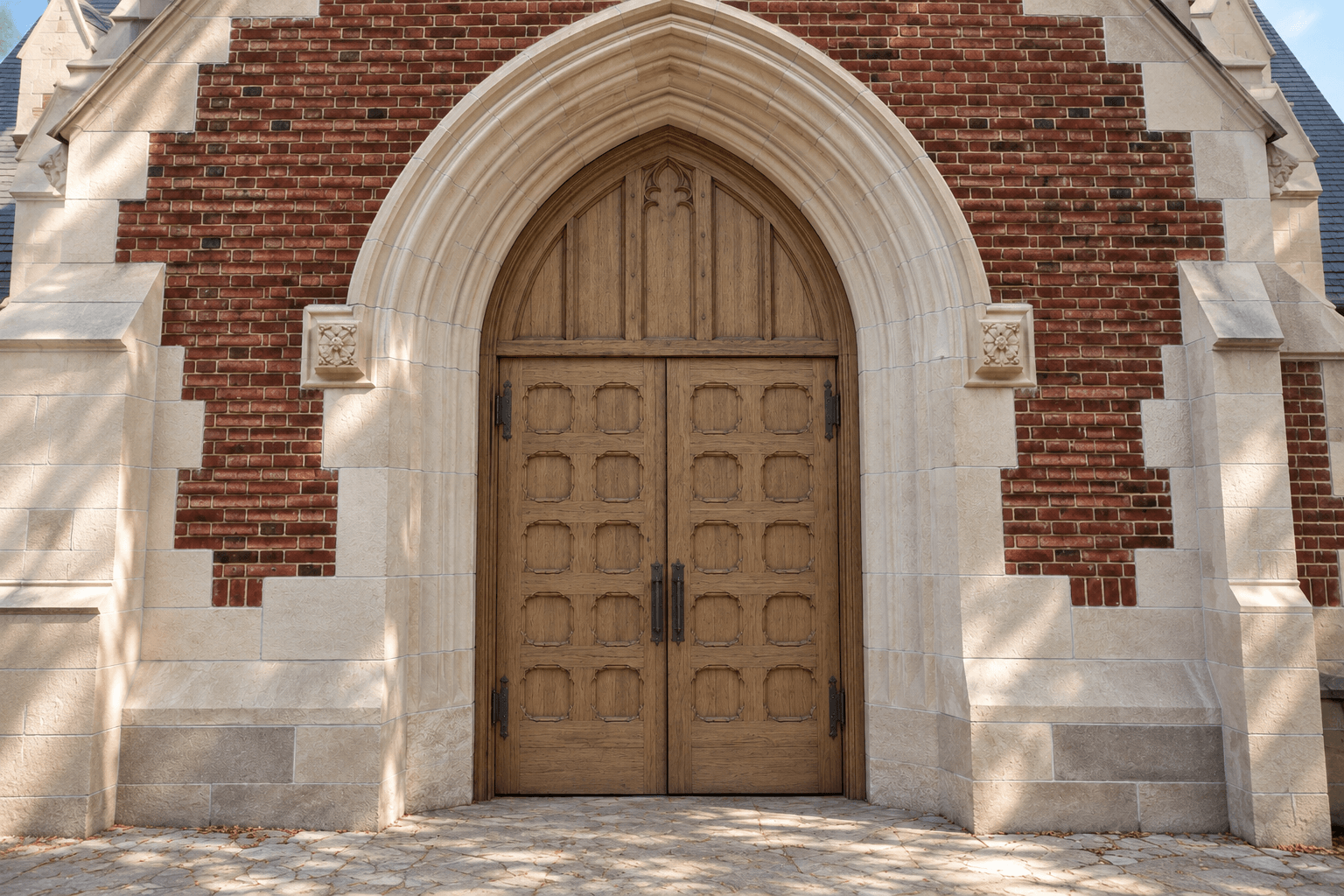
We built an exact replica of the original carved entry doors from a historic Tudor Gothic library, built in 1929 on a university campus in the St. Louis area. The new doors, made in stained white oak, are now installed in the building’s original stone arch. Here’s how we replicated a century-old gothic door.
At Scobis, we see a lot of beautiful work. This one was special. When a building has stood for nearly a hundred years, its doors are not just hardware and wood. They are the first handshake a building gives you.
Below, we walk through how we approached the job: what makes Gothic design so distinctive, why historic replicas are harder than they look, and exactly how we captured every carved detail so the new doors read as the originals.
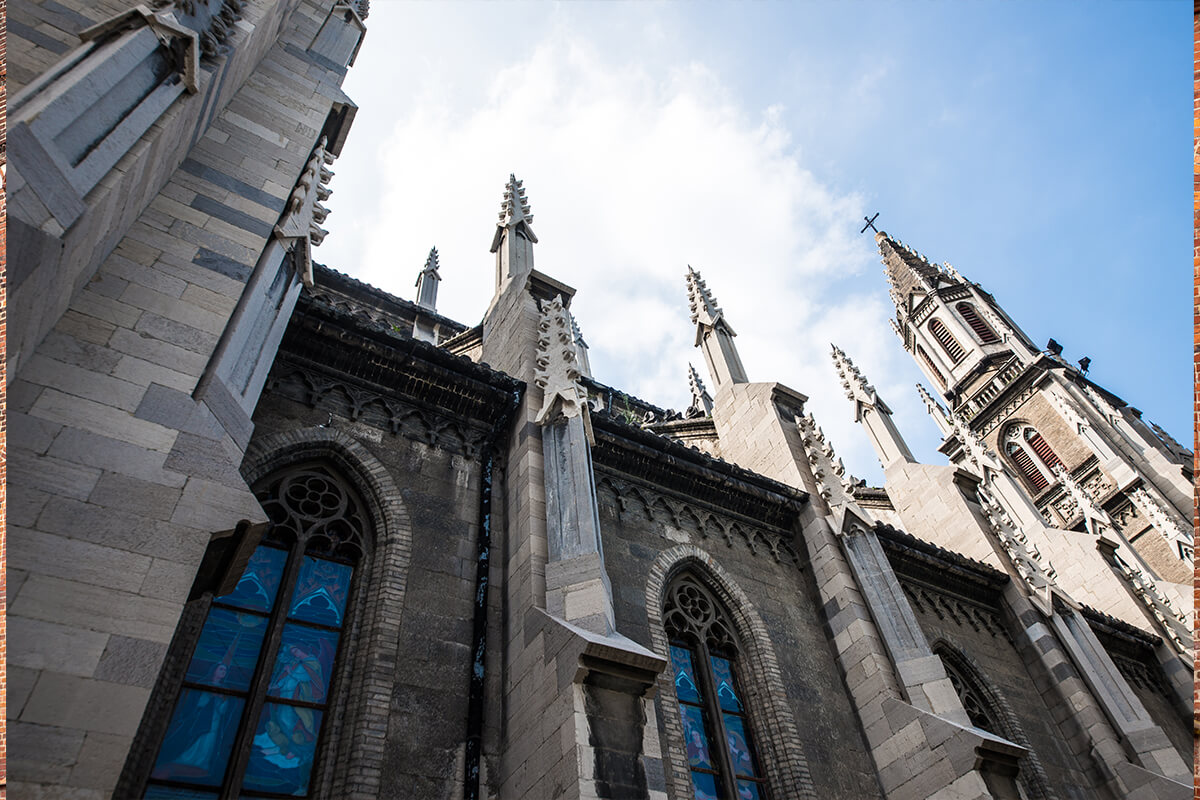
Why a historic building needed an exact replica of its original doors
The library was once known as the heart of its campus. After sitting empty for several years, it is being renovated into an event and gathering space, and the institution made one priority clear: preserve the building’s Tudor Gothic character.
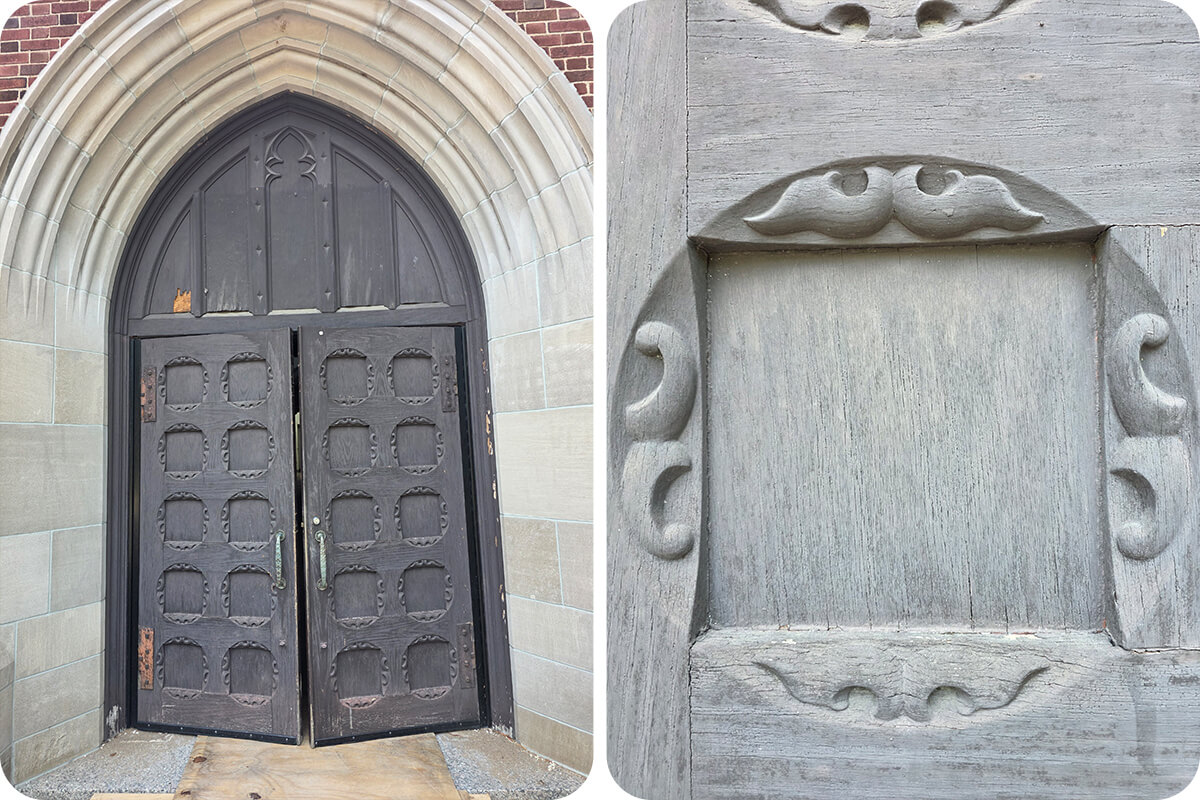
That is where we come in. The project covered the main front entry doors and the two vestibule doors just inside, all built to the same carved design. The original double doors had nearly a century of weather, wear and repairs behind them. Each leaf carries ten hand-carved medallions set in a grid of oak rails and stiles, framed by a pointed stone arch and a carved Gothic transom.
The brief was simple to say and hard to do: make new doors that are identical to the old ones, built to last another hundred years, while the surrounding jamb, trim and transom were refinished to match.
How to Recognize a Tudor Gothic Door?
Gothic architecture is a style born in medieval Europe, recognized by the pointed arch, vertical lines and carved ornament. Its builders wanted every element to pull your eye upward.
In the late 1800s and early 1900s, American universities revived the style so widely that it earned its own name: Collegiate Gothic. Tudor Gothic, the flavor of this library, blends those pointed arches with the warm brick, cut stone and heavy oak joinery of English Tudor buildings.
You can read the whole style in this one entry:
- The pointed arch. The limestone surround steps back in layered moldings, drawing you toward the door.
- The tracery transom. The carved panel above the doors echoes the pointed, cusped shapes of Gothic window tracery.
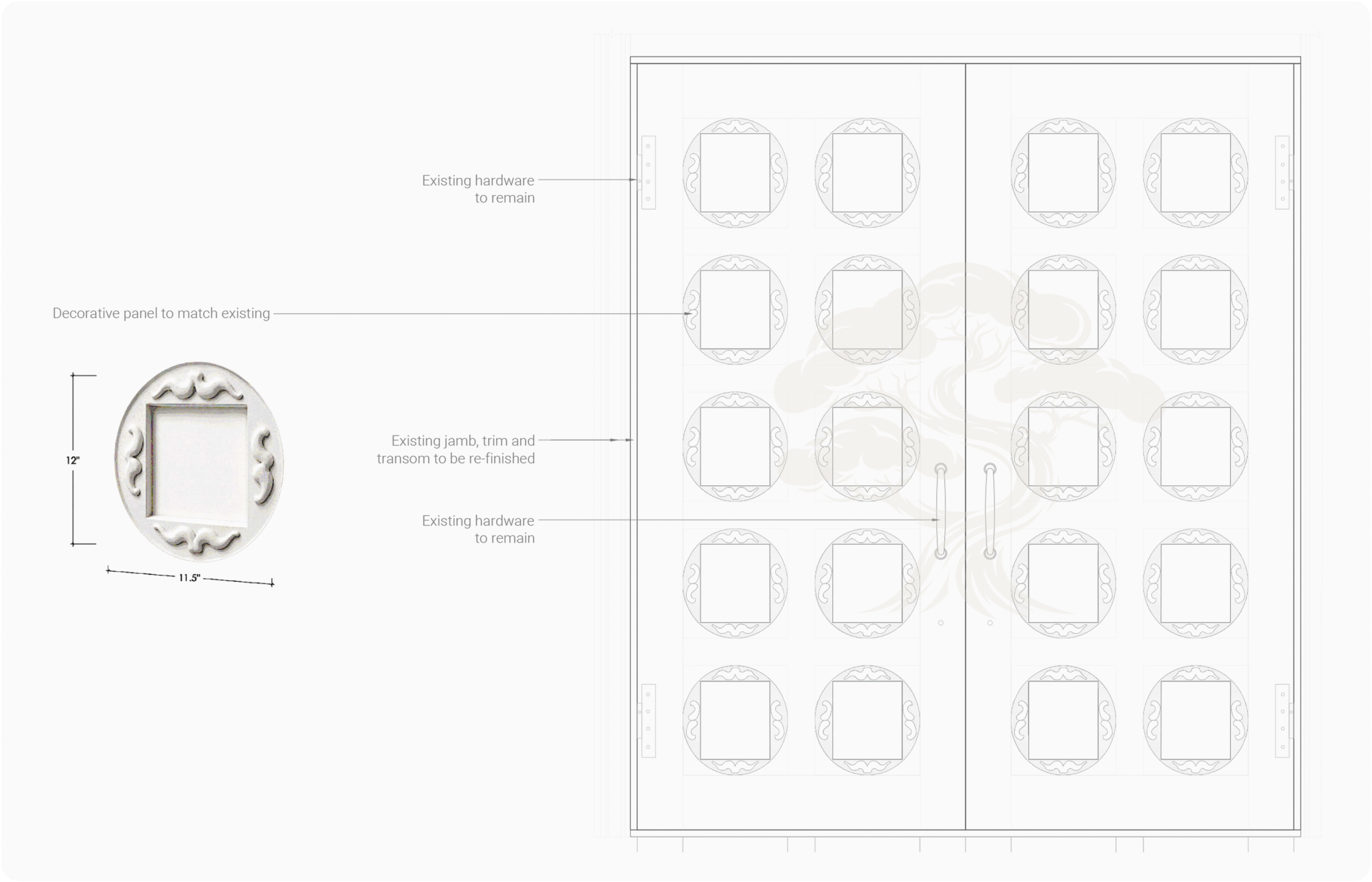
- The carved medallions. Each panel is a square set inside a circle, trimmed with C-scrolls on the sides and paired leaf motifs above and below. It is a rhythm of rigid geometry softened by hand-carved curves.
- The iron hardware. Strap hinges and heavy pulls say “built to last,” which is exactly the message these buildings were meant to send.
Why does this matter in 2026? Because the trend in restoration today is authenticity over approximation. Owners, architects and institutions want the real proportions and real materials, not a door that is merely “in the style of.”
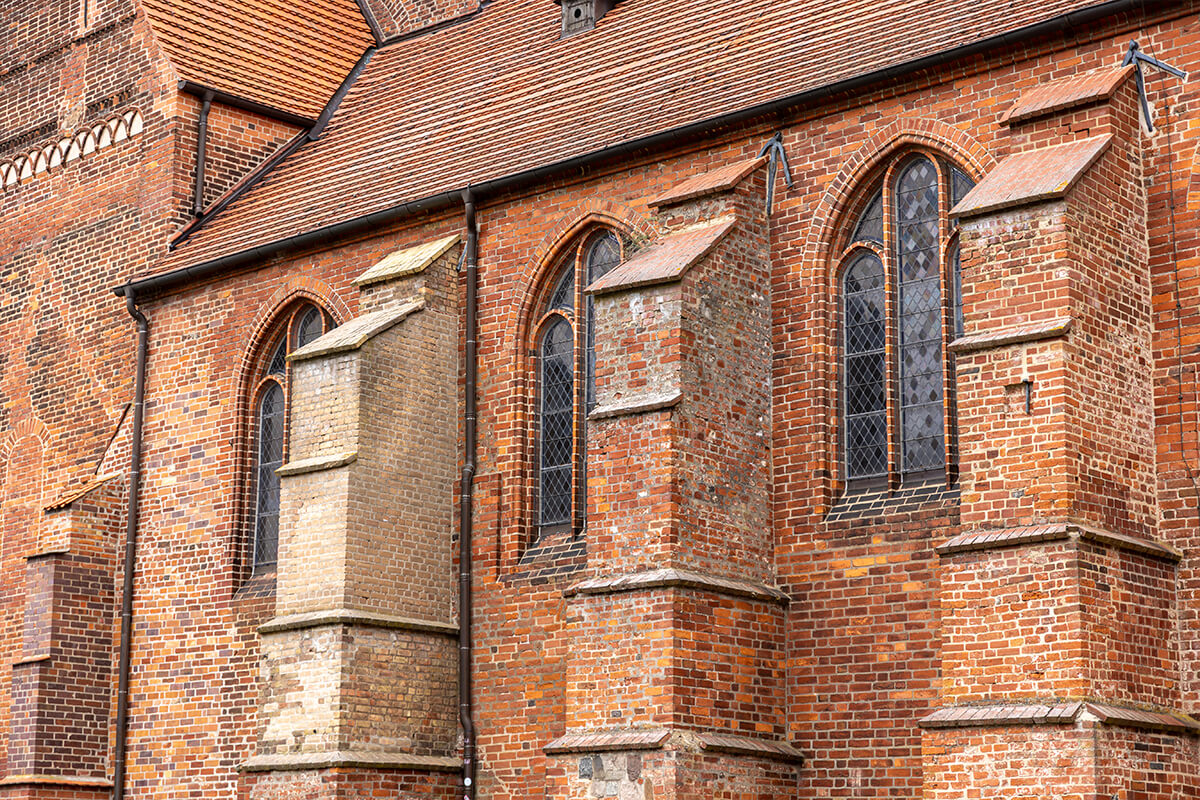
Why historic door replicas are so hard to get right
A historic replica fails in the details, and the details are exactly what people notice. Put a new door next to century-old stone and any shortcut shows.
Here is what makes this work tricky:
- Nothing is standard. Old doors were built by hand, so no two carvings are perfectly alike and nothing matches a catalog size.
- Time changes the original. Wood shrinks, warps and wears. We have to separate the design intent from a century of movement.
- Photos lie. A photo flattens depth. The carvings on these doors rise and fall in soft curves that only show up when you measure the real profile.
- The opening is part of the design. The doors must fit an existing masonry arch and frame exactly, with no room to “adjust the building.”
- Old looks, modern performance. A replica still needs to swing smoothly, seal against weather and handle daily traffic in a public event space.
How we replicated a historic door
We did not work from photos. We took the original door out and brought it into our hands, because an exact match needs the real thing.
- Remove and document. We pulled the original door and recorded every panel, rail, stile and piece of hardware before touching anything.
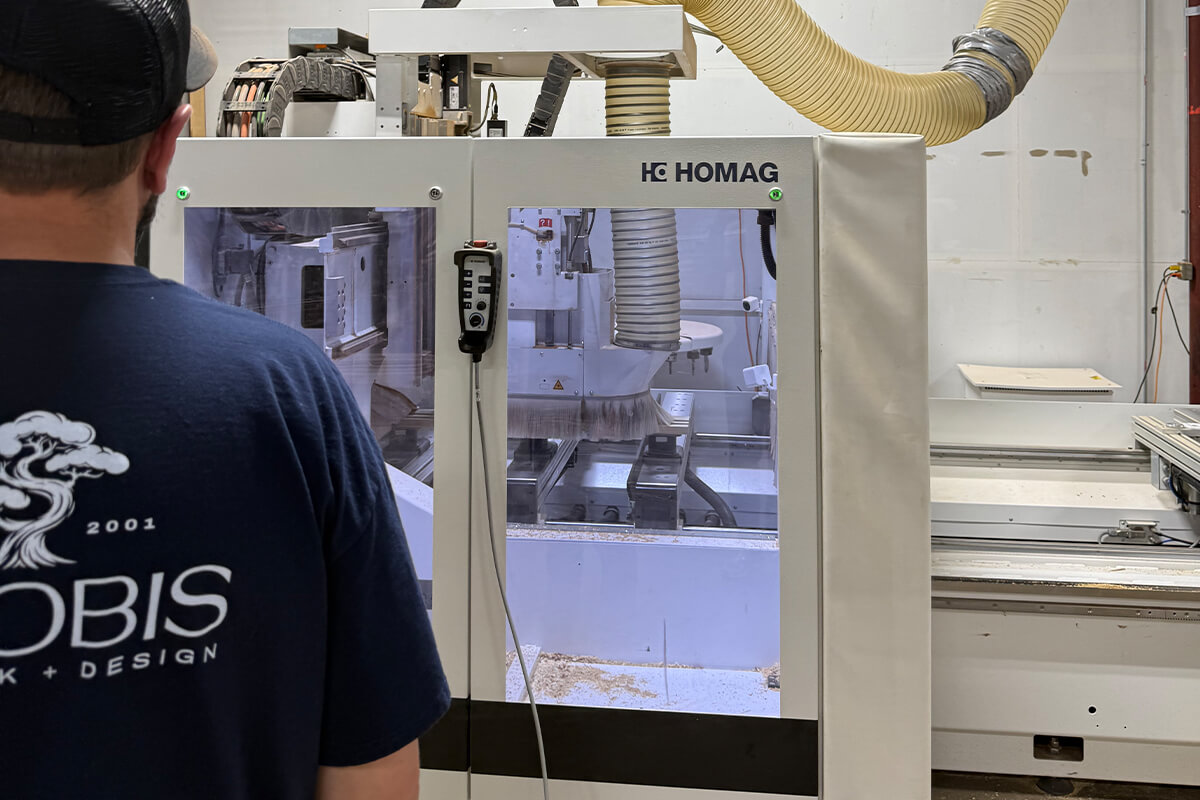
- Scan the carvings. We scanned the carved medallions and moldings to capture their true depth and curves, not just their outline.
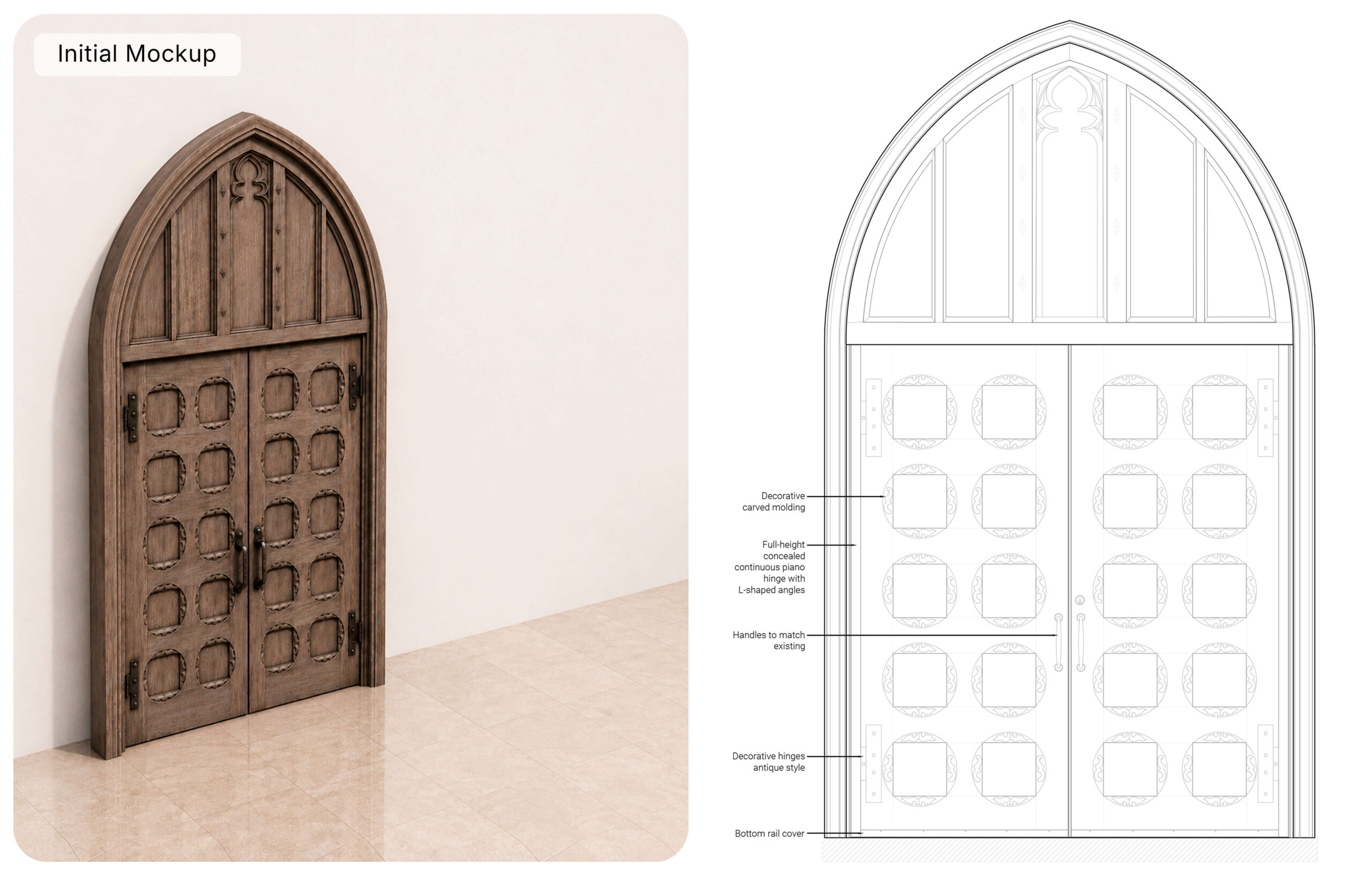
- Draw every profile. Our design team turned those scans into detailed drawings of each molding and motif, then laid out the full elevation: panel spacing, rail heights and the exact width of each leaf.
- Engineer what you don’t see. The decorative antique-style hinges stay for the look, while a full-height concealed piano hinge carries the weight. The handles match the originals, and a bottom rail cover protects the most vulnerable edge.
- Build, carve and install. With the drawings approved, each medallion was carved to match the original, and the finished doors were fitted into the existing stone arch.
This is our favorite kind of project. Design is not only drawing something new. Sometimes it is listening very carefully to what someone built a century ago, and making sure nothing gets lost in translation.
Why we chose stained white oak over other woods
We built these doors in white oak, stained to match the deep, aged tone of the originals. Before deciding, we compared four woods against what a Gothic entry door really needs: period accuracy, weather resistance, carving quality and how it takes stain.
| Wood | What It Does Well | Why It Wasn't the Right Fit Here |
|---|---|---|
| Red Oak | Classic oak grain, easy to source | Open pores wick in water, so it rots faster outdoors, and it can turn pinkish under stain |
| Mahogany | Stable, weather resistant, carves beautifully | Not true to Tudor Gothic joinery, and its grain reads differently from the original oak |
| Sapele | Durable and more affordable than mahogany | Its striped ribbon grain would look modern next to the original woodwork |
| Walnut | Rich color, fine carving detail | Softer and costlier for a large exterior door, and too dark to match the original tone |
White oak checked every box. Oak is the traditional wood of Gothic and Tudor doors, so it is the honest choice for this style. Its closed-grain structure resists moisture and rot, which is why it has been used for boats and barrels for centuries. It carves cleanly, holds crisp detail and takes stain evenly, so every medallion reads sharply under the finish through Missouri summers and winters.
Decide between restoring or replicating a historic door
Restoration repairs the original piece; replication builds a new one identical to it. Both are valid, and the right choice depends on what is left to save.
Restoration makes sense when the structure is sound and the damage is local: a split panel, a worn finish, loose joints. Replication is the better path when rot, warping or past repairs have compromised the door, or when it must meet today’s demands for security, weather sealing and heavy use. For this library, a replica lets the building keep its original look while the doors stand up to life as a busy event venue.
Need to replicate a historic door?
If you have a historic door, window, mantel or molding that needs to be saved or recreated, we would love to see it.
Historic door and millwork replicas in St. Louis
Scobis Millwork + Design builds historic replicas for homes, churches, campuses and landmark buildings across St. Louis and St. Charles. Our region is full of architecture worth protecting, from Victorian rowhouses to Gothic Revival churches, and much of it depends on woodwork that no catalog can supply.
What sets our work apart is that design and production live under one roof. The same team that scans and draws your original also engineers and builds the replica, so no detail gets lost between the drawing and the finished piece.
FAQs: Historic Door Replication
Can you make an exact copy of an old wooden door?
It all comes down to the oak’s undertone. Honey or orange-toned oak looks best with terracotta, olive, and warm whites. Natural white oak looks best with sage, beige, and greige. With either one, skip the cool blue-grays.
What wood is best for a historic door replica?
Usually the species the original used. For Gothic and Tudor doors that is oak, and white oak adds excellent resistance to moisture and rot.
Can a replica door keep the original hardware?
Often, yes. We can reuse original pieces or match them, and hide modern hinges and seals so the door looks period-correct but performs like new.
Can you replicate a historic door from photos alone?
Photos help, but they flatten carved depth and distort proportions. For an exact match we work from the original door, or from careful on-site measurements when it can’t be removed.
How long does it take to replicate a historic door?
It depends on the size and how much hand carving is involved. We set the schedule after reviewing the original, since design, drawings and approvals come before production starts.
It depends on the size and how much hand carving is involved. We set the schedule after reviewing the original, since design, drawings and approvals come before production starts.
Do you work outside St. Louis?
We are based in the St. Louis area and serve the Midwest and the surrounding region. Reach out about projects farther away.
Contact Our Team!