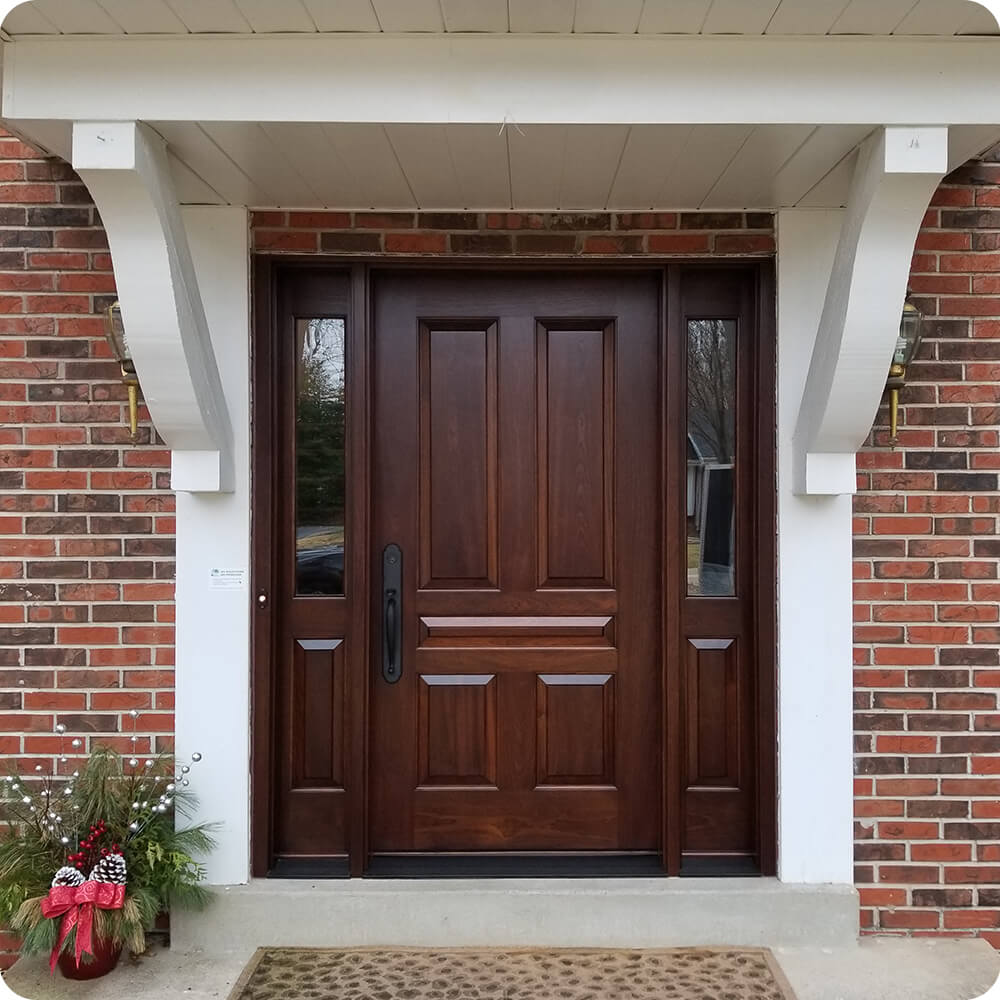
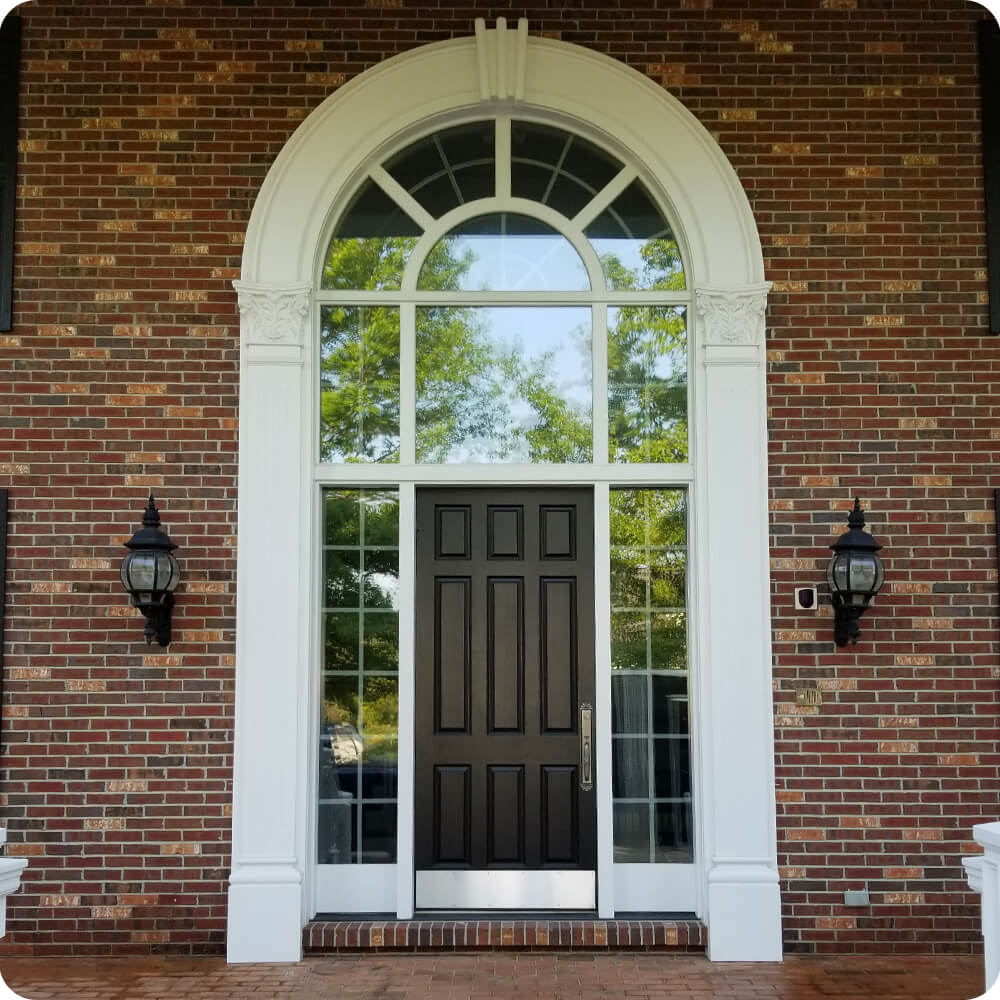
The original entry was a single dark composite door with narrow sidelights and a classic nine-lite sunburst transom above, a solid, traditional design, but a single door under an arch this substantial left a lot of that opening's width doing nothing but framing glass. The dark stained-brown fiberglass door, while well-built, didn't carry the same warmth as the surrounding brick and white column trim.
Project Story
The thinking behind the work
The Starting Point
The Thinking
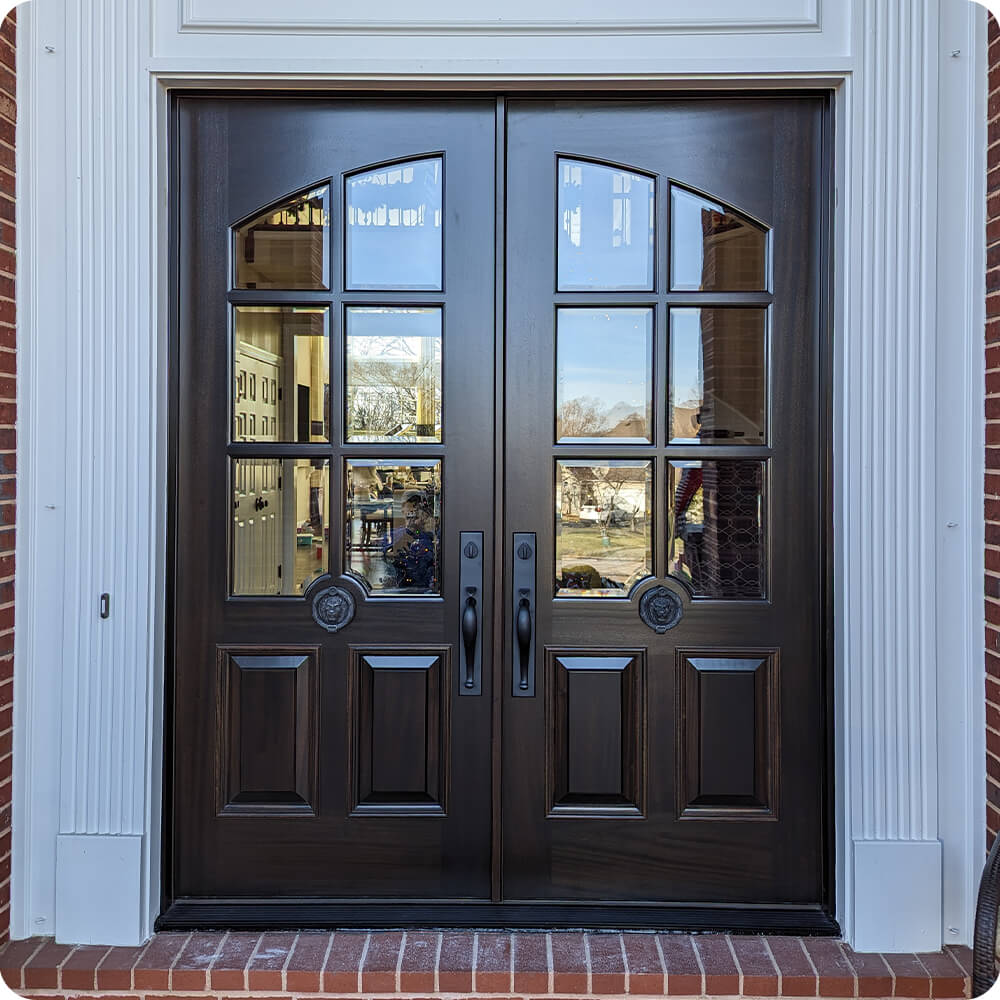
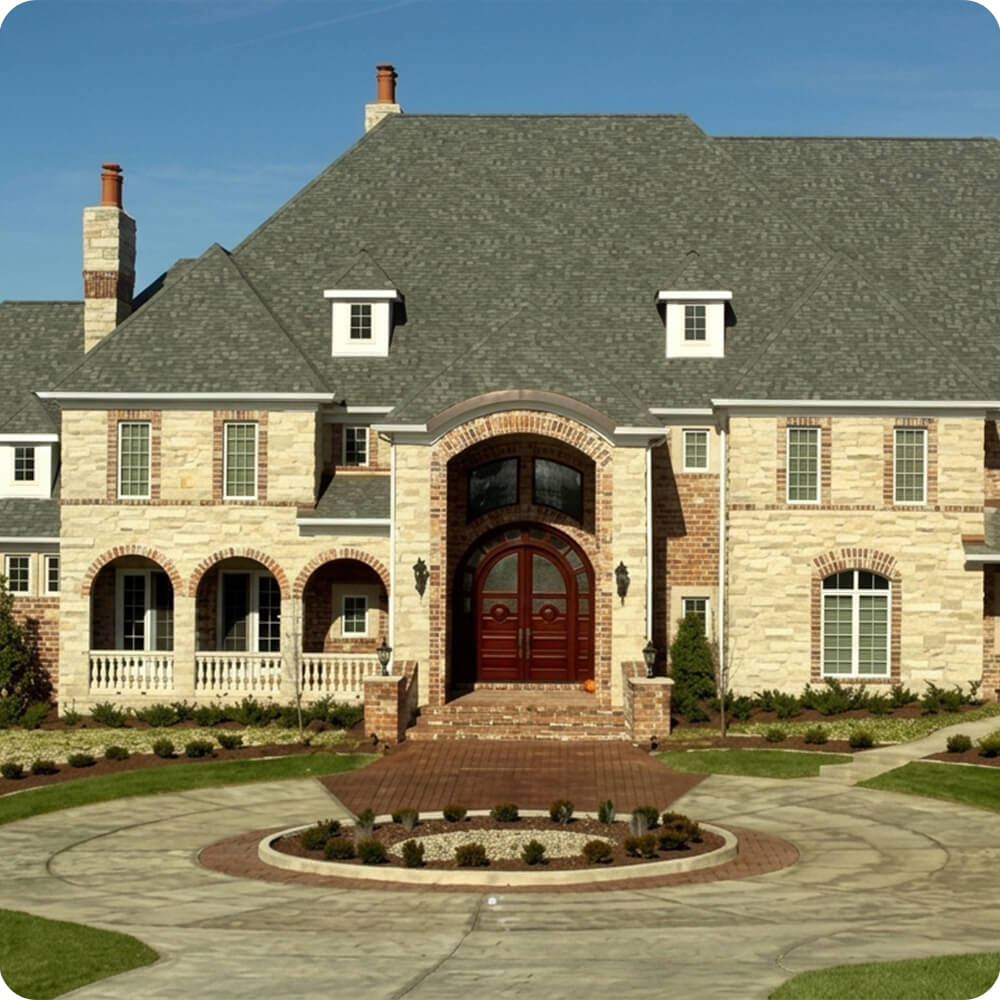
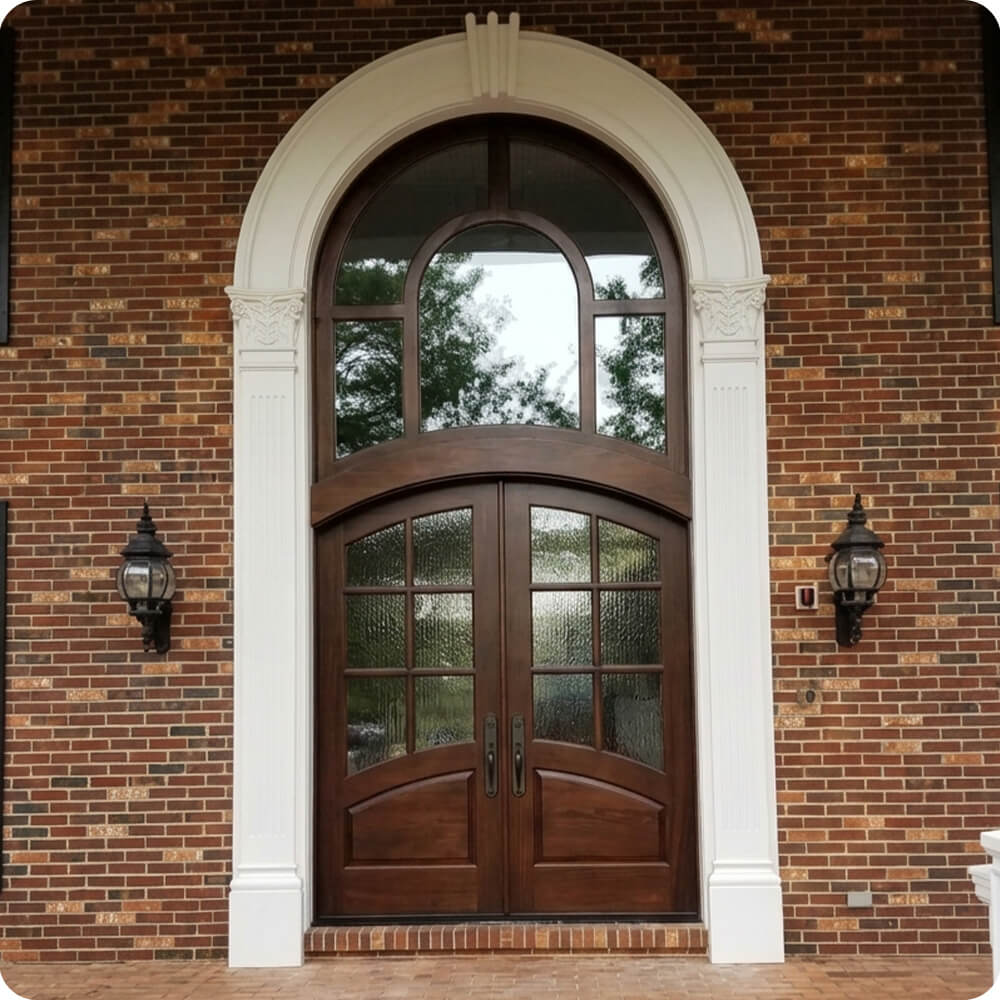
An arched opening flanked by fluted columns and topped with ornate capitals deserves a door that fills more of that width and matches the craftsmanship overhead. Moving from a single door to a true double door widened the entry considerably, using the whole arch as the doorway instead of routing most of its width through fixed sidelights. The upper glass carries the same arched geometry as the transom, so the curve reads continuously from the peak of the arch straight down into the doors, rather than stopping at a flat header. Below that, a divided grid of textured glass brings privacy and pattern to the doors' upper half, sitting above a single arched raised panel per leaf.
The Execution
Built as a double mahogany door with an arched upper glass section carrying a segmented, sunburst-style pattern that echoes the transom above, filled with a divided grid of textured privacy glass. Each leaf sits on a single arched raised panel below. Finished in a deep, warm mahogany stain. Hardware is a matched pair of curved pull handles in a dark bronze finish, mounted on both leaves.
The Result
The entry now uses the full width of its arched opening rather than routing most of it through fixed sidelights, and the continuous arch line from transom to door glass ties the whole composition together. The mahogany stain and bronze hardware bring a warmth and weight to the entry that the original dark composite door didn't carry, while still keeping the same classic sunburst transom and column surround that made the entry distinctive in the first place.
Specification
Unit Size
6'-0" x 9'-0"
Panel Thickness
1¾"
Joinery
Mortise-and-tenon, no mechanical fasteners.
Glass
Clear glass in a radiating fan pattern from the arch peak, continued through the transom, door, and both sidelights
Finish System
Marine-grade exterior finish, six sides
Hardware
Matched curved pull handles, dark bronze finish
Installed By
Scobis
Common Questions
Why replace a single door and sidelights with a true double door?
The original layout put most of the entry's width into fixed sidelights rather than the door itself. A true double door uses that same arched width as an actual doorway, making the entry more functional and giving the home a wider, more welcoming presence under the existing arch.
Why carry the arch shape from the transom into the door's glass?
The original transom already had a distinctive sunburst arch pattern worth keeping. Extending that same arched geometry down into the doors' own glass means the curve reads as one continuous shape from the peak all the way to the threshold, rather than stopping abruptly at a flat-topped door underneath a curved window.
Why go from a dark composite finish to a stained mahogany door?
The dark composite door, while sturdy, didn't have the same warmth as the surrounding brick and painted column trim. A rich mahogany stain brings real wood tone and grain into the entry, giving it a more custom, elevated look in place of a manufactured finish.
More Projects Like This