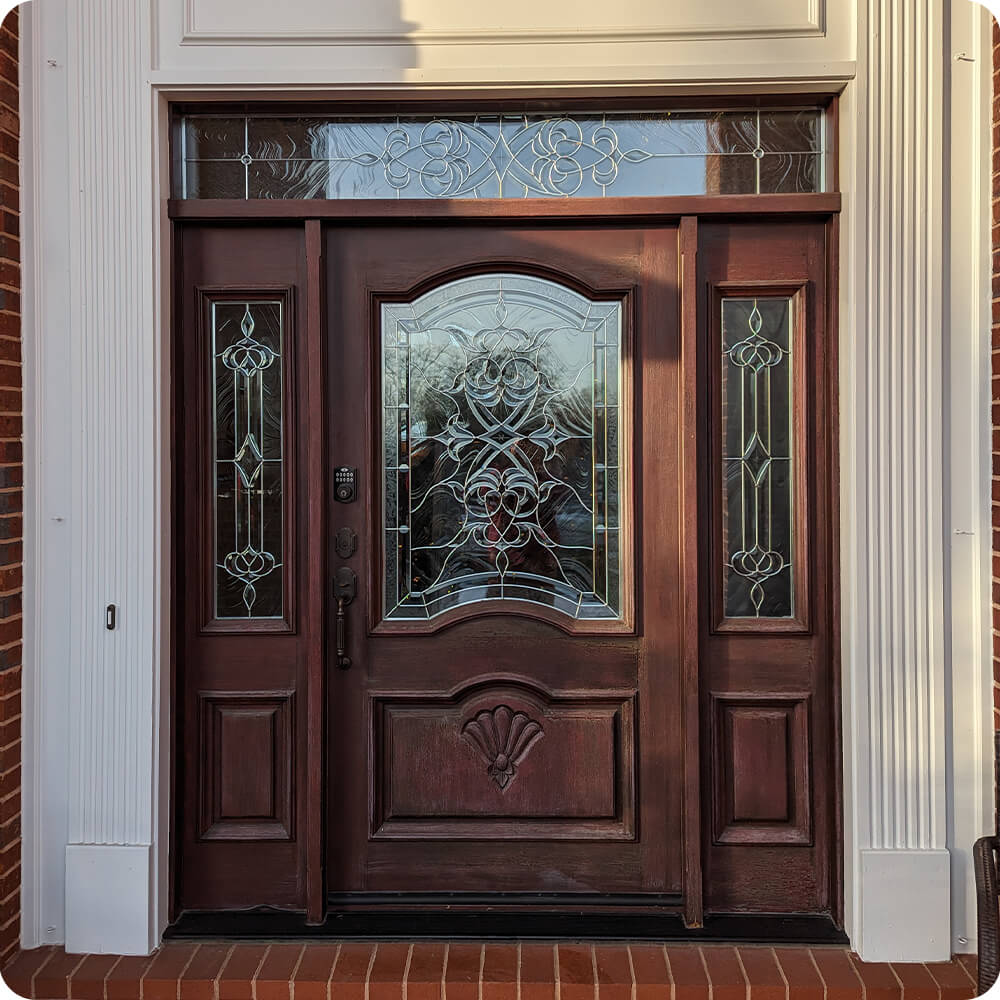
The original entry was a single door with an ornate arched leaded-glass panel, an intricate scrollwork design centered in the upper portion, flanked by narrower matching leaded sidelights, and topped with a fanned transom carrying its own leaded pattern. It's a genuinely detailed, traditional design, but a single door under a two-story white surround this substantial left most of the width working through decorative sidelights rather than the door itself.
Project Story
The thinking behind the work
The Starting Point
The Thinking
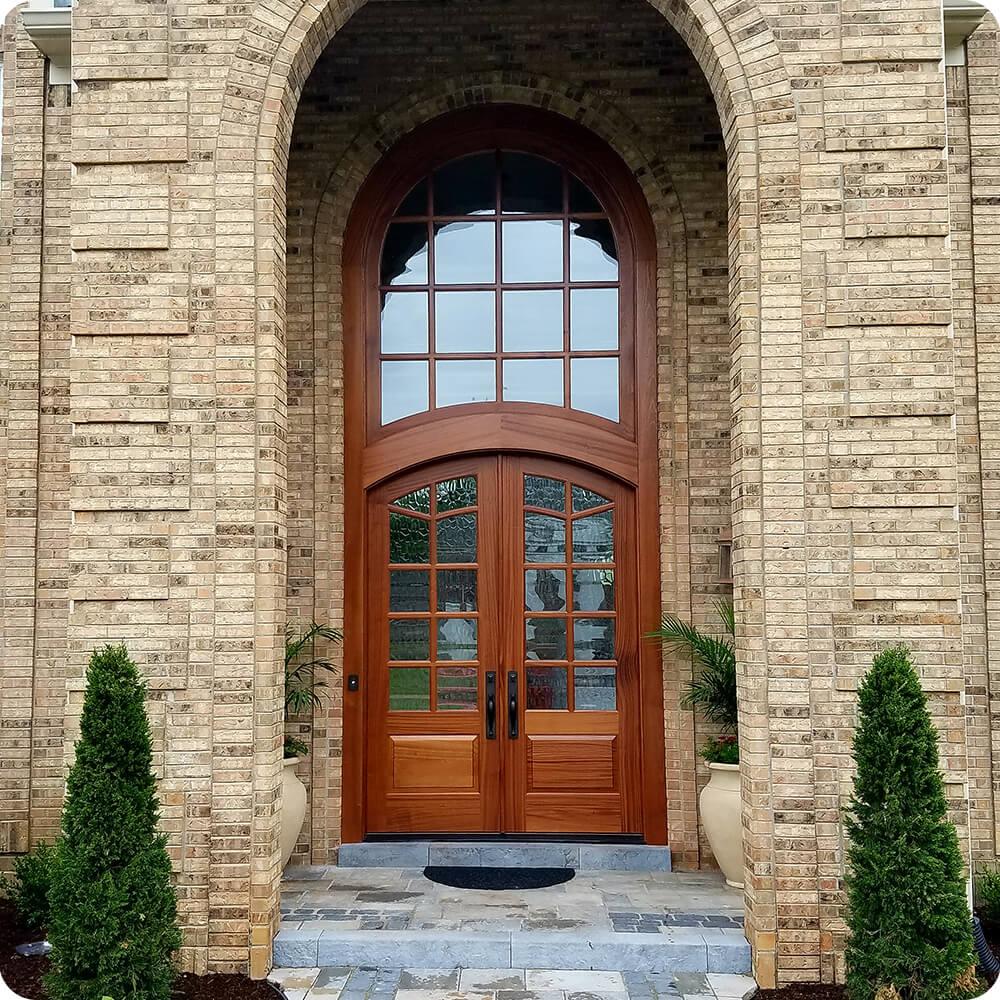
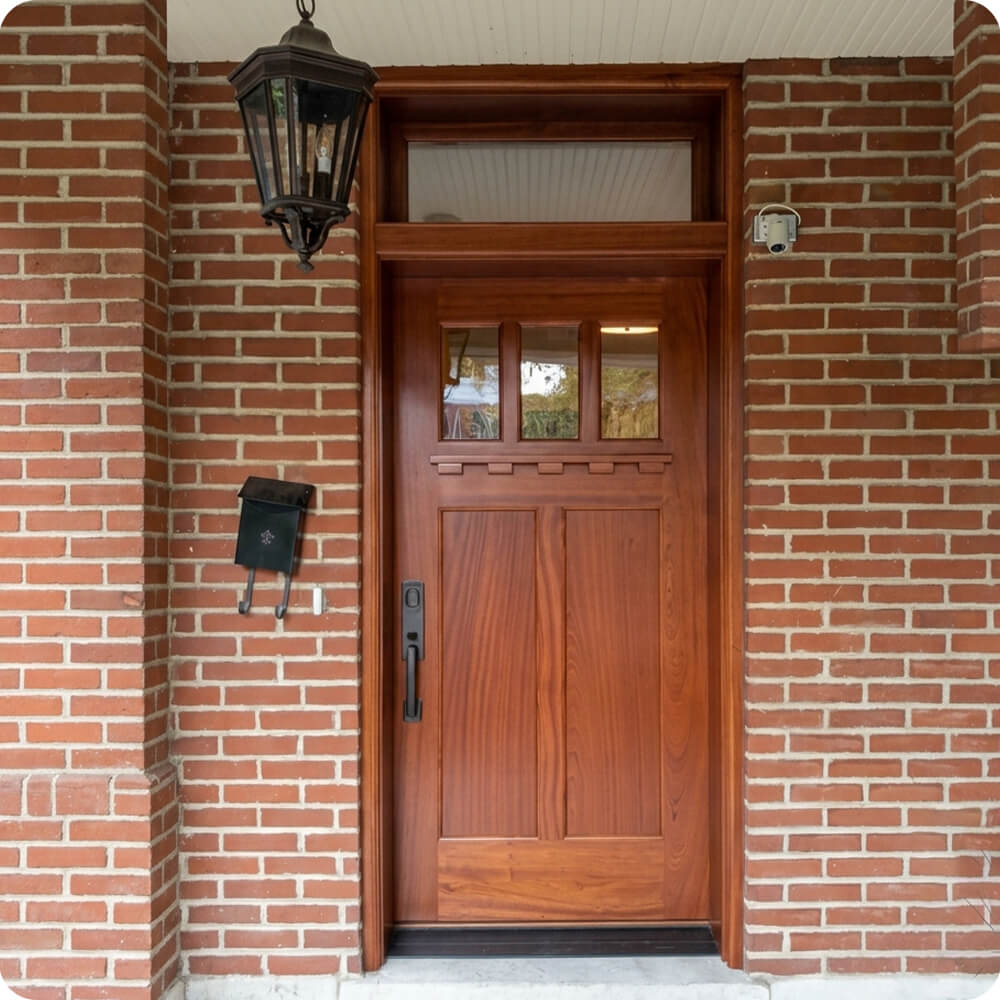
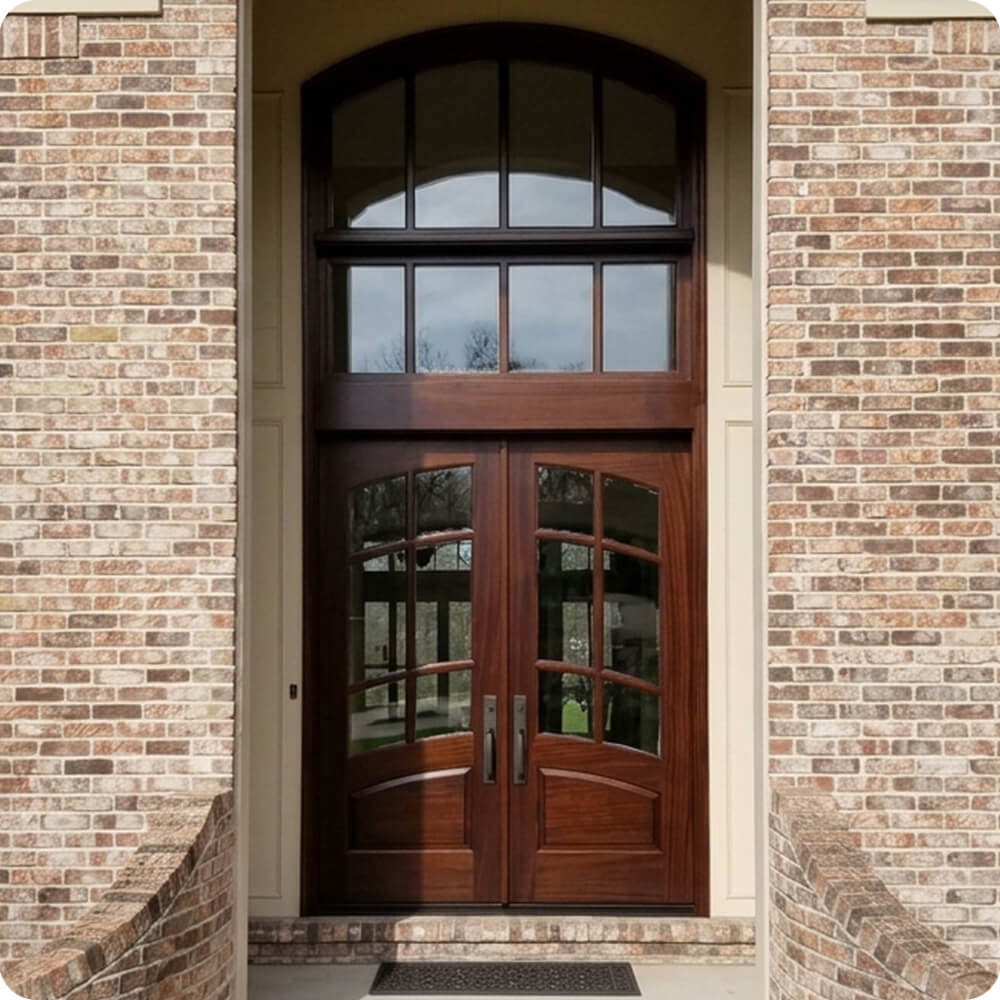
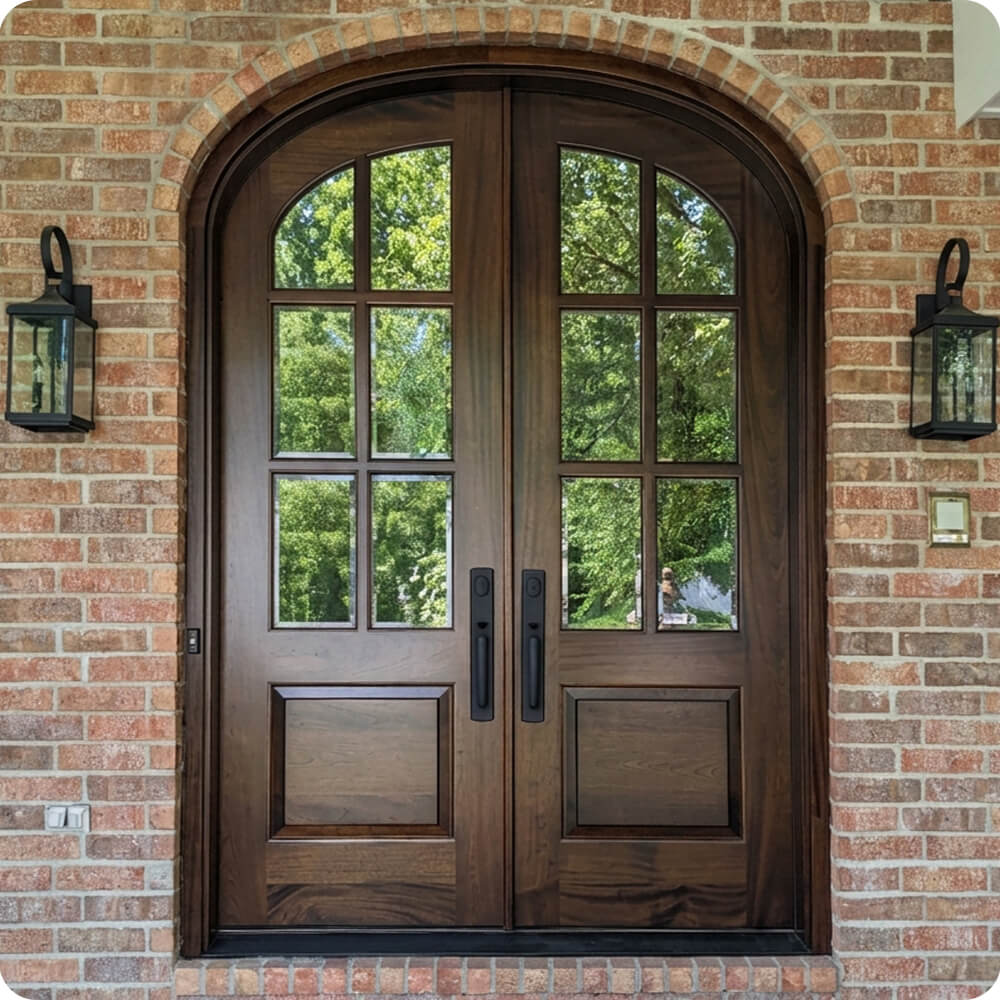
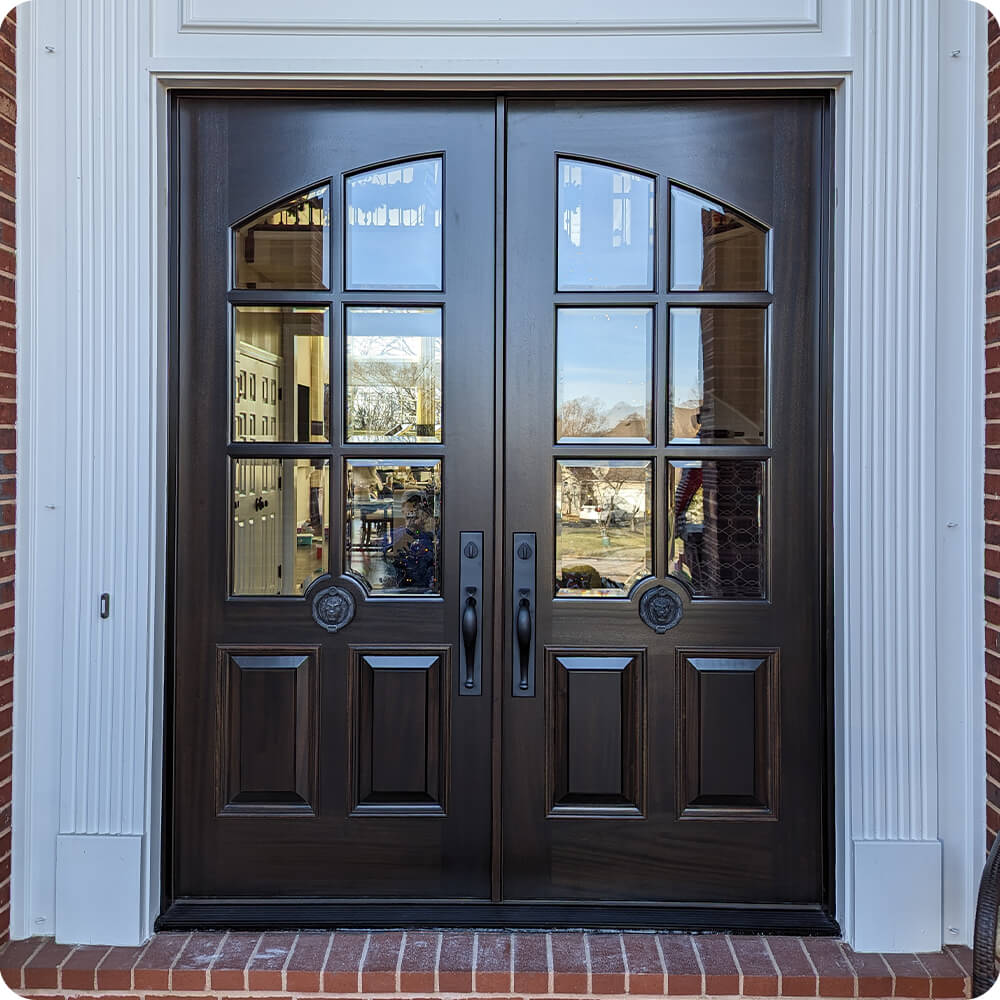
The tall white surround and fanned transom had real presence, and a single door plus sidelights wasn't using that full width as an entrance. Moving to a true double door lets the whole opening function as the doorway, with each leaf carrying its own arched 6-lite glass grid, simpler and more architectural than the original's dense scrollwork, letting more daylight through in a cleaner pattern.
The Execution
Built as a double door filling the full opening, each leaf glazed with an arched 6-lite glass grid and fitted with a decorative cast lion-head medallion below the glass line. Finished in a deep, rich espresso stain. Hardware is a matched pair of ornate pull handles with a thumb-latch mechanism, mounted at the center of each leaf.
The Result
The entry now uses its full width as a genuine double-door statement, with a cleaner 6-lite glass pattern replacing the denser leaded scrollwork of the original. The lion-head medallions carry forward the same ornamental tradition in a new form, and the matched pull handles give both doors equal, coordinated presence.
Specification
Unit Size
6'-6" x 8'-6"
Panel Thickness
1¾"
Joinery
Mortise-and-tenon, no mechanical fasteners.
Glass
Clear glass, arched 6-lite grid per leaf
Finish System
Marine-grade exterior finish, six sides
Hardware
Matched pair of ornate pull handles with thumb-latch mechanism, decorative cast lion-head medallions on each leaf
Installed By
Scobis
Common Questions
Why replace a single door with ornate leaded glass with a simpler double-door design?
The original single door and sidelights put most of the entry's width into decorative glass flanking the door rather than the door itself. A true double door uses that full width as an actual doorway, and a cleaner 6-lite grid still brings in daylight without the density of the original leaded scrollwork.
What's the purpose of the lion-head medallions on the new doors?
They carry forward the same ornamental, decorative tradition as the original leaded glass, but in a different form, a cast detail rather than glasswork. It keeps a sense of craftsmanship and character on the door even with a simpler glass pattern above.
Why add matched pull handles instead of a single keyed deadbolt setup?
With two operating leaves, matched hardware on both sides gives the entry a coordinated, symmetrical look rather than one functional lock and one plain door edge. Ornate pull handles also suit the traditional character established by the medallions and the white column surround.
More Projects Like This