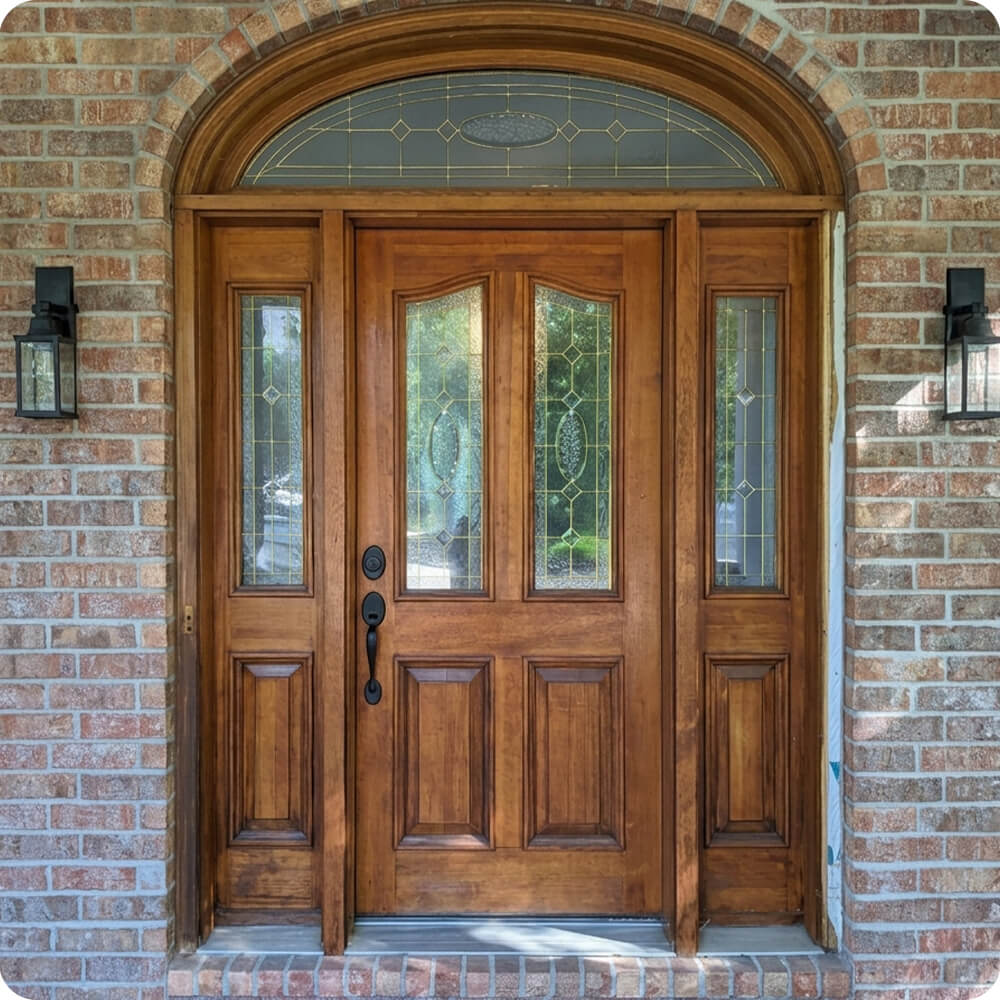
A soldier-course brick arch frames this entry, and it's the best feature on the front of the house. Inside it, the woodwork had become a puzzle of parts: a single door, two sidelights, four vertical posts, a transom bar, and a half-round transom, all in a honey-orange finish that had gone blotchy near the base. Nearly every piece of glass carried brass-caming leaded work, with diamond jewels, etched ovals, and textured backgrounds, so the eye had nowhere to rest.
Project Story
The thinking behind the work
The Starting Point
The Thinking
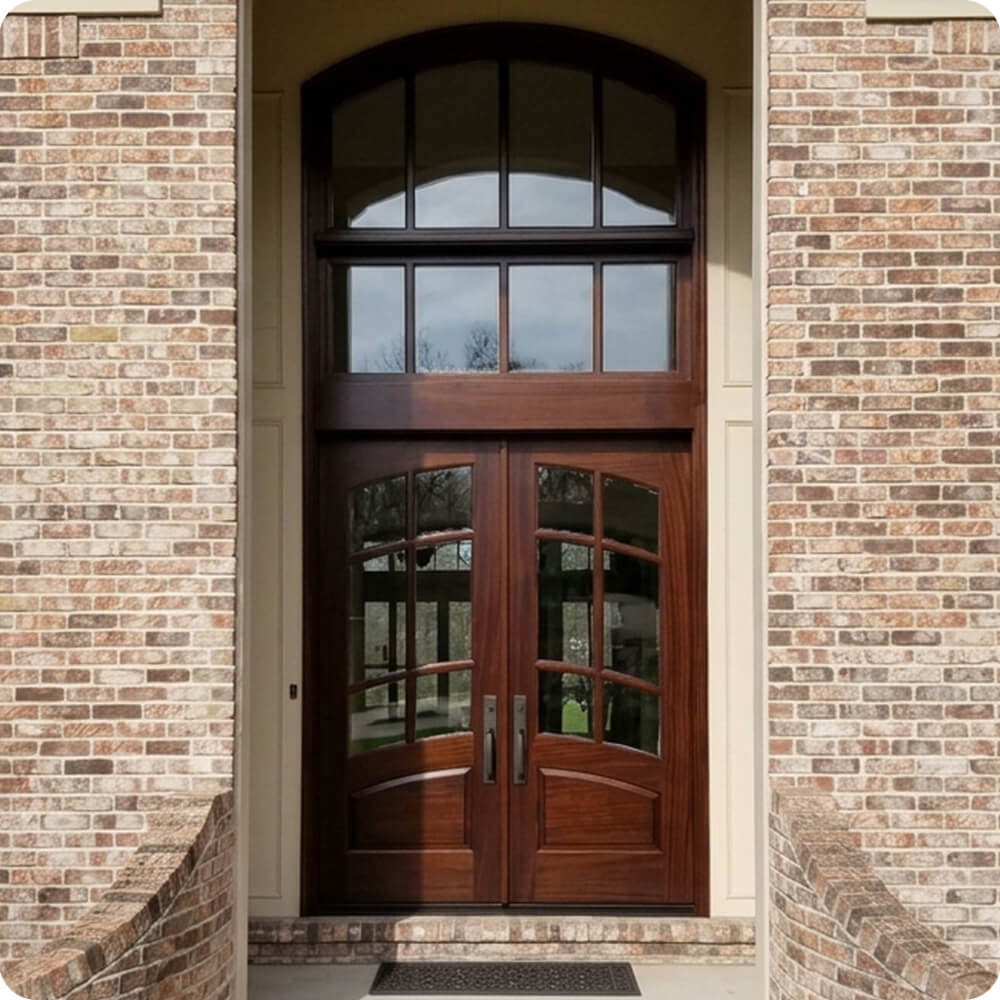
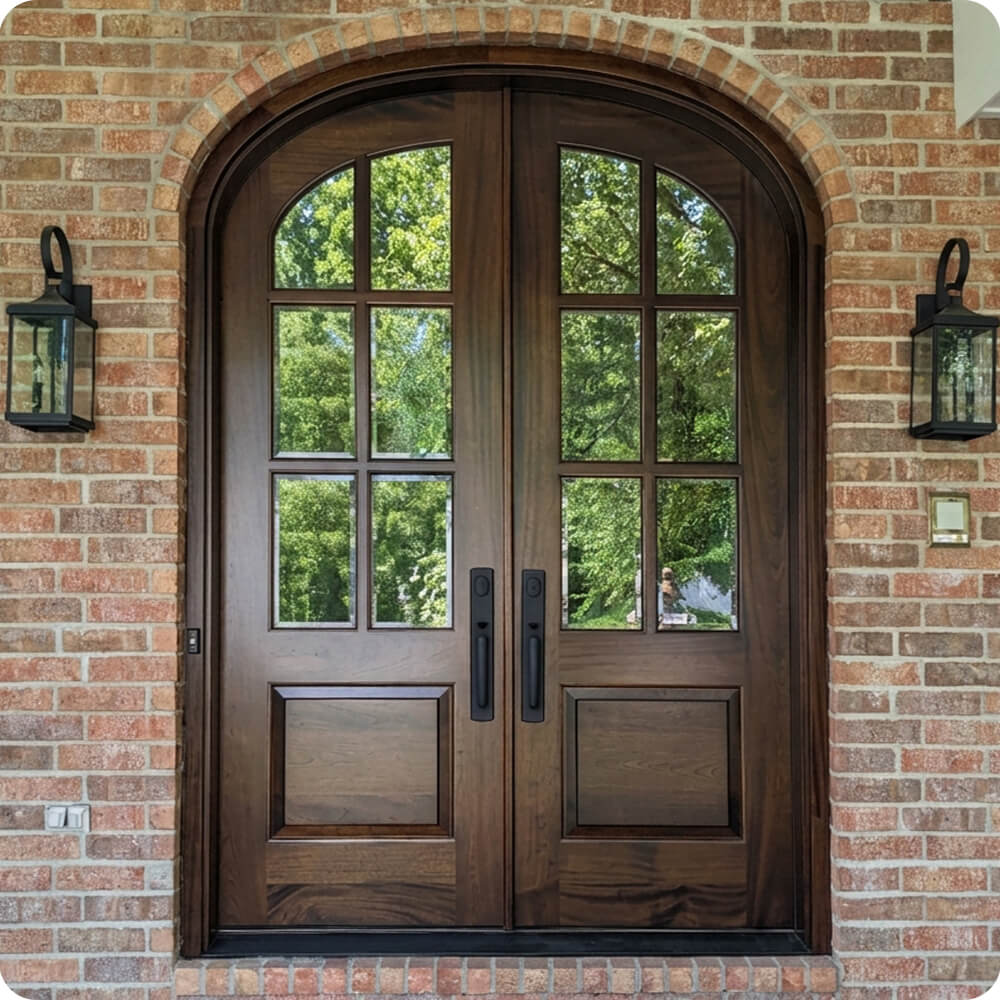
The brick arch drew one continuous curve, and the new design set out to match it with one continuous piece of woodwork. A pair of arch-top leaves fills the full masonry opening, so the curve of the brick and the curve of the door now run parallel from spring line to crown. The glass went the other way from before: instead of ornate leaded patterns, clear beveled lites in a simple divided grid. The bevels catch light at the edges and give the glass sparkle without clutter. The top two lites of each leaf follow the arch, echoing the brickwork above. The finish shifted too.
The Execution
The pair is built in solid mahogany, 1¾" thick, with mortise-and-tenon joinery. It's stained a deep walnut-brown and sealed with an exterior clear topcoat that brings out the ribbon figure in the stiles and panels. Each 2'-11" leaf carries six clear beveled insulated lites, two across and three high, with the top pair curving to follow the arch. A single raised panel sits below the lock rail. The door and its arched frame are built as one assembly that fills the brick opening and closes the old gap at the jamb. Full-plate matte black handlesets with thumb latches and keyed deadbolts are mounted on both leaves, over a dark bronze threshold. The removal and installation were completed in a single day.
The Result
The arch finally has a door that follows it. The woodwork rises straight from the sill to the crown without a single transom bar, the beveled glass stays clear and bright, and the symmetrical pair centers the whole entry between the lanterns. The dark mahogany deepens the warmth of the brick instead of competing with it. A layered, busy opening has become one clean, confident arch.
Specification
Unit Size
6'-6" × 8'-11"
Panel Thickness
1¾"
Joinery
Mortise-and-tenon, no mechanical fasteners.
Glass
Clear beveled insulated glass, six lites per leaf with arch-top upper lites
Finish System
Multi-coat stain with exterior clear topcoat
Hardware
Full-plate matte black handlesets with thumb latch and keyed deadbolt, both leaves
Installed By
Scobis
Common Questions
Why turn a door, sidelights, and transom into an arched double door?
Every post and transom bar broke the brick arch into smaller pieces. An arch-top pair fills the whole opening with a single shape that follows the curve of the masonry, so the entry reads as one architectural element instead of a collection of parts.
Why clear beveled glass instead of leaded glass?
The old leaded patterns were ornate and busy, and they appeared on every piece of glass at once. Clear beveled lites keep the entry bright and simple, and the beveled edges add a quiet sparkle that suits a traditional door without cluttering it.
Why a darker stain than the original?
The original honey-orange tone fought with the red and buff brick. A deep walnut-brown sits naturally against the masonry, lets the grain show, and ties the door to the black lanterns and hardware.
More Projects Like This