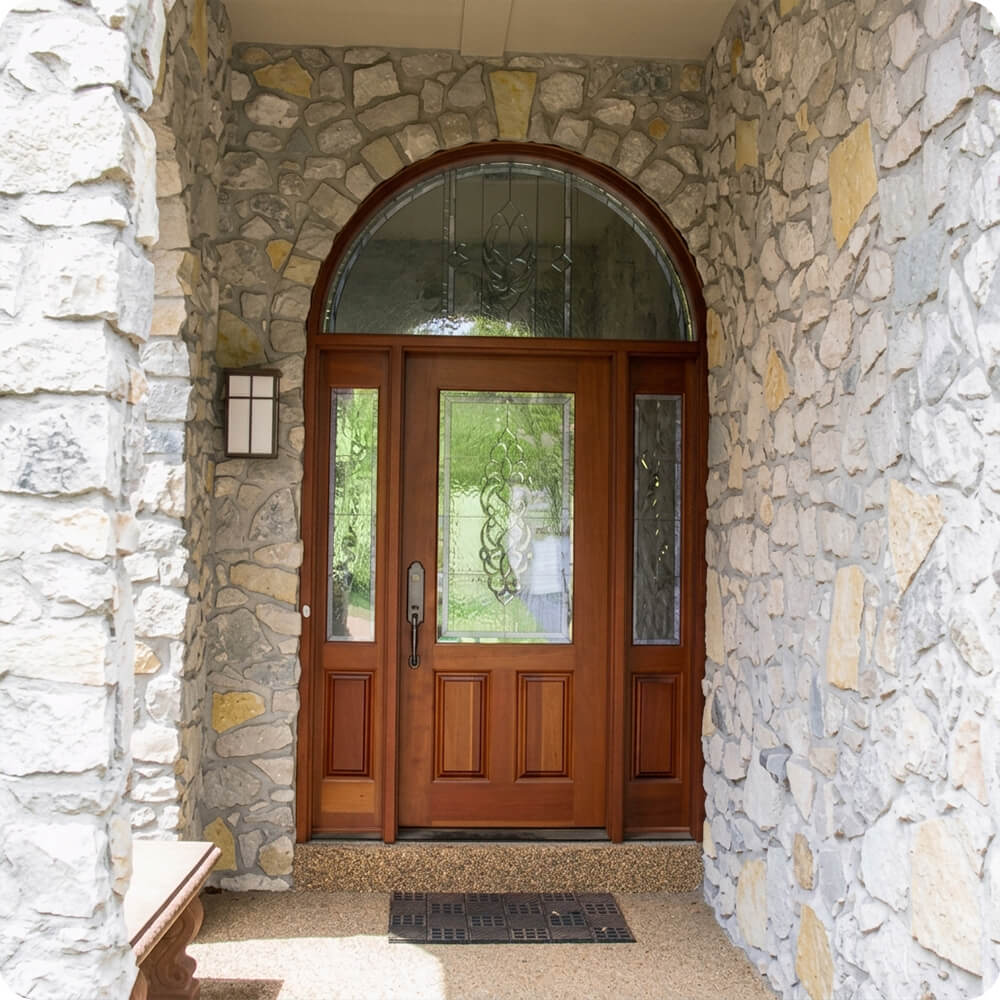
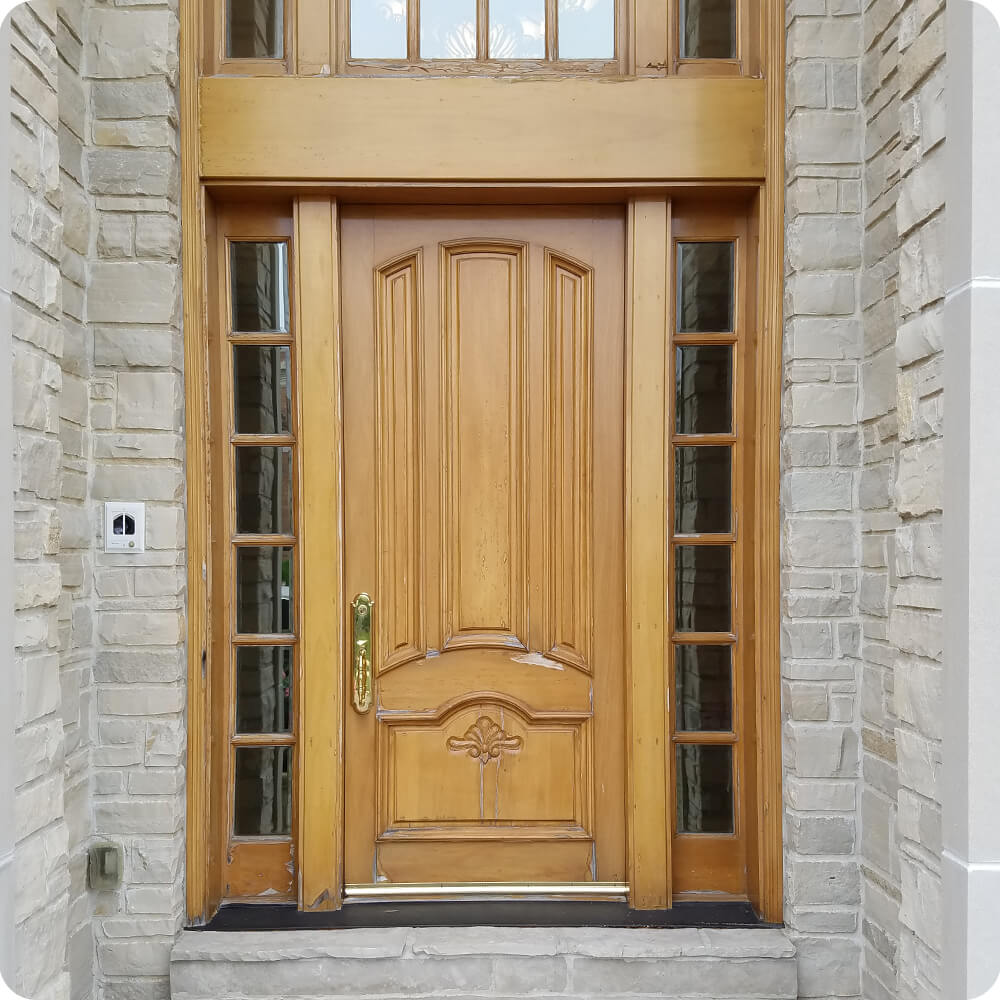
The door itself was already well-built, a three-panel arched top over a lower carved panel with an applied floral medallion, flanked by matching five-lite sidelights and topped with a multi-pane transom. But the finish had failed. A light golden stain had gone patchy and worn, with visible chipping and cracking along the door's stiles and rails where years of sun and weather had broken down the old finish coat. It was a good door wearing a finish that could no longer protect it.
Project Story
The thinking behind the work
The Starting Point
The Thinking
When the underlying door, panel work, and glass configuration are all still sound, the right move isn't to replace the whole unit, it's to strip back to bare wood and refinish properly. The light golden tone wasn't holding up to direct exposure, so the design moved to a deeper, richer mahogany-red stain, which does two things at once: it reads as a more current, elevated color, and a darker stain with a quality topcoat typically holds up longer against UV breakdown than a light finish does.
The Execution
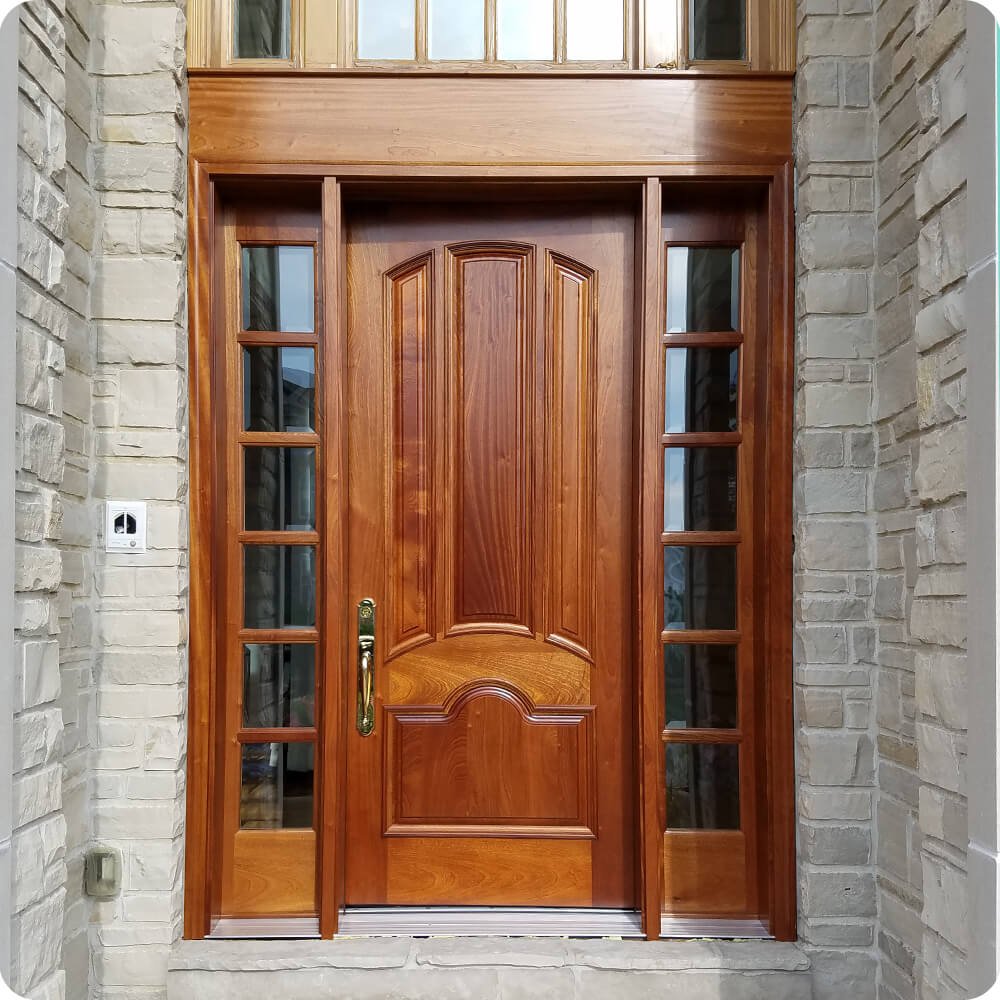
The existing door, sidelights, and transom were stripped down and refinished in a deep mahogany-red stain with a fresh protective topcoat, replacing the failed golden finish entirely. The door's three-panel arched-top design and the lower panel's carved floral medallion were preserved as-is
The Result
The same door that was showing real wear now looks like a rich, current entry, with a finish built to hold up better than the one it replaced. Because the structure, glass, and hardware all carried over unchanged, the cost and scope stayed proportional to what the door actually needed.
Specification
Unit Size
5'-6" x 8'-0"
Panel Thickness
1¾"
Joinery
Mortise-and-tenon, no mechanical fasteners.
Glass
Five-lite clear glass sidelights, multi-pane transom
Finish System
Full strip to bare wood, new mahogany-red stain, marine-grade topcoat, six sides
Hardware
Existing brass handleset and lever, retained and reinstalled
Installed By
Scobis
Common Questions
Why refinish the existing door instead of replacing it with a new one?
The door's structure, panel carving, and glass configuration were all still in good condition, the problem was the finish, not the door itself. Refinishing preserves a well-built door and its original details while fixing the actual issue, at a fraction of the cost of a full replacement.
Why switch from a light golden stain to a darker mahogany tone?
Light stains tend to show wear and UV breakdown faster than darker ones, and this door's finish had already cracked and chipped from sun exposure. A deeper mahogany-red stain reads as more current and typically holds up longer under the same conditions, addressing both the look and the durability problem at once.
Why keep the original brass hardware instead of updating it?
The handleset wasn't the issue, it was in solid working condition and matched the door's traditional style. Replacing hardware that isn't broken just adds unnecessary cost; keeping it let the budget go entirely toward properly fixing the finish, which was the actual problem.
More Projects Like This