A modern dark-brick home called for an entry that could match its clean, minimalist architecture, no traditional trim, no applied moulding, just a large single slab set into a simple rectangular opening. The dark charcoal brick and matte black hardware throughout the home's exterior established a restrained, contemporary palette that the door needed to fit into.
Project Story
The thinking behind the work
The Starting Point
The Thinking
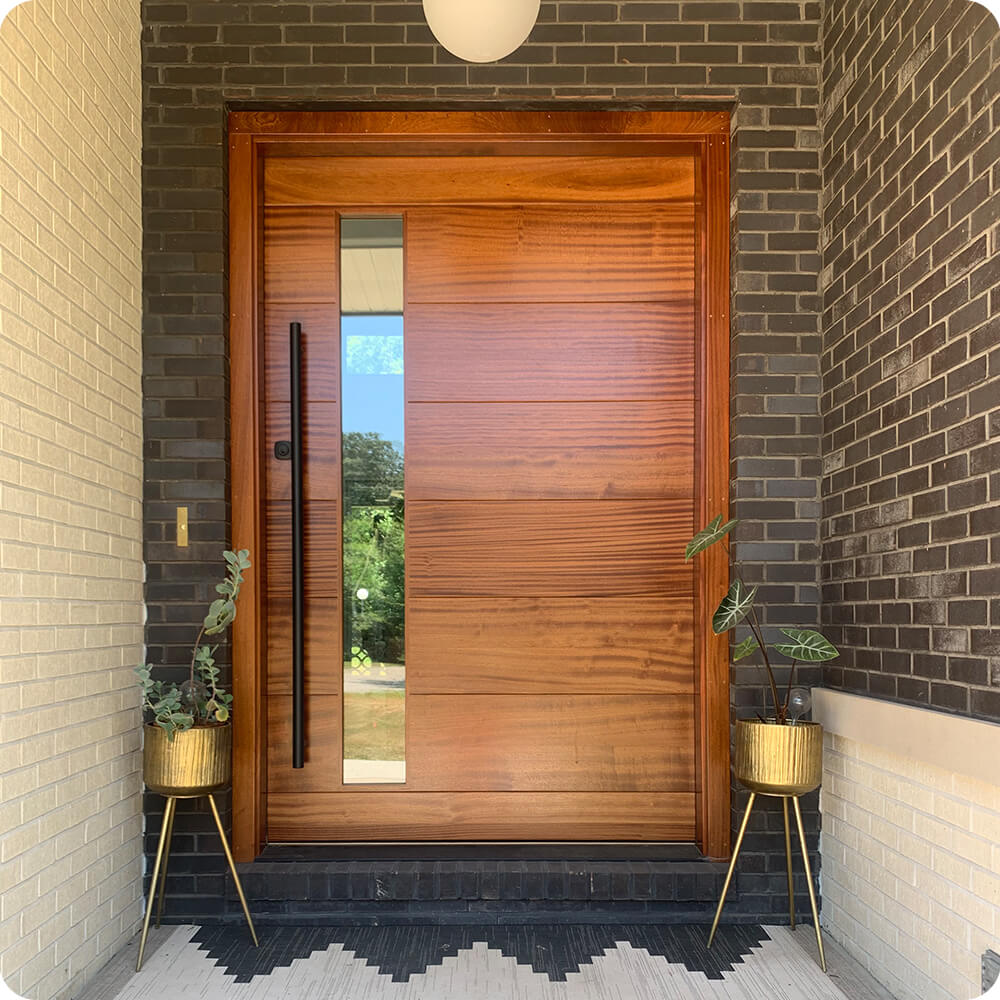
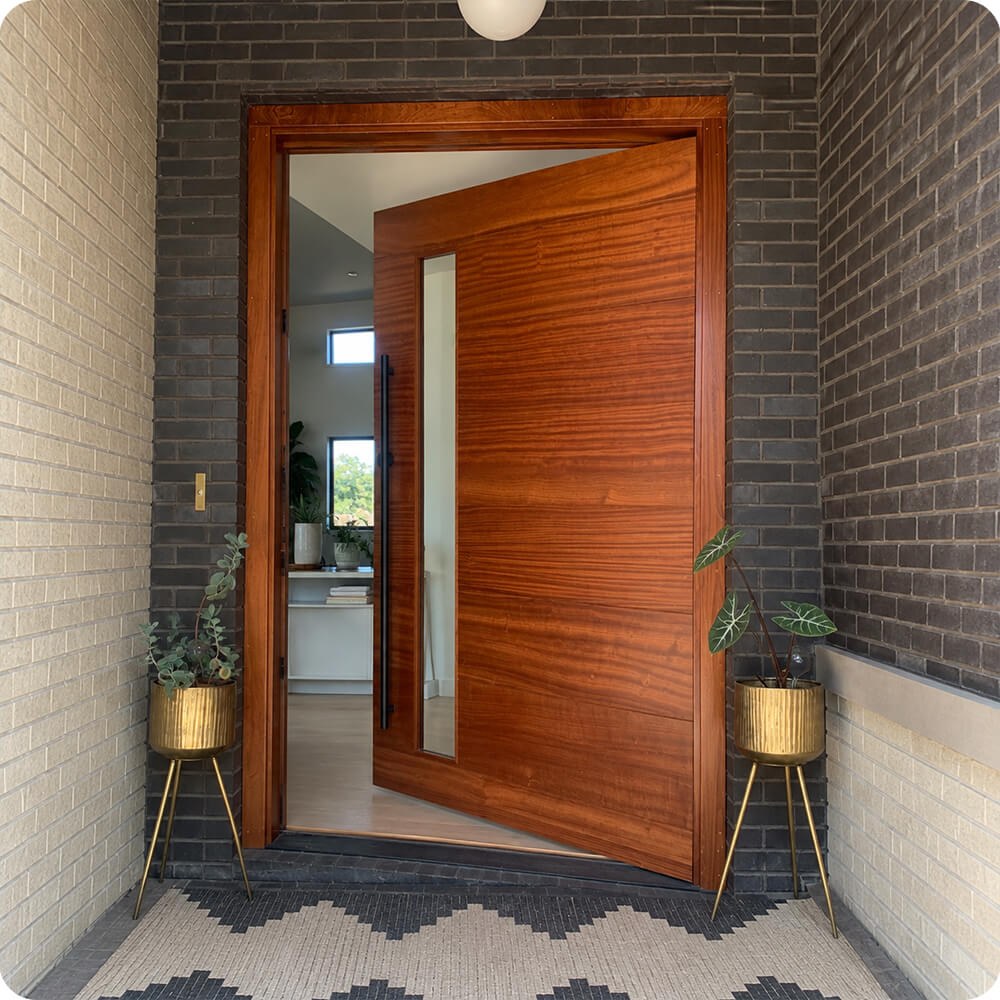
A pivot door was the right call for this scale and style, rather than swinging on side hinges like a traditional door, it rotates on a center pivot point, giving it a distinctive, architectural motion that suits a modern design. The design leans into the wood itself as the statement: continuous horizontal reveal lines run across the full width of the door, breaking the slab into wide bands that catch light differently and add texture without applied panel moulding. A single narrow vertical glass strip sits just off-center, bringing in a sliver of daylight and sightline without compromising privacy on a door this size.
The Execution
Built as a single oversized pivot door in a rich, reddish-brown-toned hardwood with a striking ribbon-grain figure. The face is divided into wide horizontal bands by continuous reveal lines rather than applied panels, and a narrow vertical glass strip is set just off-center near the hinge side. Finished in a warm, glossy stain that highlights the wood's natural grain movement. Hardware is a full-height black bar pull, mounted vertically for a clean, minimal grip.
The Result
The finished door reads as a genuine architectural statement rather than a standard entry, the pivot mechanism, the wide reveal lines, and the warm wood grain against dark brick give the home's entrance real presence, while the glass strip and black hardware keep the design restrained and modern rather than ornamental.
Specification
Unit Size
4'-0" x 8'-0"
Panel Thickness
2¼"
Joinery
Mortise-and-tenon, no mechanical fasteners.
Glass
Single narrow vertical clear glass strip, set just off-center near the hinge side
Finish System
Marine-grade exterior finish, six sides
Hardware
Full-height black bar pull, pivot hinge mechanism
Installed By
Scobis
Common Questions
Why choose a pivot door instead of a standard hinged door?
A pivot door rotates on a center point rather than swinging from side hinges, which suits an oversized slab like this one both structurally and visually, it can handle a larger, heavier door without side hinges bearing all the weight, and the rotating motion itself feels distinctly modern and architectural.
Why horizontal reveal lines instead of traditional raised panels?
Traditional panel mouldings read as more classic and detailed, which doesn't suit a minimalist dark-brick home. Continuous horizontal reveal lines give the door texture and visual interest through shadow and grain movement alone, keeping the design clean and contemporary.
Why one narrow glass strip instead of a larger window?
A door this size doesn't need a big window to bring in light, a single narrow strip gives a sliver of daylight and a sightline without compromising privacy or interrupting the door's solid, monolithic look.
More Projects Like This