
How to Use Green and Millwork to Make a Home Feel Luxurious
Green makes a home feel luxurious when it is paired with well-built millwork, because the color adds depth and calm while the woodwork adds structure, shadow, and craftsmanship you can see. Together they create rooms that feel collected, permanent, and expensive rather than decorated. So here’s how to use green and millwork to make your home feel luxurious.
Green is no longer a trend color. Designers now treat it as a new neutral, the way gray was used for the last decade, and it has lasted for a reason. At Scobis, we see it work best not as an accent on a pillow, but on the architecture itself: paneled walls, built-in libraries, kitchen cabinetry, and entry doors. Below we explain why that pairing works, how to choose the right green, and the design decisions that separate a high-end result from a painted room.
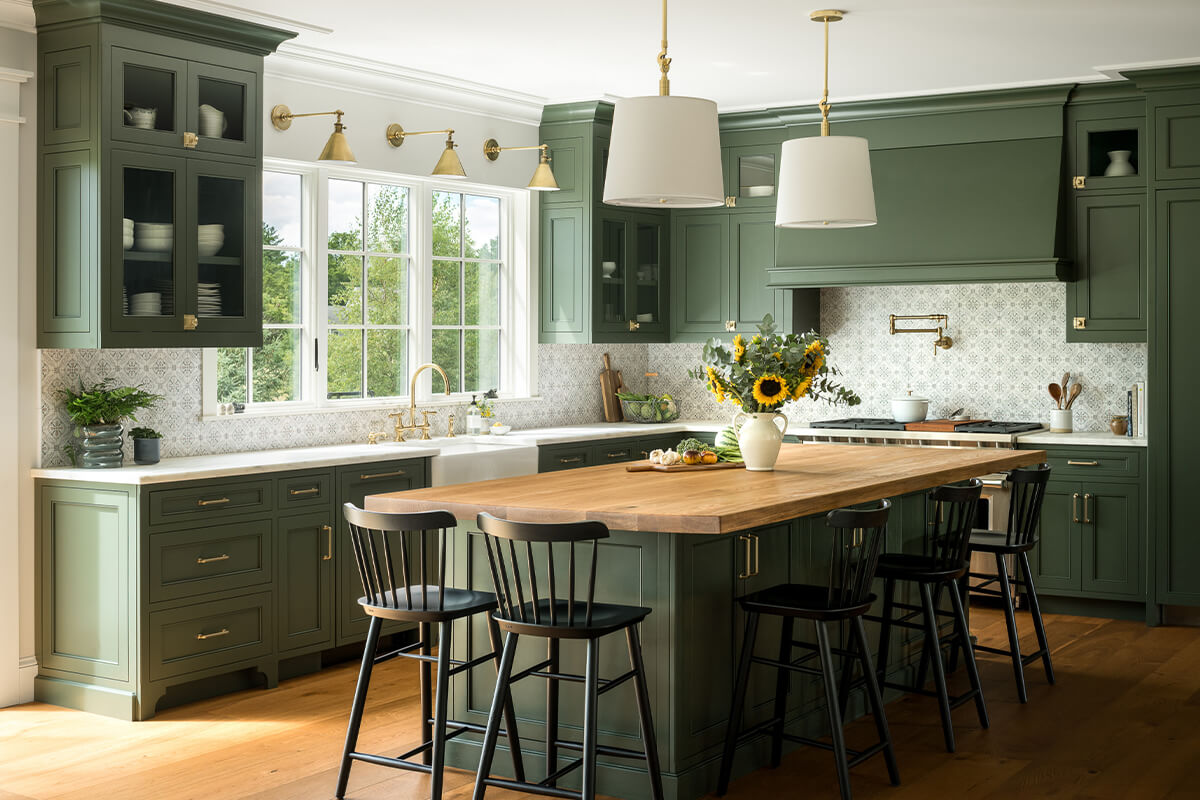
Why does green make a home feel luxurious?
Green feels luxurious because it reads as calm, natural, and established all at once. Very few colors manage all three.
- It is restful to the eye. Green is the color we see most in nature, so the eye accepts it easily. A room wrapped in deep green feels quiet and settled, which is the core of how luxury feels, as opposed to how it looks.
- It carries history. Deep greens have long been the color of libraries, studies, private clubs, and stately parlors. When you use it on paneling or built-ins, you borrow that sense of heritage and permanence.
- It behaves like a neutral. Green sits comfortably beside cream, white, caramel, brass, stone, and wood. That makes it easy to build a full room around without the color fighting the furnishings.
- It has range. From silvery sage to olive, forest, emerald, and near-black green, there is a shade for a bright kitchen and a shade for a moody study. That flexibility means it can carry a whole home, not just one room.
- Darker greens make spaces feel richer. Counterintuitively, a deep green can make a small room feel larger and more intentional. The walls recede, the edges soften, and the space reads as cozy and enveloping rather than cramped.
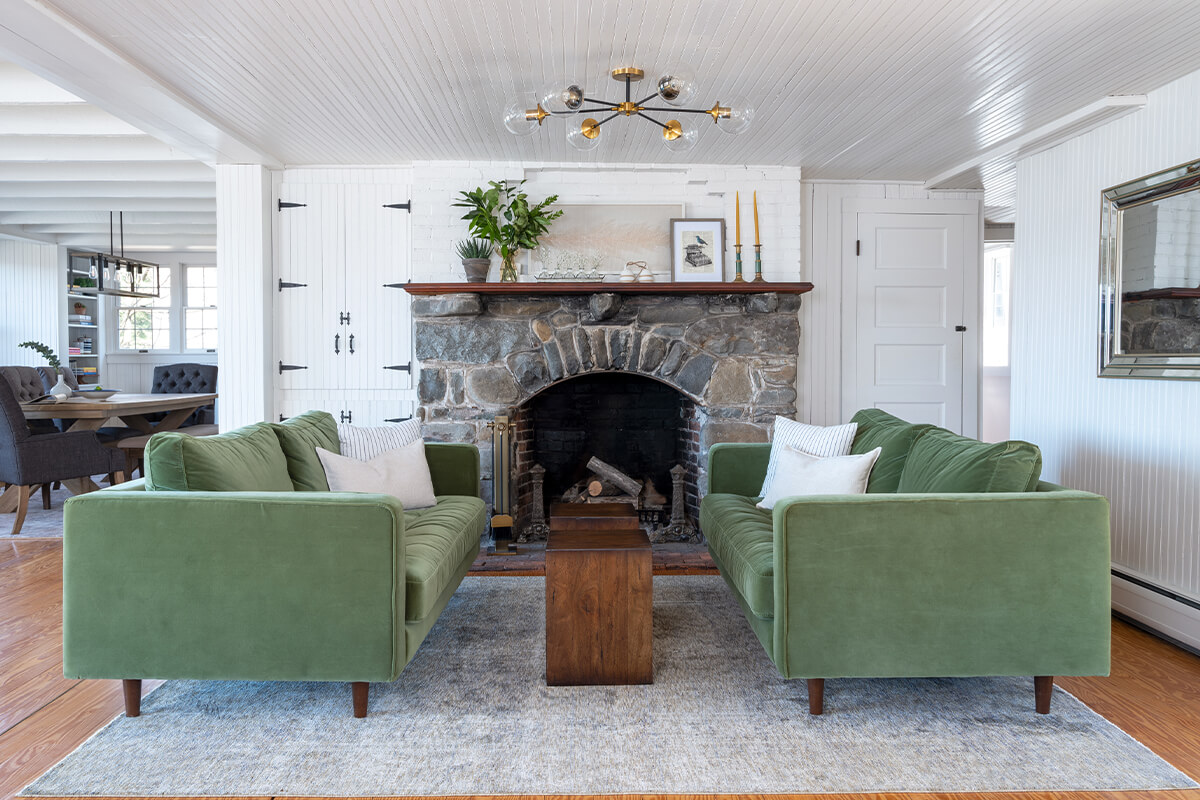
Why does green work so well with millwork?
Green works with millwork because it shows off the craftsmanship instead of hiding it. Here is the reasoning behind that, from a designer’s point of view.
Green and wood are natural partners. Wood and leaves come from the same place, so the eye reads the pairing as right before it even thinks about it. Many popular hardwoods, including walnut, cherry, and mahogany, carry red and orange undertones. Red and orange sit opposite green on the color wheel, so a green wall beside a stained wood door or shelf makes both look richer and more saturated.
Mid and deep greens reveal profiles. Crown moulding, raised panels, and fluted details are all about light and shadow. Stark white can flatten those details in bright light. A saturated green, finished with some sheen, catches highlights along every edge and holds shadow in every recess, so the depth of the joinery becomes visible.
Millwork gives green structure. A green wall alone is just paint. The same green on wainscoting, paneling, or a built-in bookcase becomes architecture. The millwork gives the color edges, rhythm, and a reason to be there, which is what makes it feel designed rather than decorated.
Both signal permanence. Custom millwork is an investment that stays with the house. Deep green has a long track record in classic interiors and doesn’t age out quickly. Paired together, they make a room feel like it was always meant to look that way.
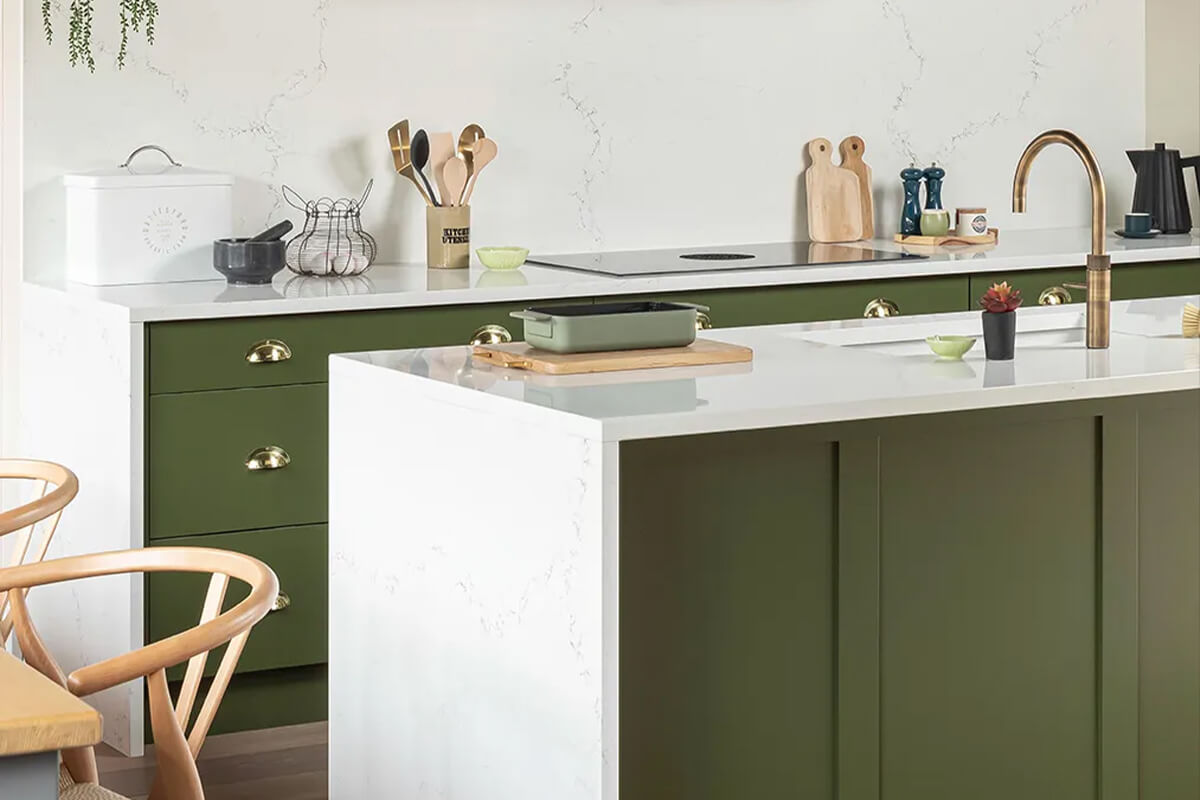
How do you choose the right green for your millwork?
Choose your green by starting with what won’t change: your light, your wood tones, and your metals. The paint should be chosen to suit those, not the other way around.
| Shade family | Feels like | Best with | Where it shines |
|---|---|---|---|
|
Sage and gray-green#9CAF88
|
Soft, airy, calm | White oak, cream, polished nickel | Kitchens, bedrooms, bright rooms |
|
Olive and brown-green#6B6B3A
|
Warm, earthy, relaxed | Walnut, leather, aged brass | Living rooms, dens, mudrooms |
|
Forest and hunter#2F4F3A
|
Classic, stately | Mahogany, cherry, unlacquered brass | Libraries, studies, dining rooms |
|
Emerald and jewel greens#1E6B4F
|
Bold, glamorous | Marble, gold, black accents | Powder rooms, bars, statement doors |
|
Near-black green#1F2A24
|
Moody, dramatic | Brass, warm lighting, natural wood | Studies, entries, built-in walls |
Hex codes are approximate on-screen references for each shade family. Always match paint from a physical brand sample.
Read your light first. North-facing rooms get cool, bluish light, so warmer olive and brown-based greens keep them from feeling cold. South- and west-facing rooms get warm light and can handle cooler blue-greens.
Test on the real surface. Paint a sample board or a spare cabinet door, not a small swatch on drywall. Green reads differently on a raised panel with shadows than on a flat wall. Look at it morning and evening.
Go a step deeper than you think. Color almost always looks brighter once it covers a whole room. If you are between two greens, the slightly darker, grayer one is usually the one that reads as expensive.
Greens with a long track record in classic interiors include Benjamin Moore Essex Green and Colonial Verdigris, and Sherwin-Williams Jasper. Treat those as starting points to sample, not a formula.
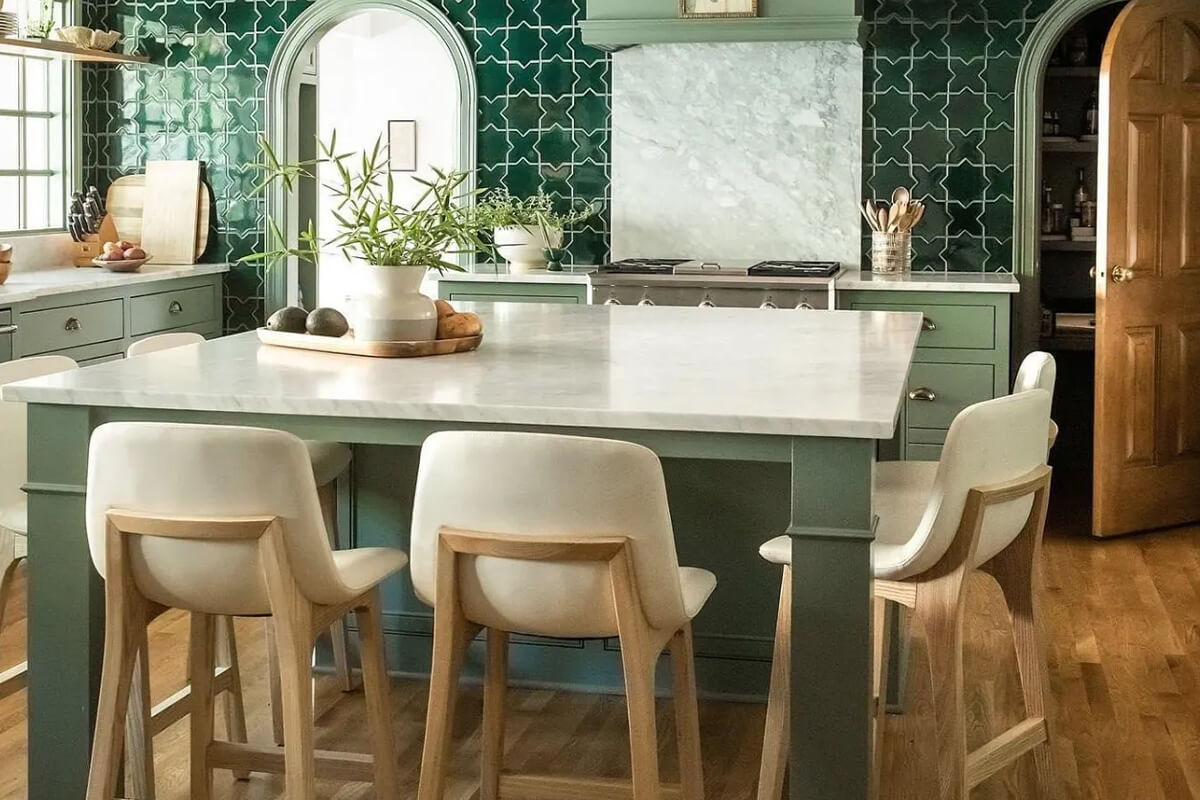
How do you pair wood millwork with green?
The most luxurious approach is often to keep your millwork in natural or stained wood and let green surround it. The green becomes the backdrop, and the wood becomes the feature. Here is how to carry that pairing from room to room.
- Entry: mahogany door, deep green walls. A stained mahogany front door against forest or hunter green foyer walls is one of the strongest pairings there is. The red undertones in the mahogany glow against the green, and the entry feels grand from the first step inside.
- Library or study: walnut built-ins, olive or near-black green walls. Walnut’s chocolate tones sit beautifully against earthy greens. Paint the walls and ceiling in green so the built-in shelving stands out as the room’s centerpiece.
- Kitchen: white oak cabinetry, sage accents. Light white oak pairs naturally with soft sage on the walls, a painted island, or a tiled backsplash. The result feels fresh and warm without competing with the wood grain.
- Dining room: cherry paneling, hunter green above. Stained cherry wainscoting with deep green walls above creates a layered, formal room that feels especially rich by candlelight.
Want to Bring Green Into Your Home?
We can help you choose the right wood, profile, and finish so the color looks its best for decades.
- Hallways: stained interior doors on green walls. Running a single green through the hallway and keeping every interior door stained turns the doors into a rhythm of wood along the walk. It is an easy way to connect rooms.
- Ceilings and beams: wood overhead, green on the walls. Stained beams or a tongue-and-groove wood ceiling above green walls brings warmth down into the room and makes the space feel finished.
- Bathroom: walnut or oak vanity, emerald tile. A wood vanity against green tile or walls softens a hard-surface room and makes it feel like a spa.
- Bedroom: oak paneled headboard wall, gray-green walls. Keep the green soft so the wood reads warm and restful rather than dramatic.
The principle in every room is the same: match the green’s undertone to the wood. Red-toned woods like mahogany and cherry come alive next to deeper, cooler greens. Golden woods like white oak and maple sit best beside softer, grayer greens. Brown woods like walnut work with almost any green, especially earthy olives.
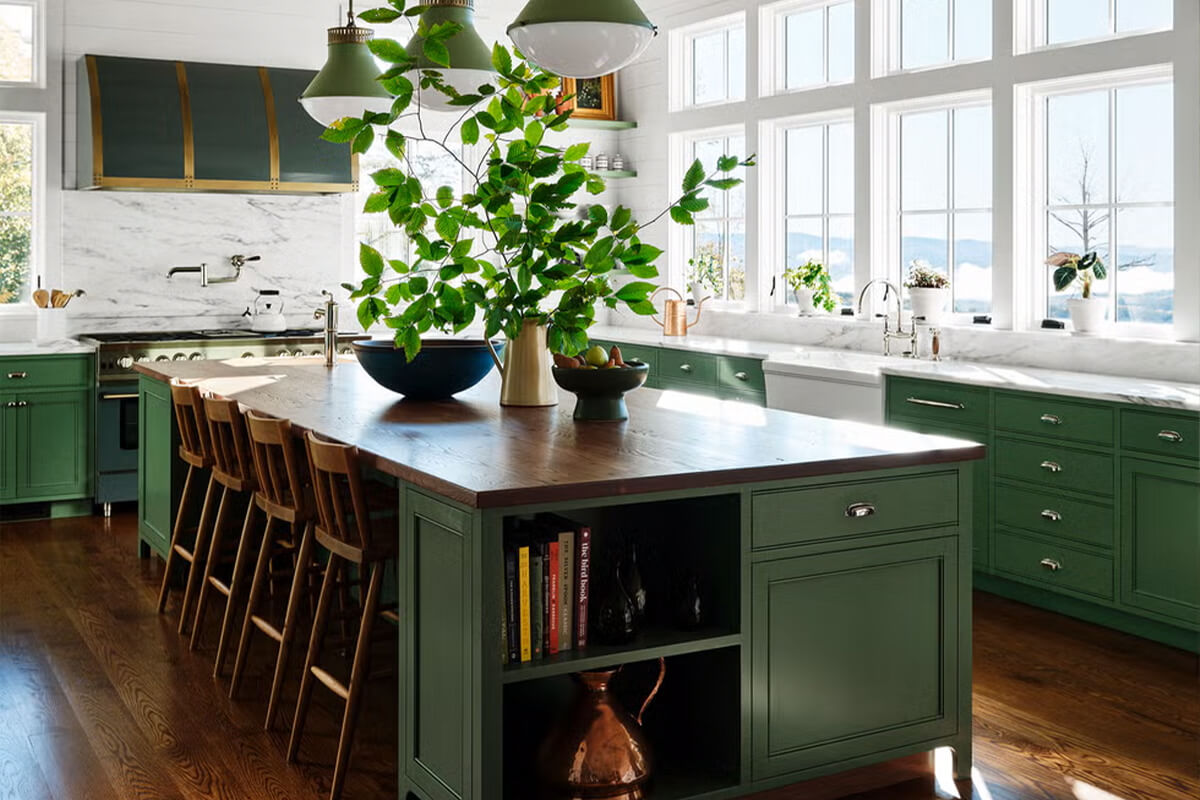
How do you style green around wood millwork?
A high-end result comes from treating the millwork as the anchor of the room and building the green around it: on walls, fabrics, stone, and accents. These are the tips we give clients.
- Let the wood lead. Decide which piece of millwork is the star, such as the front door, a built-in, or a paneled wall, and choose a green that makes it stand out rather than one that competes with it.
- Paint trim and walls the same green. Color-drenching the walls, baseboards, and casings in one green lets stained wood doors and built-ins pop against a calm, continuous backdrop. It is one of the fastest ways to make a room feel custom.
- Use sheen to add depth. A flatter finish on walls and a soft satin on painted trim keeps the green rich while the natural sheen of the wood finish catches the light.
- Bring green into fabrics near the wood. A velvet green sofa beside walnut shelving, green linen drapery framing an oak window seat, or a green rug under a cherry dining table ties the color directly to the millwork.
- Choose metals that suit both. Unlacquered or aged brass and bronze warm up green and echo the warmth of stained wood. Use them on door hardware, cabinet pulls, and lighting so all three materials feel connected.
- Add stone with green veining. Marble or quartzite with green or gray-green movement on a countertop, fireplace surround, or vanity links your wood cabinetry and green walls in one material.
- Repeat the pairing across the home. Echo the same wood tone and the same green family in at least three rooms. This makes the whole house feel designed as one, not room by room.
- Light the wood, not just the room. Shelf lighting in built-ins, picture lights over paneling, and sconces beside doors bring out the grain and keep deep greens from feeling heavy at night.
- Finish with living green. Plants and fresh stems are the simplest way to add green beside wood. Fewer, larger plants look more intentional than many small ones.
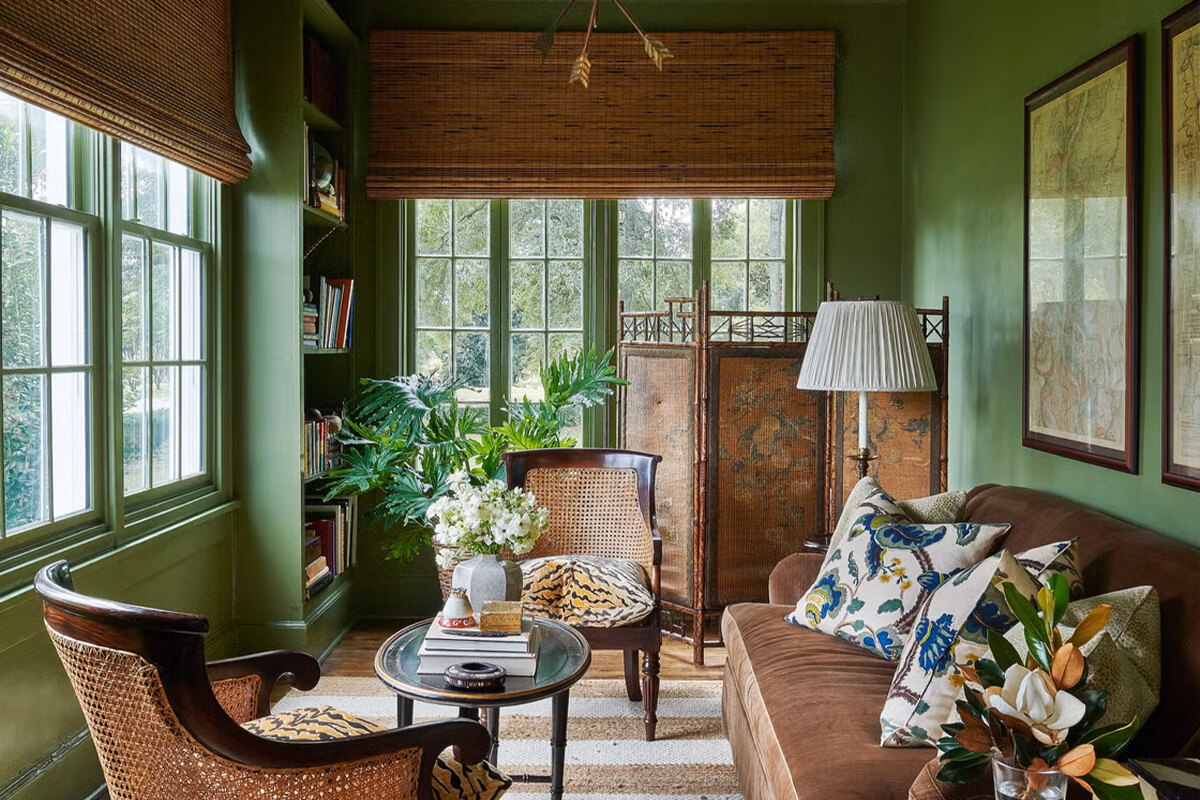
What mistakes should you avoid with green?
Most green rooms that miss the mark do so for one of a few predictable reasons.
- Choosing from a tiny swatch. A green that looks perfect on a chip can turn muddy or neon across a full wall. Always sample at scale, on the actual surface.
- Ignoring undertones. A yellow-green beside red-toned cherry, or a blue-green beside orange oak, can clash. Hold your wood sample next to the paint before committing.
- Too many competing greens. Mixing greens is good, but mixing earthy and cool greens in one room looks accidental.
- Painting over fine wood. If your millwork is a beautiful hardwood, consider keeping some of it stained. Once painted, quality wood is costly to restore.
- Using green on poor millwork. Deep, glossy colors highlight every gap, uneven joint, and rough edge. The better the color, the more the craftsmanship underneath matters.
- Forgetting the lighting. A dark green room without a lighting plan can feel heavy at night.
FAQs: Interior design with green
What color green goes best with wood millwork?
It depends on the wood’s undertone. Red-toned woods like mahogany and cherry look richest beside deep forest or hunter greens. Golden woods like white oak and maple pair best with soft sage and gray-greens. Walnut works with almost any green, especially earthy olives.
Does green go with a mahogany front door?
Yes. Mahogany’s red undertones sit opposite green on the color wheel, so a deep green entry wall makes the door look warmer and more saturated. It is one of the most classic luxury pairings for an entry.
Is green paint a trend, or will it last?
Deep greens have been used in libraries, studies, and formal rooms for centuries, and designers now treat green as a neutral. Muted and darker greens in particular age well and are unlikely to feel dated soon.
Should I paint my wood millwork green or keep it stained?
If your millwork is a quality hardwood, keeping it stained and putting the green on the walls around it usually looks more high-end. Once fine wood is painted, it is costly to restore. Painted millwork works best when you want a fully color-drenched room.
Can dark green walls work in a small room?
Unlacquered or aged brass and bronze are the classic choice because they warm up green and echo the tones in stained wood. Polished nickel works well with cooler sage greens and light woods like white oak.
What metals pair best with green and wood?
Paint a large sample board and hold it next to your actual millwork, door, or wood sample. Check it in morning and evening light, since green shifts noticeably with the light in the room.
How do I test a green before committing?
Yes. Deep green on the walls, and even the ceiling, softens the corners so the room feels enveloping rather than cramped. Add warm lighting and a wood element, such as a door or vanity, to keep it from feeling heavy.
Contact Our Team!