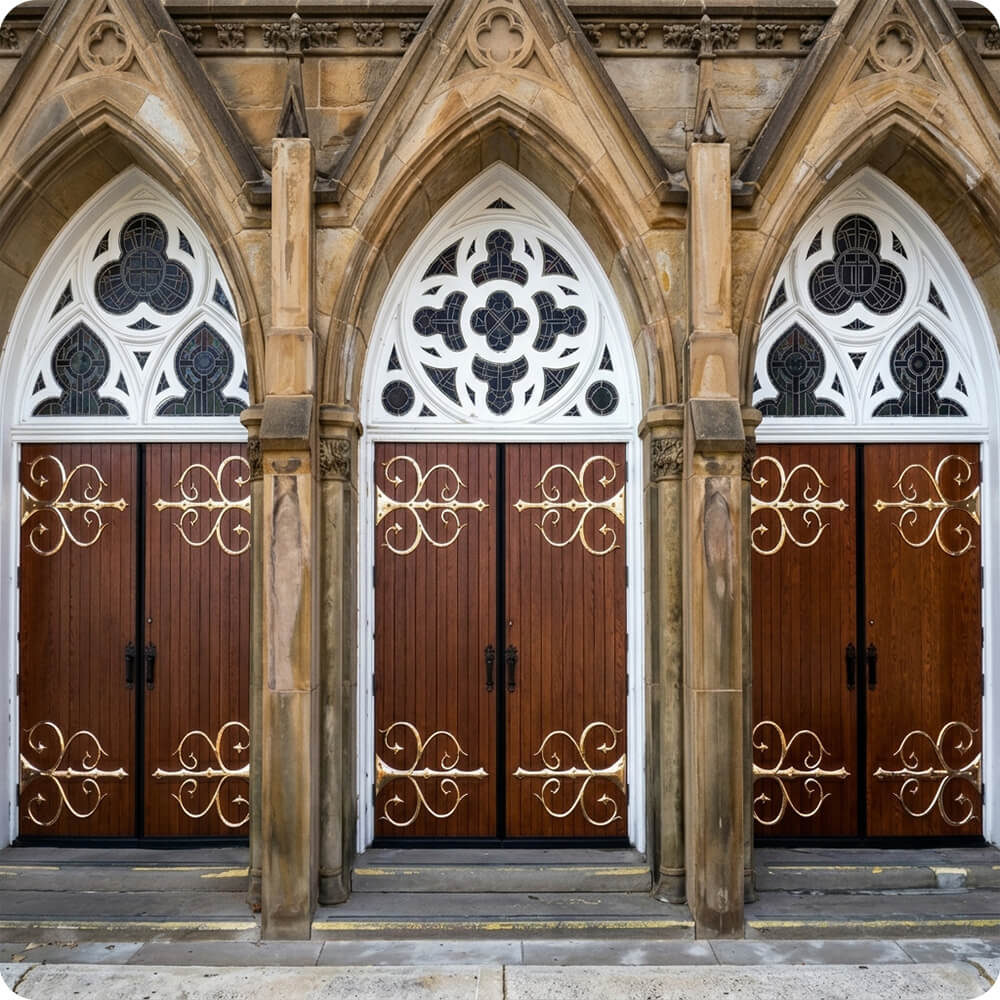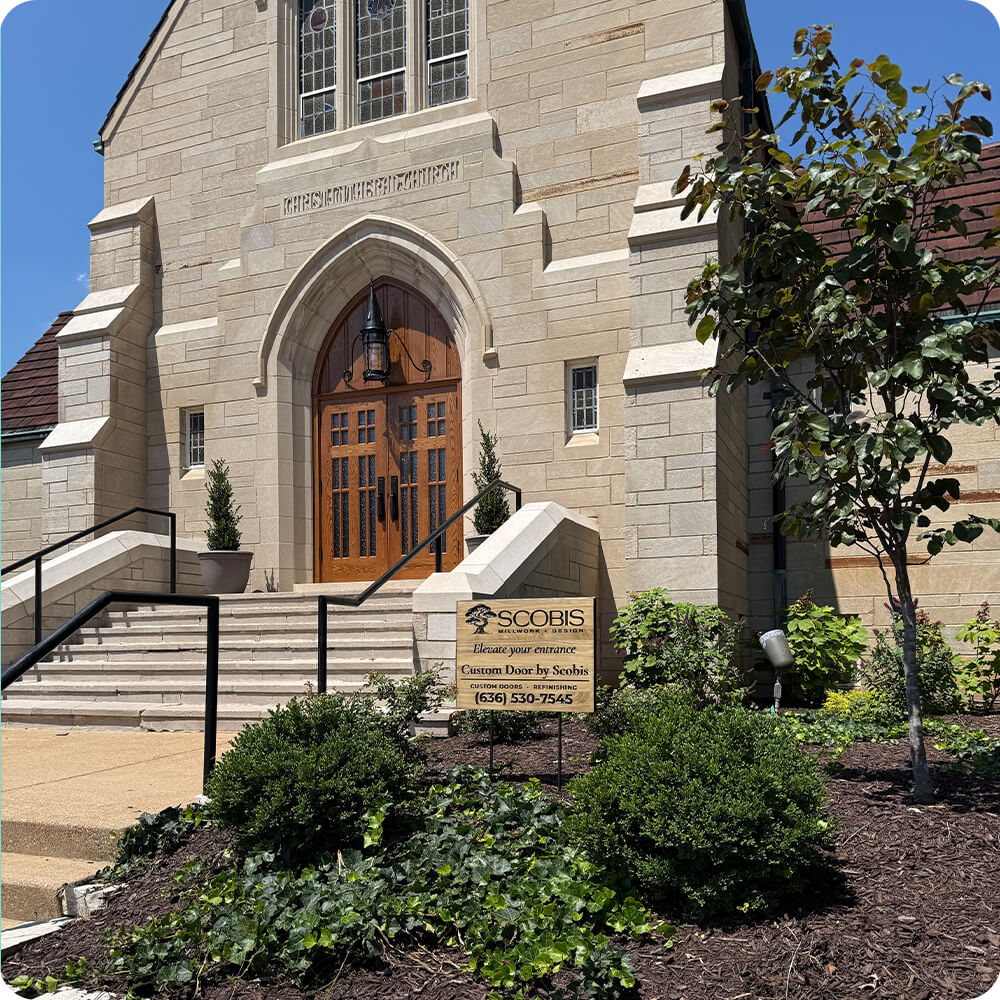
Christ Church Cathedral’s red doors are a downtown landmark. They face west toward the St. Louis Public Library, at the entrance to a narthex and bell tower dedicated on Easter Sunday, 1912. The entry sits deep in a carved stone portal, under a Gothic tympanum with tracery and a hanging lantern. It also has to do two jobs that pull against each other. When it’s closed, it’s the cathedral’s public face on a busy city street, and it has to look strong and dignified. When it’s open for services, events, and the people the cathedral serves daily, it has to feel welcoming without letting the weather and the street noise into the building.
Project Story
The thinking behind the work
The Starting Point
The Thinking
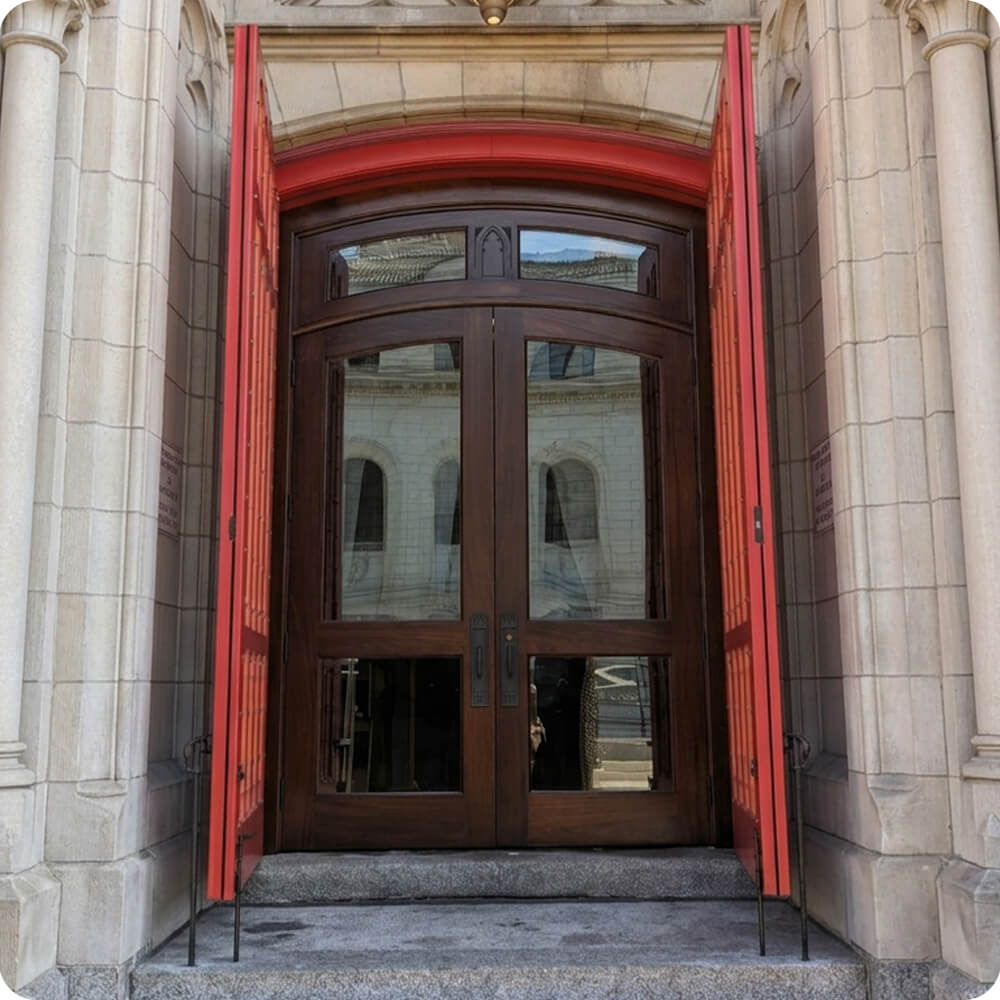
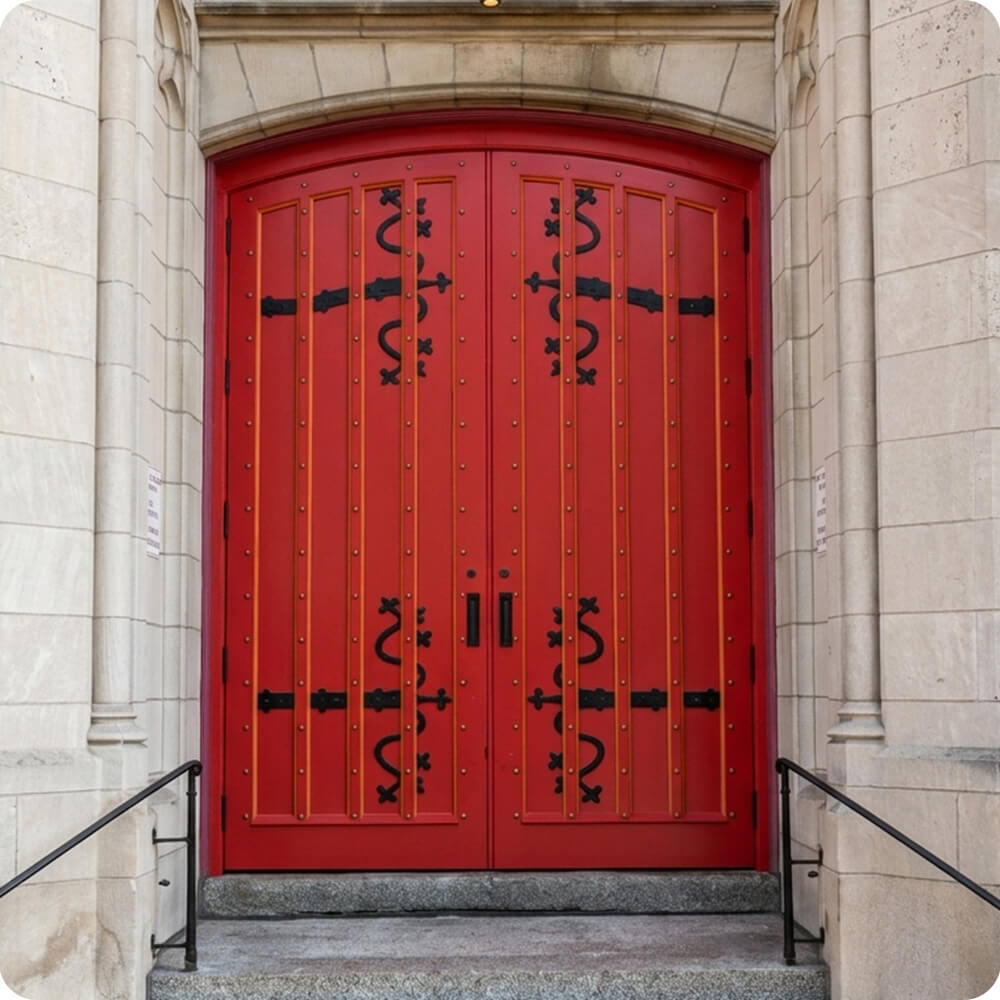
The answer was two sets of doors, each built for one of those jobs. The outer doors carry the cathedral’s identity, and red is a long Episcopal tradition, so they stayed red. They’re built as heavy Gothic plank doors with iron scrollwork, in the same vocabulary as the tracery above them. The inner doors are made for when the outer doors are open. They’re mostly glass, so visitors on the steps can see straight into the narthex, while the doors still close out wind, cold, and traffic noise.
The Execution
The outer doors are vertical plank leaves painted a bright traditional red. Fine gold accent lines run between the boards, and rows of rivet heads follow each line. Each leaf carries two black iron strap hinges with spear-and-fleur terminals, plus a tall scrolled iron ornament near the meeting stiles, with short black iron pulls at center. The inner unit is walnut in a rich dark stain. Each leaf has a tall upper glass lite over a smaller lower lite, divided by a solid mid-rail, with dark bronze rectangular-plate hardware.
The Result
Closed, the entry is the cathedral the city knows: bold red doors under the stone tracery, with black ironwork you can read from across the street. Open, it’s a lit wood-and-glass doorway that shows off the narthex and invites people in, while the building stays sealed against the downtown weather. The small tracery ornament in the walnut transom ties the new inner doors to the 1912 stonework around them. Both sets follow the same arch, so the entry looks complete either way.
Specification
Unit Size
7'-0" × 9'-0"
Panel Thickness
2¼"
Joinery
Outer doors: vertical plank construction. Inner doors: stile-and-rail construction
Glass
Inner doors: clear tempered glass, two lites per leaf; two-lite segmental transom with carved Gothic tracery ornament. Outer doors: no glass
Finish System
Outer doors: red exterior paint system with gold accent striping. Inner doors: dark walnut stain with a satin clear topcoat
Hardware
Outer doors: black iron strap hinges with spear-and-fleur terminals, scrolled iron ornaments, black iron pulls, decorative rivet heads. Inner doors: dark bronze rectangular-plate handlesets
Installed By
Scobis
Common Questions
Why two sets of doors in one entry?
The entry has two jobs that pull against each other. Closed, the heavy outer doors give the cathedral a strong, secure face on the street. When they’re opened for services and events, the glazed inner doors take over, keeping wind, cold, and traffic noise out of the narthex while letting people see in. Each set can be designed fully for its own job instead of one door compromising on both.
Why keep the outer doors red?
Red doors are a long-standing tradition in Episcopal churches, and at Christ Church Cathedral they’re part of how the city recognizes the building. The new doors keep that color and pair it with gold accent lines and black iron scrollwork. That gives the red the weight and detail of the carved stone portal around it instead of reading as a flat painted surface.
Why so much clear glass in the inner doors?
Once the red doors swing open, the inner doors become the cathedral’s welcome. Clear glass lets passersby see straight into the narthex, so the building feels open and approachable instead of shut. The lower lites are smaller than the upper ones, which keeps the doors sturdy and places the solid mid-rail where hands and bags make contact.
More Projects Like This