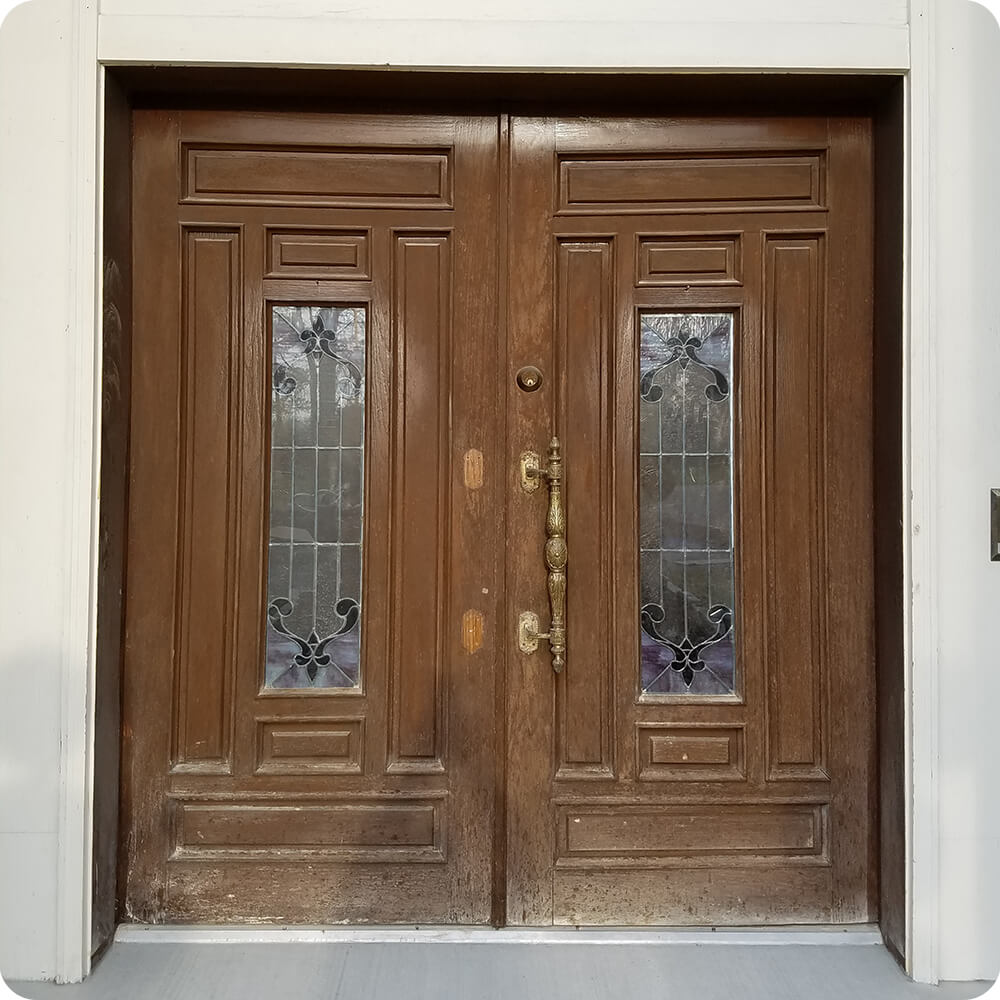
The church's original entry doors were carrying a painted brown finish that had broken down badly, chipped, worn thin in high-touch areas, and showing bare wood underneath in places. Each leaf had a narrow arched glass lite with a decorative floral leaded-glass motif set into it, paired with a large ornate brass handleset. The design had real character, but the failing paint finish made the entry look neglected rather than cared for, regardless of how much daily traffic the building actually saw.
Project Story
The thinking behind the work
The Starting Point
The Thinking
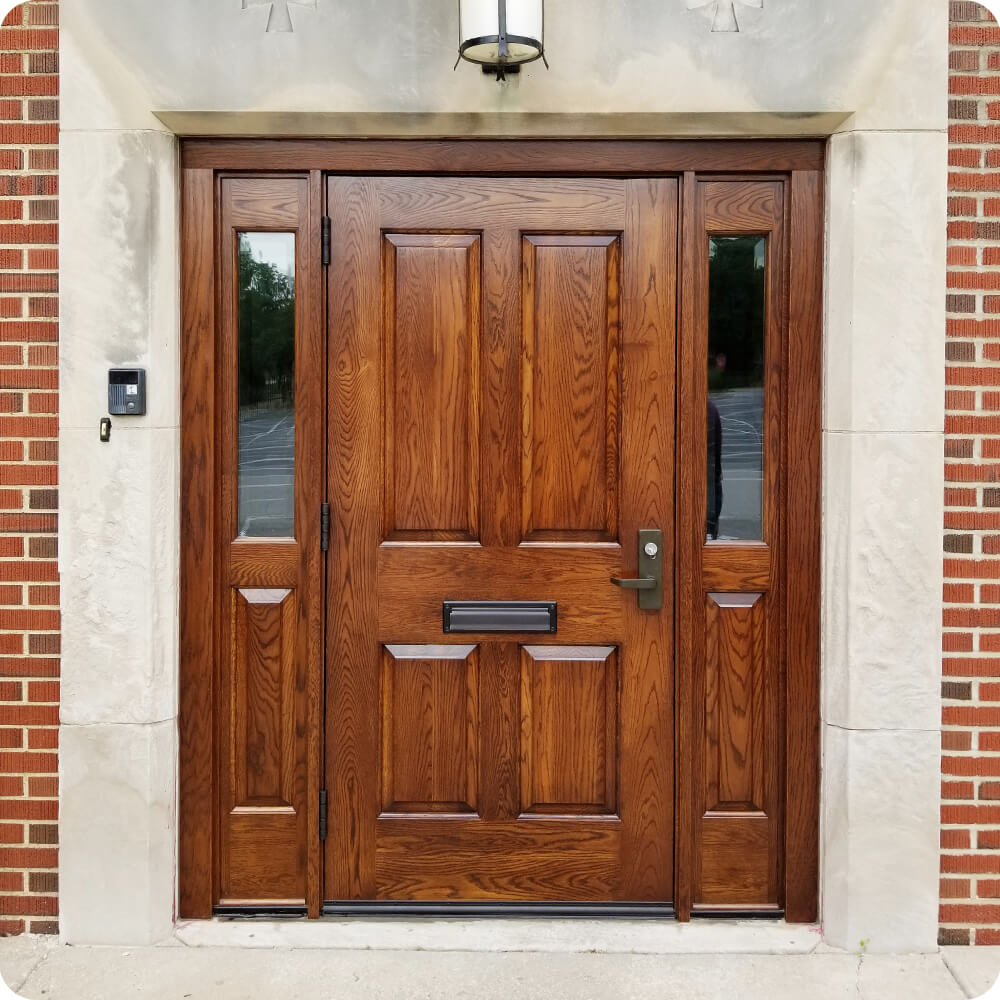
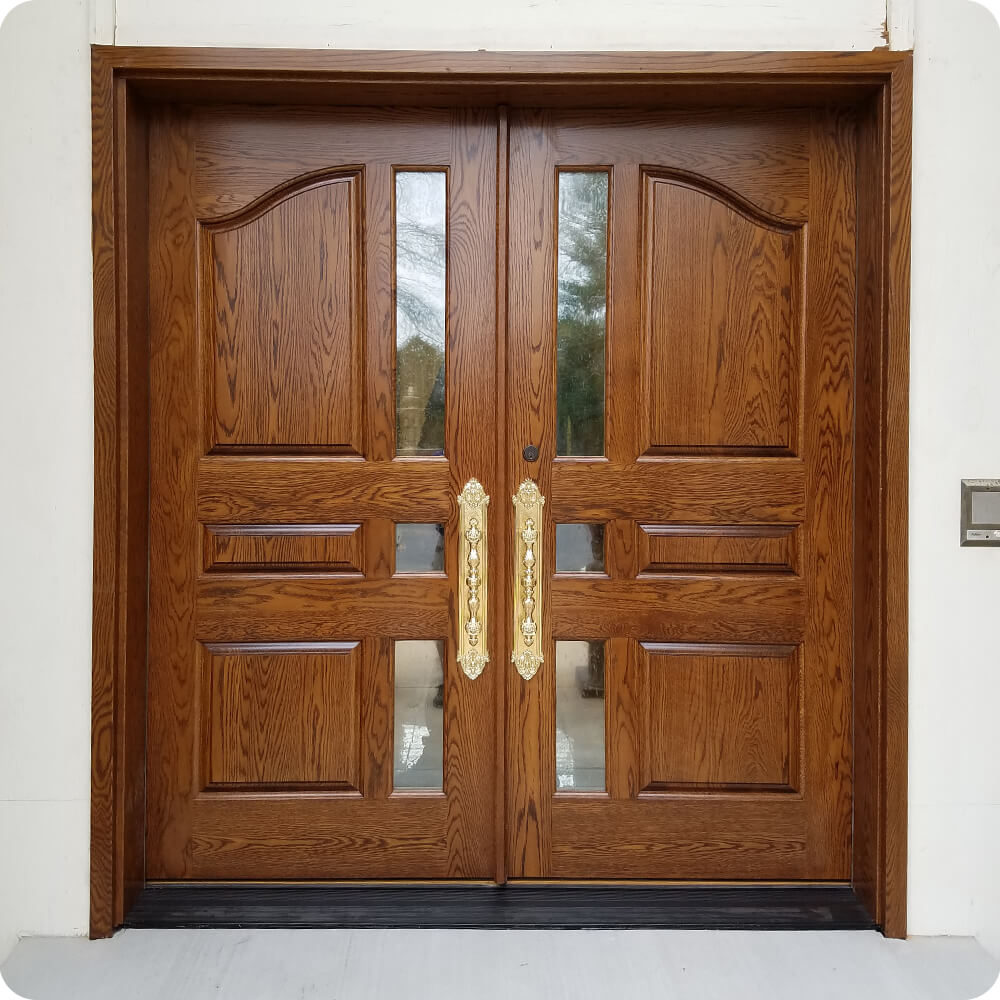
A painted finish that had already failed once wasn't worth repeating. Moving to a natural stained oak finish solves two problems at once: it reads as warmer and more inviting than a painted door, and a quality stain-and-topcoat system generally shows wear more gracefully than paint does over years of heavy public use. The panel design shifted to a cleaner six-panel raised layout with an arched glass lite at the top of each leaf, keeping a simple, dignified look appropriate for a religious building rather than the more ornate floral glass of the original.
The Execution
Built as a double door with an arched glass lite near the top of each leaf, sitting above a six-panel raised body split into upper and lower panel groupings. Finished in a warm, natural oak stain rather than paint, chosen specifically for how it wears under heavy daily traffic compared to a painted surface. The oversized ornate brass handlesets were retained from the original design, mounted at the center of each leaf.
The Result
The entry now presents as well-maintained and substantial rather than worn, the warm oak tone reads as inviting rather than institutional, and because it's stained rather than painted, it's built to age more gracefully under the kind of constant public use a church entry sees every week.
Specification
Unit Size
6'-0" x 8'-0"
Panel Thickness
2¼"
Joinery
Mortise-and-tenon, no mechanical fasteners.
Glass
Clear glass, arched lite near the top of each leaf.
Finish System
Marine-grade exterior stain finish, six sides
Hardware
Oversized ornate brass handlesets, retained from original design.
Installed By
Scobis
Common Questions
Why move from a painted finish to a stained oak finish?
The original painted finish had already failed, chipped and worn through to bare wood in places from constant public use. A stained oak finish generally holds up better over time under that kind of heavy daily traffic than paint does, and it gives the entry a warmer, more inviting look for a building that welcomes visitors every week.
Why simplify the glass design from the original decorative floral motif?
The original leaded glass had real detail, but a cleaner arched lite keeps the entry looking dignified and current without the upkeep that comes with ornate leaded patterns. It's a simpler design that still brings in daylight and a sense of craftsmanship at the doors' focal point.
Why keep the original oversized brass handlesets?
They were already substantial, appropriate in scale for a building entry that sees constant public use, and in good working condition. Replacing hardware that wasn't the actual problem would have added cost without addressing what needed fixing
More Projects Like This