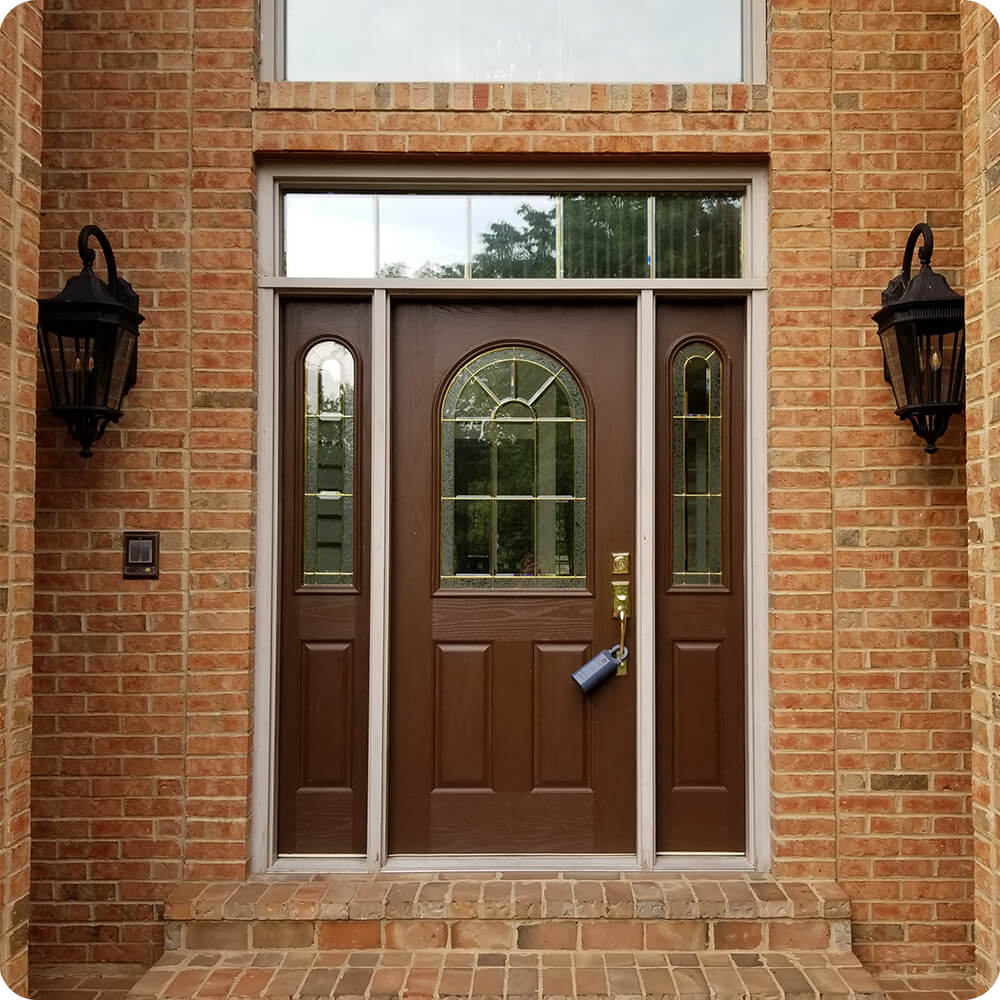
The original entry was a single brown fiberglass door with matching sidelights, an arched glass panel with gold caming set into the upper half, and a plain rectangular transom above. It's a serviceable builder-grade unit, but the brown color and gold-lined glass pattern read as dated, and a single door under such a tall transom left the entry feeling narrower than the opening's height suggested it could be.
Project Story
The thinking behind the work
The Starting Point
The Thinking
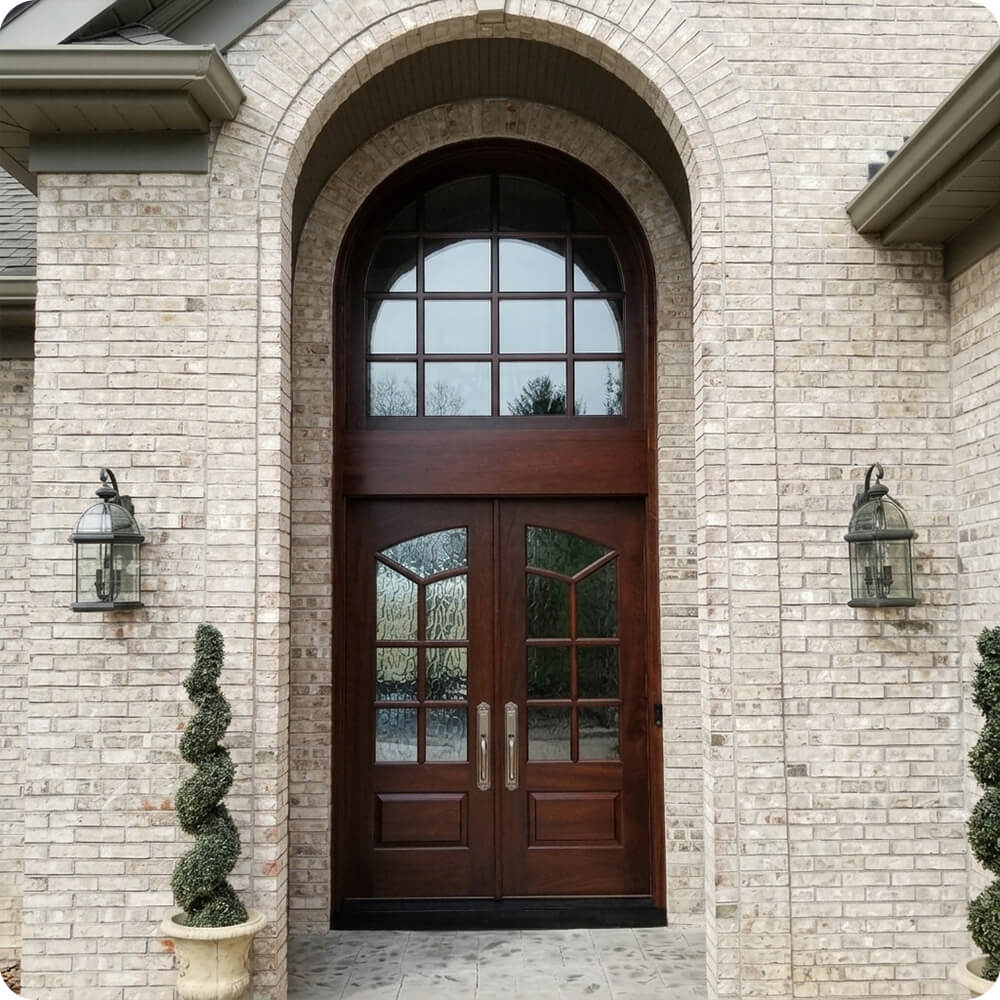
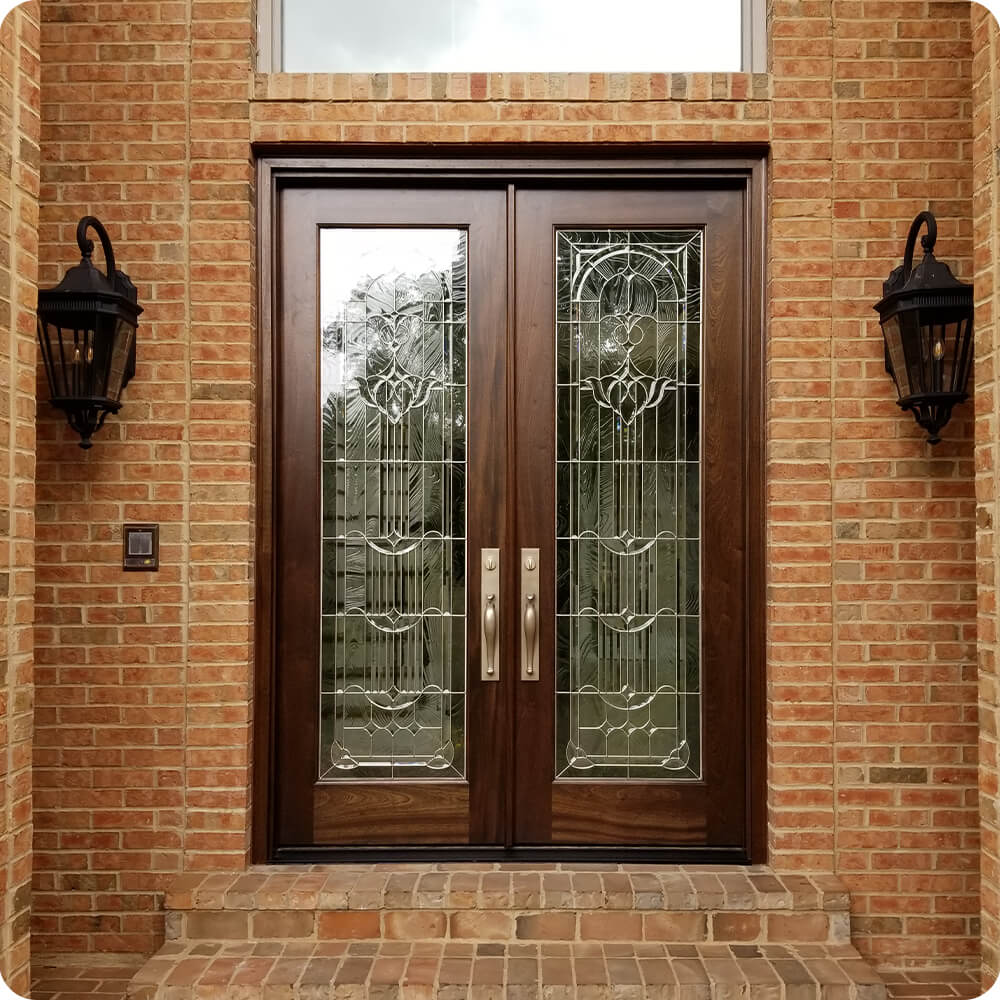
The tall rectangular transom already gave the entry real vertical presence; the door beneath it needed to match that scale. Moving to a true double door widened the entry considerably, letting the full opening function as the doorway rather than a door plus decorative sidelights. Each leaf was glazed nearly full-height with an ornate leaded-glass panel, ferns, scrollwork, and geometric bands in a silver-toned caming, replacing the brown fiberglass and gold accents with real wood and a more sophisticated glass pattern.
The Execution
Built as a double mahogany door, each leaf glazed nearly full-height with an ornate leaded-glass panel combining floral and geometric elements in a silver caming pattern. Finished in a deep, rich stain. Hardware is a matched pair of substantial brass pull handles with a thumb-latch mechanism, replacing the original single lever-and-deadbolt set.
The Result
The entry now uses the full width and height of its opening as a genuine double-door statement, with real wood grain and a detailed leaded-glass pattern replacing the flat brown fiberglass and gold-lined glass of the original. The matched brass hardware and tall glass panels give the whole entry a more substantial, upscale presence beneath the same tall transom.
Specification
Unit Size
6'-6" x 8'-0"
Panel Thickness
1¾"
Joinery
Mortise-and-tenon, no mechanical fasteners.
Glass
Leaded glass, nearly full-height ornate panel per leaf combining floral and geometric elements in a silver-toned caming pattern
Finish System
Marine-grade exterior finish, six sides
Hardware
Matched pair of substantial brass pull handles with thumb-latch mechanism
Installed By
Scobis
Common Questions
Why replace a single door with sidelights instead of just updating the finish?
The original single door and sidelights left most of the tall opening's width working through decorative glass rather than a functional doorway. A true double door uses that full width as the actual entrance, matching the scale the tall transom above had always suggested.
Why choose a more detailed leaded-glass pattern than the original?
The original arched panel with gold caming read as somewhat dated up close. A taller, more intricate leaded design combining floral and geometric elements in silver caming gives the entry a more sophisticated, current look while still keeping the tradition of decorative glass at the door.
Why move from fiberglass to solid mahogany?
Fiberglass is a practical, low-maintenance choice, but it doesn't carry the same warmth or grain character as real wood. Solid mahogany brings genuine material richness to the entry, especially paired with a deep stain that highlights the wood's natural figure.
More Projects Like This