
Custom vs. Stock Doors: Where the Difference Really Matters
Your front door is the first thing anyone sees before they ever step inside your home. So when it’s time to replace it, the choice usually comes down to two paths. Either go for a stock door from a home improvement store, or a custom wood door built for your exact opening and style. The real question is which one aligns to your home, your budget, and your timeline, and decide if a custom wood door worth it.
Here’s how to tell the difference, what it actually costs you either way, and how to decide with confidence.

What makes a door "custom" vs "stock"
A stock door is manufactured in standard sizes and finishes, then shipped to stores in bulk. It’s built to fit the most common openings and appeal to the widest range of buyers, which keeps costs low and availability high.
A custom wood door is built to your specific opening, wood species, panel style, and finish. Instead of adjusting your home to fit a standard product, the door is made to fit your home. That difference sounds small on paper, but it shows up in the fit, the feel, and how long the door lasts.
How much does a new front door improve curb appeal
A front door does more visual work than almost any other single feature on your home’s exterior. It’s the focal point of your entryway, and it’s usually the first detail a visitor or a potential buyer actually notices up close.
Homeowners often expect a new door to make a modest difference. In practice, the impact tends to be more dramatic than expected, especially when the new door is scaled and finished to match the home’s architecture rather than picked off a shelf. A custom door lets you match proportions, wood tone, and hardware to the rest of your home’s exterior, which is where most of the «wow» comes from. A stock door can still improve curb appeal, but it’s working within a narrower set of sizes, finishes, and details.
Photos do more to answer is it worth it than any spec sheet. If you’re weighing this decision, look at real entrance transformations rather than product photos alone. Pay attention to how the door’s scale, color, and glass detailing change the whole entryway, not just the door itself.
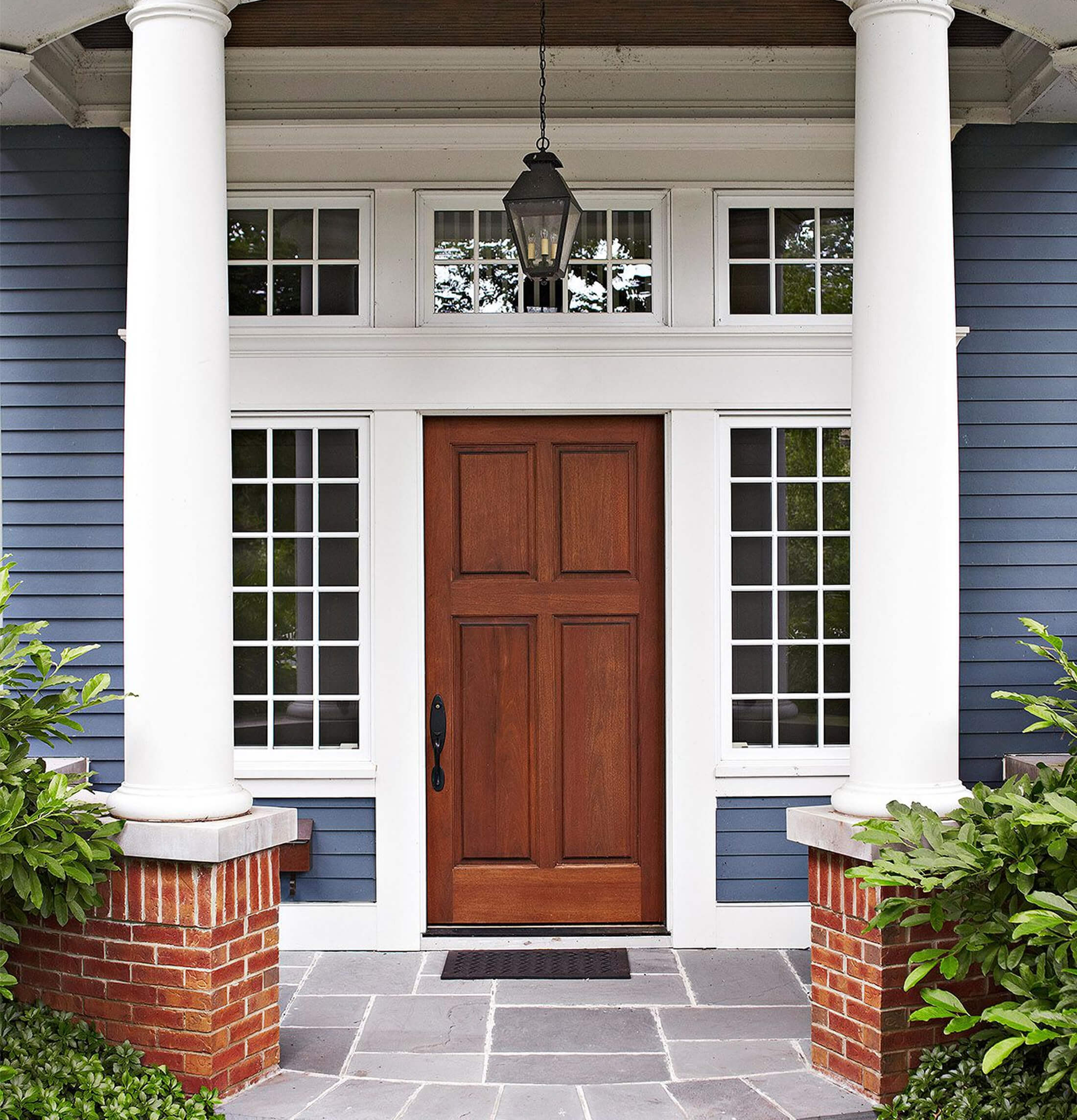
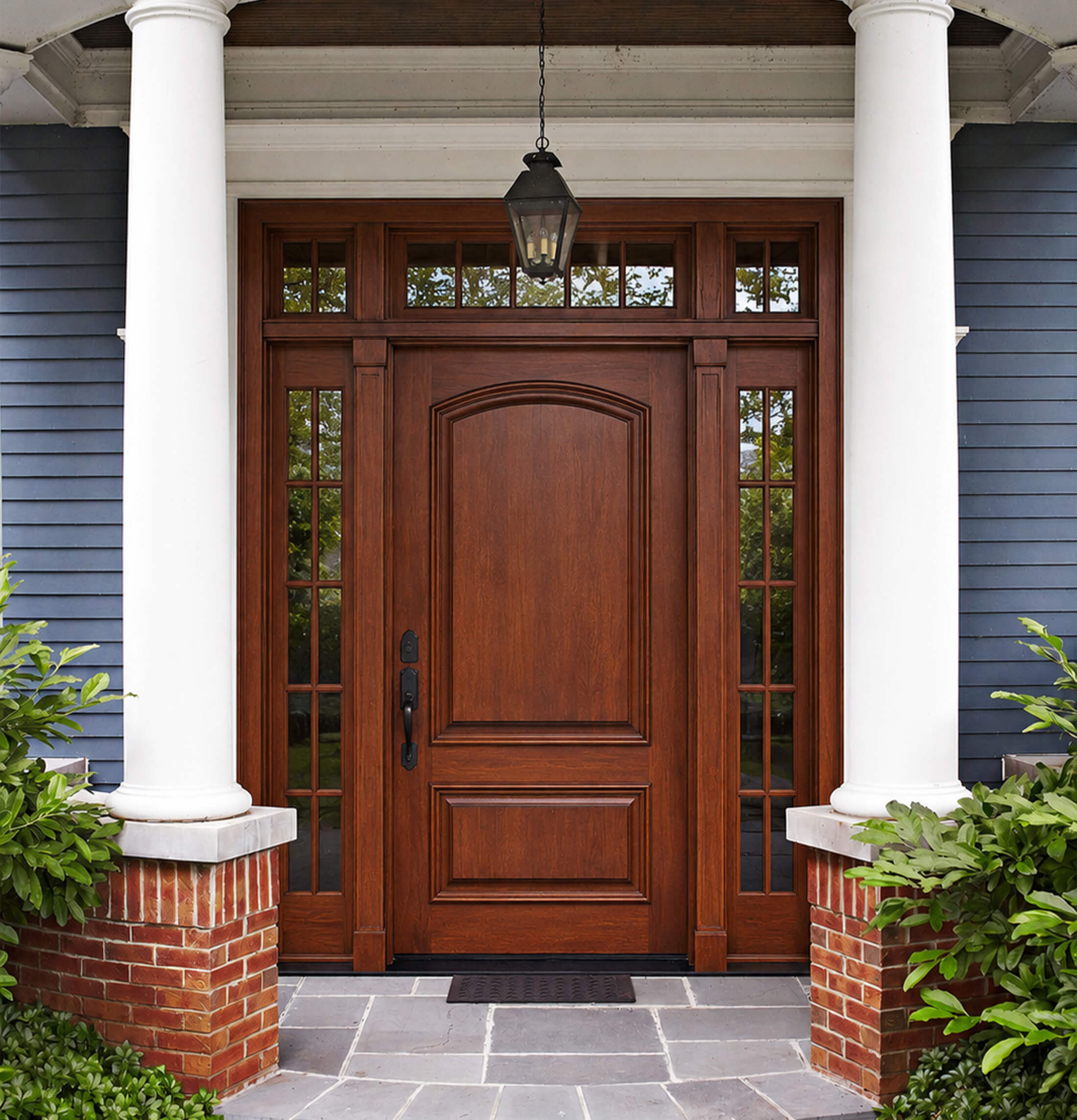
Sizing design and material options between custom vs stock
| Factor | Stock Door | Custom Wood Door |
|---|---|---|
| Sizing | Standard heights and widths only | Built to your exact opening, including non-standard sizes |
| Wood species | Limited or none (often composite/veneer) | Wide range like oak, mahogany, walnut, alder, and more |
| Panel and glass options | A handful of preset styles | Fully customizable panel layout, glass, and detailing |
| Fit | Often requires framing adjustments for unusual openings | Designed to fit from day one |
| Finish | Factory-applied, limited depth | Custom stain or paint matched to your home |
If your opening is a standard size and you like one of the available finishes, a stock door will do the job. If your home has an older or non-standard opening, or you want the door to genuinely match your architecture, custom closes that gap.
Compare cost lifespan and energy efficiency
| Factor | Stock Door | Custom Wood Door |
|---|---|---|
| Upfront cost | Lower | Higher |
| Lead time | Often available same-day or within days | Built to order, plan for lead time |
| Construction | Frequently hollow-core or composite | Typically solid wood, better resistant to warping |
| Fit and draft resistance | Standard tolerances | Tighter fit reduces drafts and can improve energy efficiency |
| Expected lifespan | Shorter — may need replacement sooner | Longer with proper care and maintenance |
| Resale/curb appeal impact | Modest | Generally stronger, especially on prominent entries |
The pattern here isn’t custom always wins. It’s that custom costs more upfront and takes longer to arrive, in exchange for a tighter fit, sturdier construction, and a longer lifespan. Whether that trade is worth it depends on how long you plan to stay in the home and how visible the door is.

When a stock door is the right choice
A stock door is a reasonable choice when:
- Your opening is a standard size
- You’re working with a tight budget or timeline
- The door isn’t a major visual focal point (a side or basement entry, for example)
- You’re prepping a rental or investment property rather than a long-term home
There’s nothing wrong with a stock door in these situations. It does the job it’s designed to do.
When a stock door is the right choice
A custom wood door tends to be worth the investment when:
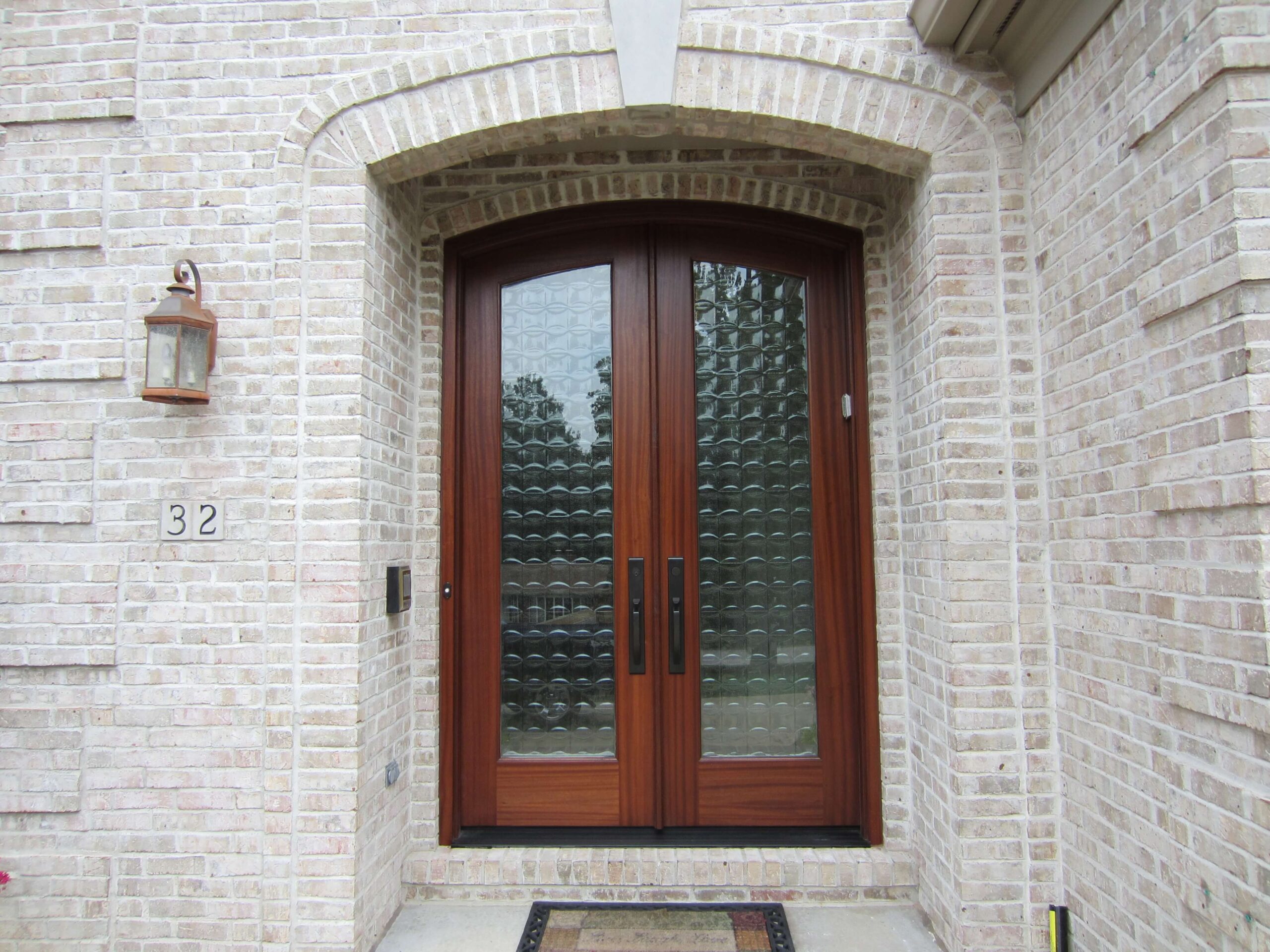
- Your opening is non-standard, older, or an unusual shape
- Your front entrance is a major part of your home’s curb appeal
- You want a specific wood species, finish, or design detail you can’t find in stock options
- You plan to stay in the home long enough for durability and energy efficiency to pay off
- You’re doing a full entrance makeover, not just a swap
How to decide which door fits your home
Ask yourself three questions:
- Is my opening standard or non-standard? Non-standard openings usually settle this decision on their own.
- How visible is this door? A front entrance carries more weight than a side or utility door.
- How long will I be in this home? The longer the horizon, the more a custom door’s durability and fit pay off.
If you land on custom for two or more of these, it’s worth getting a quote before committing to a stock option that may need modification anyway.
Have a project you'd like feedback on?
Upload a photo of your entrance and we’ll show you what a custom door could look like.
Why St. Louis homeowners are choosing custom
Local housing stock is actually the real driver here, more than a stylistic «trend.» A few things worth naming specifically:
Clayton and Ladue
These mix historic mansions with newly built custom estates, and the architecture spans everything from Tudor to contemporary the neighborhoods in Clayton are a delightful mix of architectural styles, from charming Tudors to modern mansions, and you’ll see both the historic homes and the newly-built custom ones.
Kirkwood and Webster Groves
Are known for older, walkable neighborhoods where the housing stock ranges from historic brick bungalows and colonial two-stories to recently built modern farmhouses you’ll find a wide range of homes around Kirkwood like historic brick bungalows, colonial-style two-story homes, and recently-built modern farmhouses.
Central West End, Compton Heights, and Shaw
Are historic city neighborhoods built around homes from the late 1800s and early 1900s, long before modern standard door sizing existed Compton Heights is one of St. Louis’ most iconic historic neighborhoods, known for its stunning architecture, tree-lined streets and timeless charm.
That’s the practical reason custom doors come up so often in St. Louis renovations. A large share of the area’s most desirable housing predates the standard sizing that stock doors are built around. Add in a steady wave of high-end renovations across these neighborhoods, and a custom-built entrance is frequently the more practical choice, not just the more attractive one.
If you’re renovating a home in Ladue, Clayton, Kirkwood, Webster Groves, or one of St. Louis’s historic city neighborhoods, there’s a good chance your original opening won’t match anything sitting on a home improvement store shelf.
FAQs: Custom Wood Doors vs Stock Doors
Is a custom wood door worth it over a stock door?
For a highly visible entrance, a non-standard opening, or a long-term home, yes. The fit, durability, and design flexibility typically outweigh the higher upfront cost. For a low-visibility or short-term situation, a quality stock door can be the more practical choice.
How much does a new front door improve curb appeal?
A new front door is one of the highest-impact, lowest-cost exterior updates available, especially when its scale and finish are matched to the home’s architecture. Custom doors tend to have a stronger visual effect because every detail is chosen to fit the home rather than a general audience.
How long do custom wood doors last compared to stock doors?
Custom wood doors are typically built with solid wood and tighter joinery, which generally means a longer lifespan than composite or hollow-core stock doors, provided the door is properly maintained.
Are custom wood doors more energy efficient?
Often, yes. Because a custom door is built to the exact dimensions of your opening, it can fit more tightly and reduce drafts compared to a standard-size stock door.
How much more expensive is a custom door than a stock door?
Costs vary by size, wood species, and design complexity, but custom doors generally cost more upfront than stock options. The tradeoff is a door built specifically for your home, with a longer expected lifespan and stronger fit.