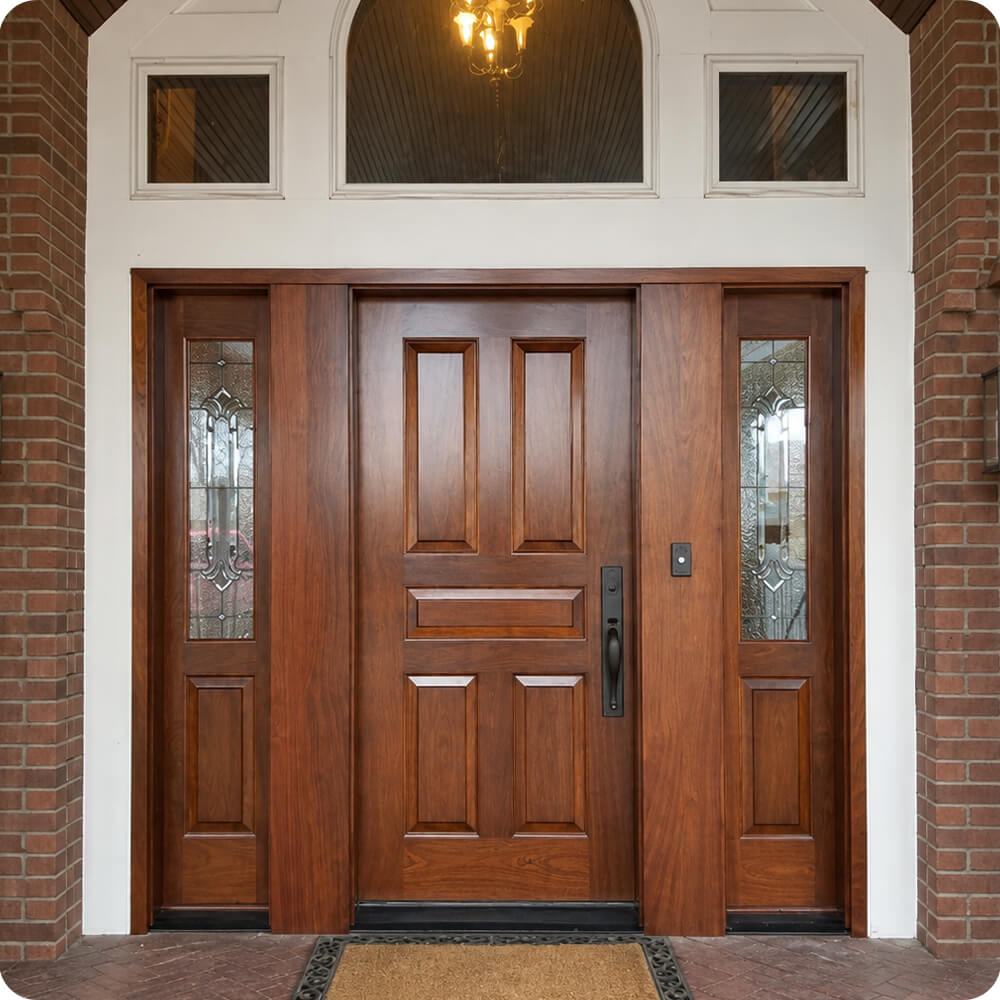
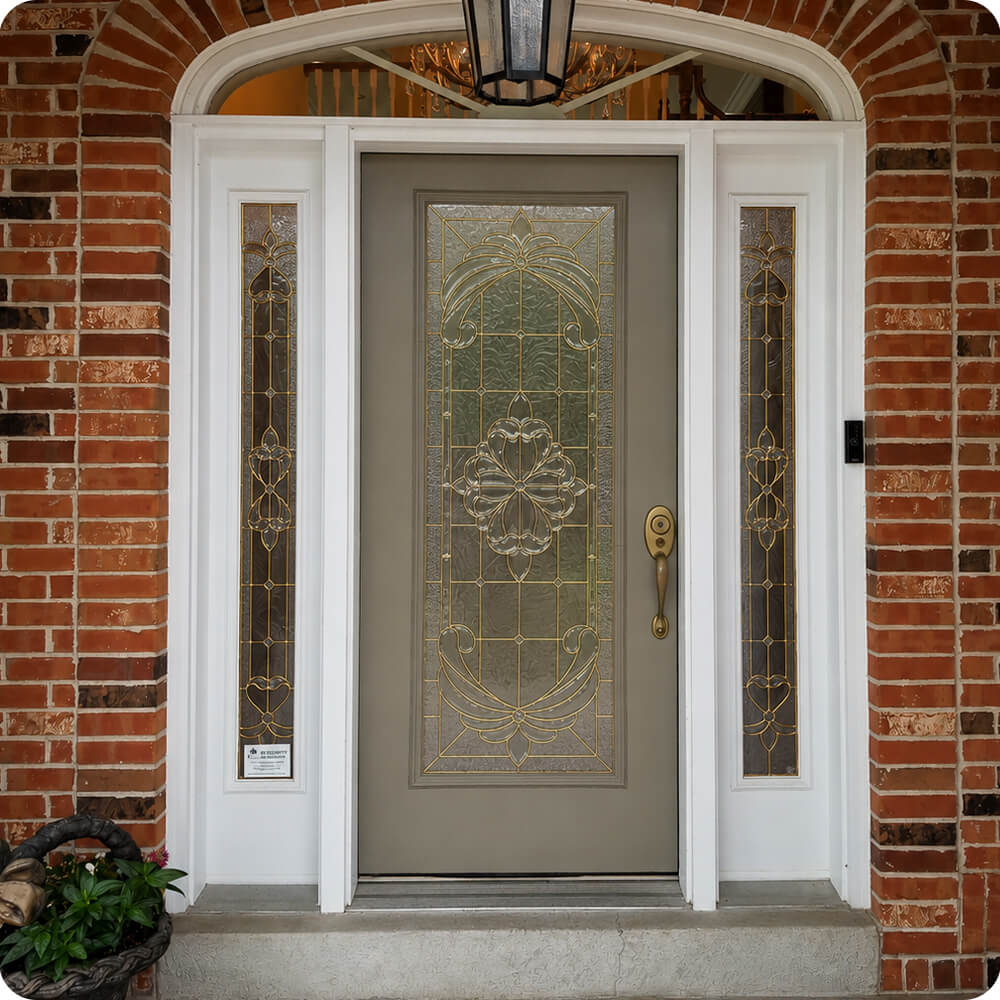
The original entry was a single painted door in a muted taupe-grey, with a full ornate leaded-glass panel, flanked by matching leaded sidelights. It's a genuinely detailed traditional design, but the painted finish and single door left the arched brick opening underutilized, and the busy leaded pattern filtered most of the light and view rather than letting it through.
Project Story
The thinking behind the work
The Starting Point
The Thinking
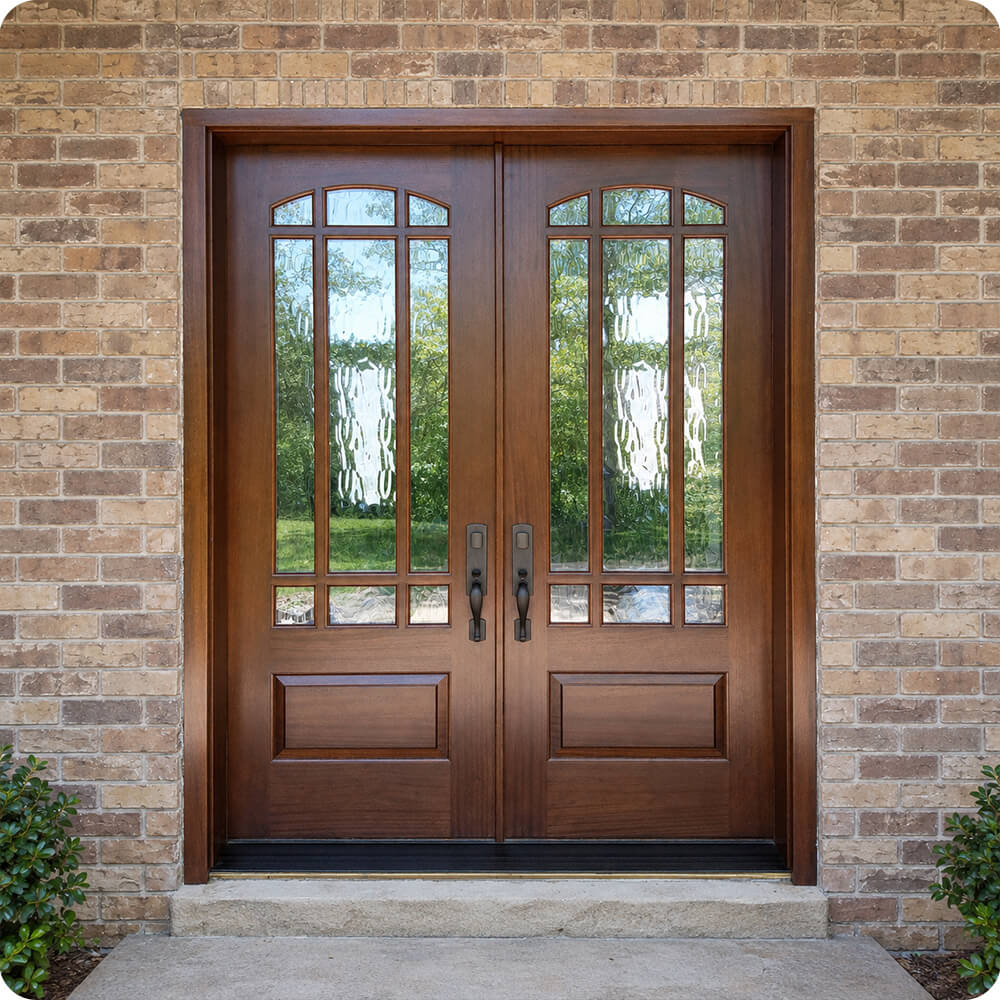
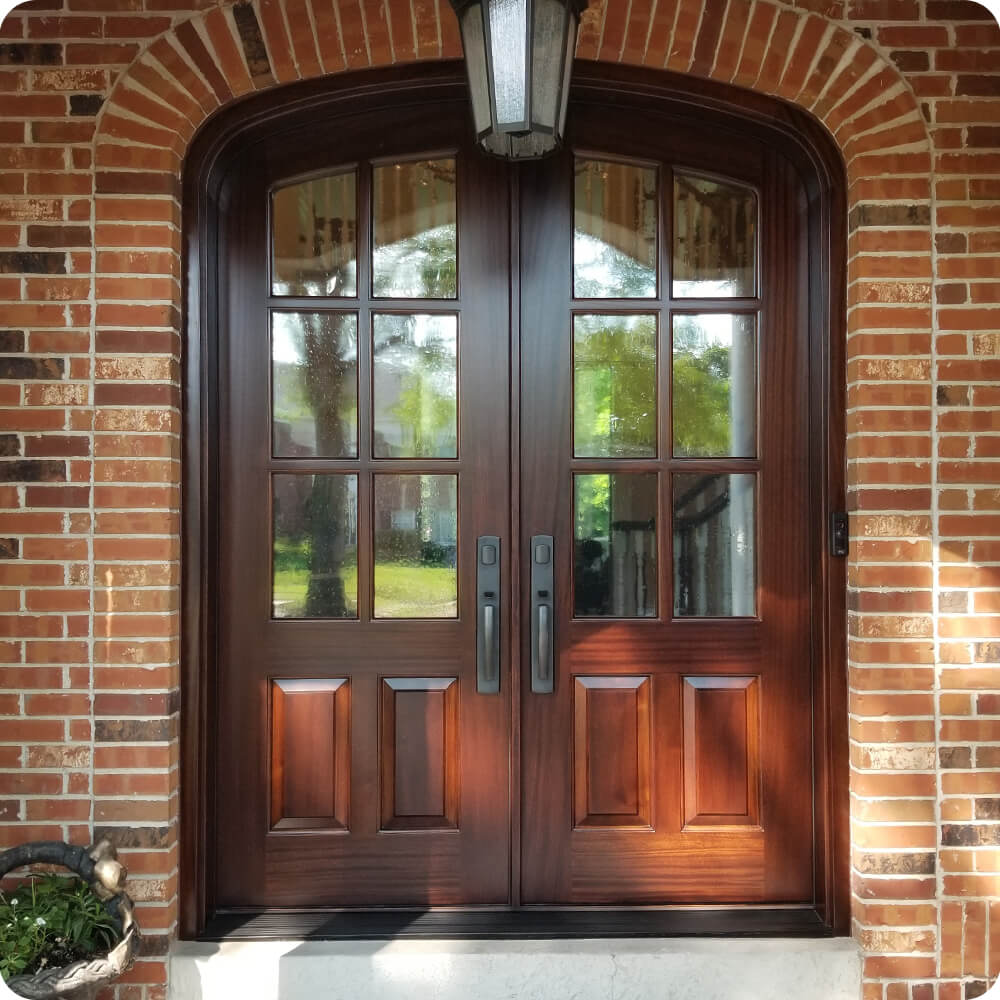
The arched brick opening had real width and height to work with, and a single door plus sidelights wasn't using the full arch as an entrance. Moving to a true double door lets the whole opening function as the doorway, with each leaf carrying a clean 6-lite arched glass grid rather than dense ornamental scrollwork, trading decorative density for genuine daylight and a clear view straight through.
The Execution
Built as a double mahogany door filling the full arched brick opening, each leaf glazed with a clean 6-lite arched glass grid over two solid raised panels below. Finished in a deep, warm mahogany stain that highlights the wood's natural grain. Hardware is a matched pair of pull handles with a thumb-latch mechanism, mounted at the center of each leaf.
The Result
The entry now uses the full width and height of the arched brick opening as a genuine double-door statement, with clear glass replacing dense leaded scrollwork and real wood grain replacing painted taupe. The whole opening reads as more open, more current, and more substantial than the original.
Specification
Unit Size
6'-6" x 9'-0"
Panel Thickness
1¾"
Joinery
Mortise-and-tenon, no mechanical fasteners.
Glass
Clear glass, 6-lite arched grid per leaf over two raised panels below
Finish System
Marine-grade exterior finish, six sides
Hardware
Matched pair of pull handles with thumb-latch mechanism
Installed By
Scobis
Common Questions
Why replace a single door with dense leaded glass with clean 6-lite glass instead?
The original leaded pattern was ornamental but filtered most of the light and view. A cleaner 6-lite grid still brings the same architectural rhythm to the glass, but lets real daylight and a clear sightline through, rather than a dense decorative pattern that mostly obscures the view.
Why move from a single door with sidelights to a true double door?
The arched brick opening had real width to work with, but a single door plus sidelights put most of that width into fixed decorative glass rather than the door itself. A true double door uses the full arch as an actual entrance, giving the home a wider, more functional entry.
Why choose a mahogany stain over the original painted finish?
The painted taupe finish, while tidy, hid the wood entirely and gave the entry a flatter, less distinctive look. A mahogany stain lets the natural grain read as the material story, giving the door genuine warmth and character in place of a uniform painted surface.
More Projects Like This