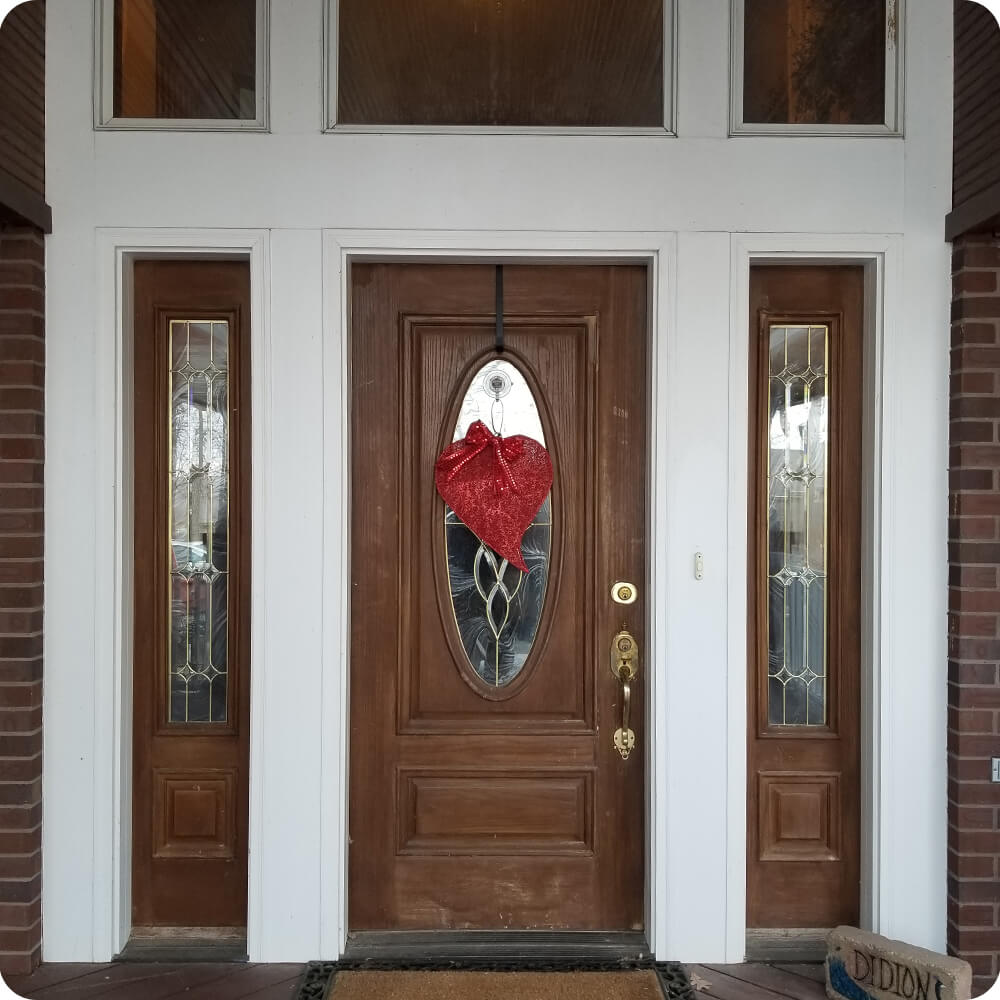
The original entry was a single door with an oval leaded-glass insert set into the upper panel, flanked by matching leaded sidelights, all trimmed in painted white against the red brick. It's a traditional, decorative design, but the painted white trim created a visual break between the door and the brick, and the door's finish had faded and worn unevenly over time.
Project Story
The thinking behind the work
The Starting Point
The Thinking
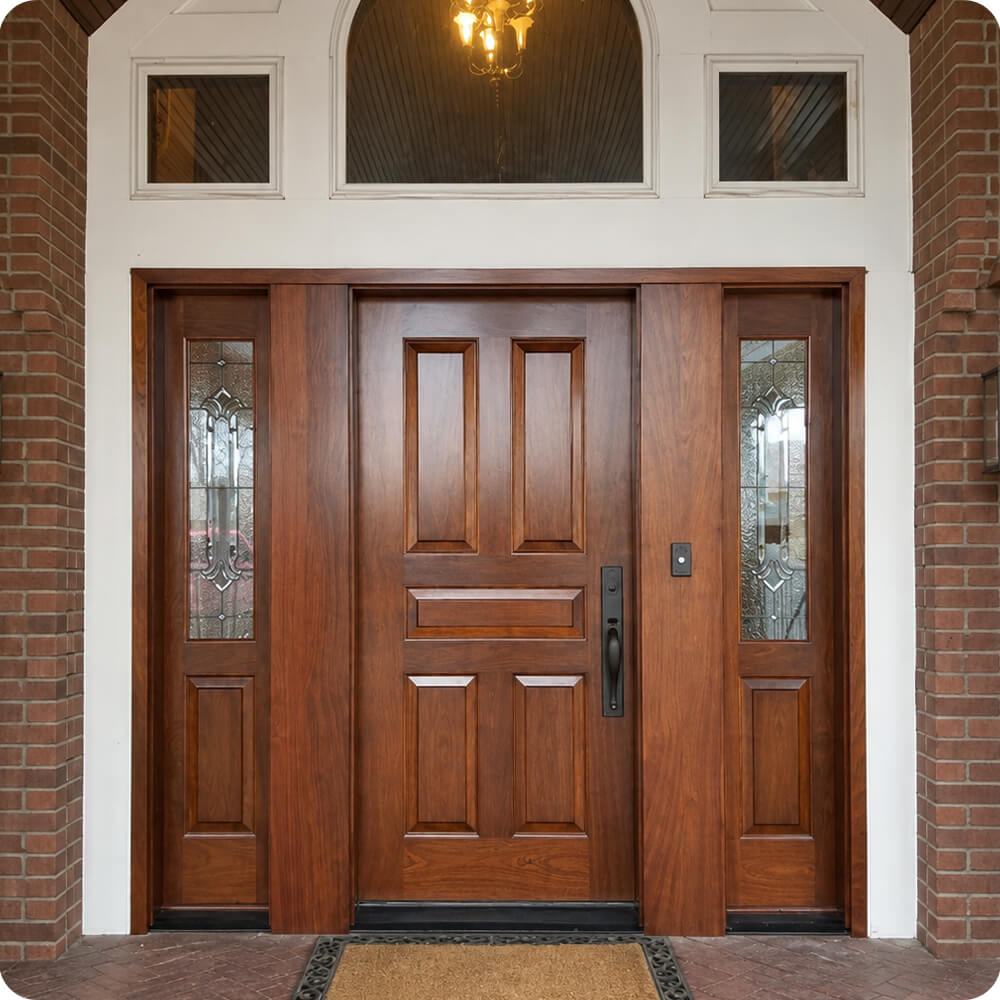
Rather than keep the painted trim separate from the door, the redesign brought both into one continuous stained wood tone, trim and door together read as a single material now, instead of a stained door sitting inside a painted frame. The oval leaded-glass insert was dropped in favor of a solid five-panel design, trading decorative glass for a more substantial, private look with real panel depth and shadow lines. The sidelights kept a leaded-glass element but simplified it to a smaller arched pattern near the top rather than a full-height decorative insert.
The Execution
Built as a single solid door in a five-panel design with no glass insert in the door itself. The sidelights retain a smaller arched leaded-glass lite near the top over a solid panel below. Finished in a rich, warm mahogany stain that continues onto the surrounding door casing, unifying the trim and the door in one continuous tone. Hardware is a dark handleset with a pull grip and separate deadbolt.
The Result
The entry now reads as one cohesive wood surface from the door through the casing, rather than a stained door boxed in by painted white trim. Trading the decorative oval glass for a solid panel design gives the door more privacy and a heavier, more substantial presence, while the sidelights' simplified leaded glass keeps a touch of the original detail without repeating the full decorative pattern.
Specification
Unit Size
5'-6" x 8'-0"
Panel Thickness
1¾"
Joinery
Mortise-and-tenon, no mechanical fasteners.
Glass
No glass in the main door; sidelights carry a small arched leaded-glass lite near the top over a solid lower panel
Finish System
Marine-grade exterior finish, six sides
Hardware
Dark handleset with pull grip and separate deadbolt
Installed By
Scobis
Common Questions
Why match the trim stain to the door instead of keeping it painted white?
Painted white trim around a stained door creates a visual break between the two, the trim reads as separate from the entry rather than part of it. Staining the trim the same tone as the door lets the whole opening read as one continuous wood surface against the brick.
Why remove the decorative oval glass from the door?
A solid five-panel design gives the door more privacy and a heavier, more substantial look, with real depth from the panel shadow lines. It's a trade-off, less ornamental detail on the door itself, but a cleaner, more private entry as a result.
Why keep some leaded glass in the sidelights but simplify the pattern?
A smaller arched leaded lite keeps a touch of the original decorative character without repeating a full-height ornamental pattern on both sidelights. It's a middle ground between fully removing the decorative glass and keeping the original design unchanged.
More Projects Like This