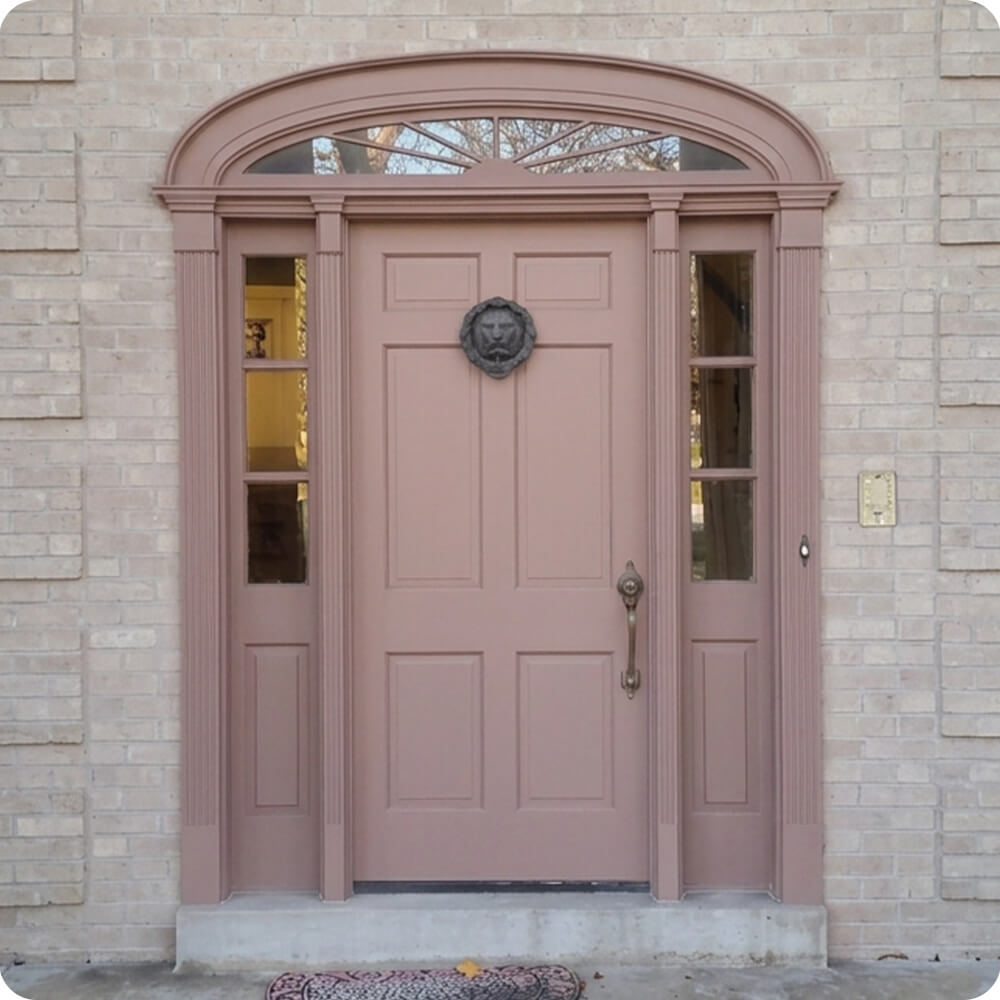
The original entry was a single painted door in a mauve-taupe tone, with a traditional six-panel layout, a cast lion-head door knocker, matching multi-pane sidelights, and a sunburst fanlight above. It's a classic Georgian-style design that had been well maintained, but the painted finish and single-door width didn't carry the same architectural weight as the wide arched transom framing it, the opening was clearly built for something more substantial than a single leaf.
Project Story
The thinking behind the work
The Starting Point
The Thinking
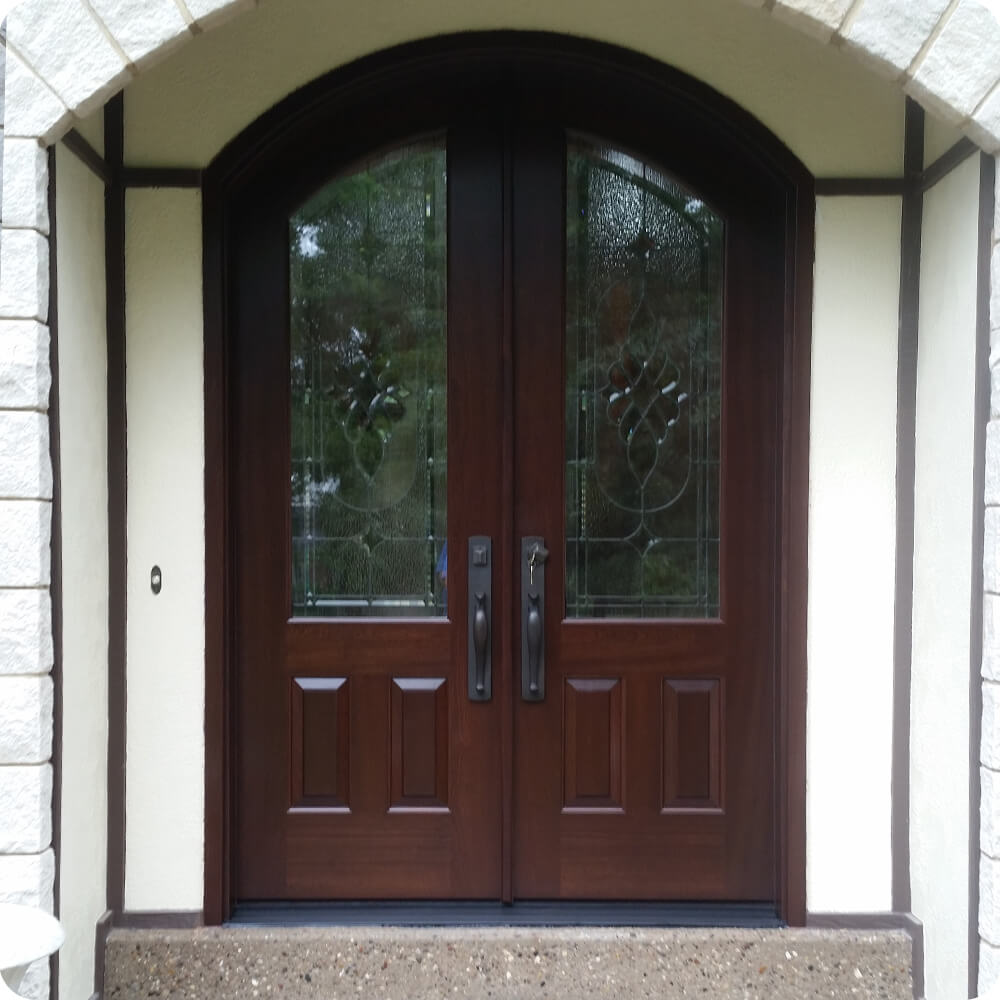
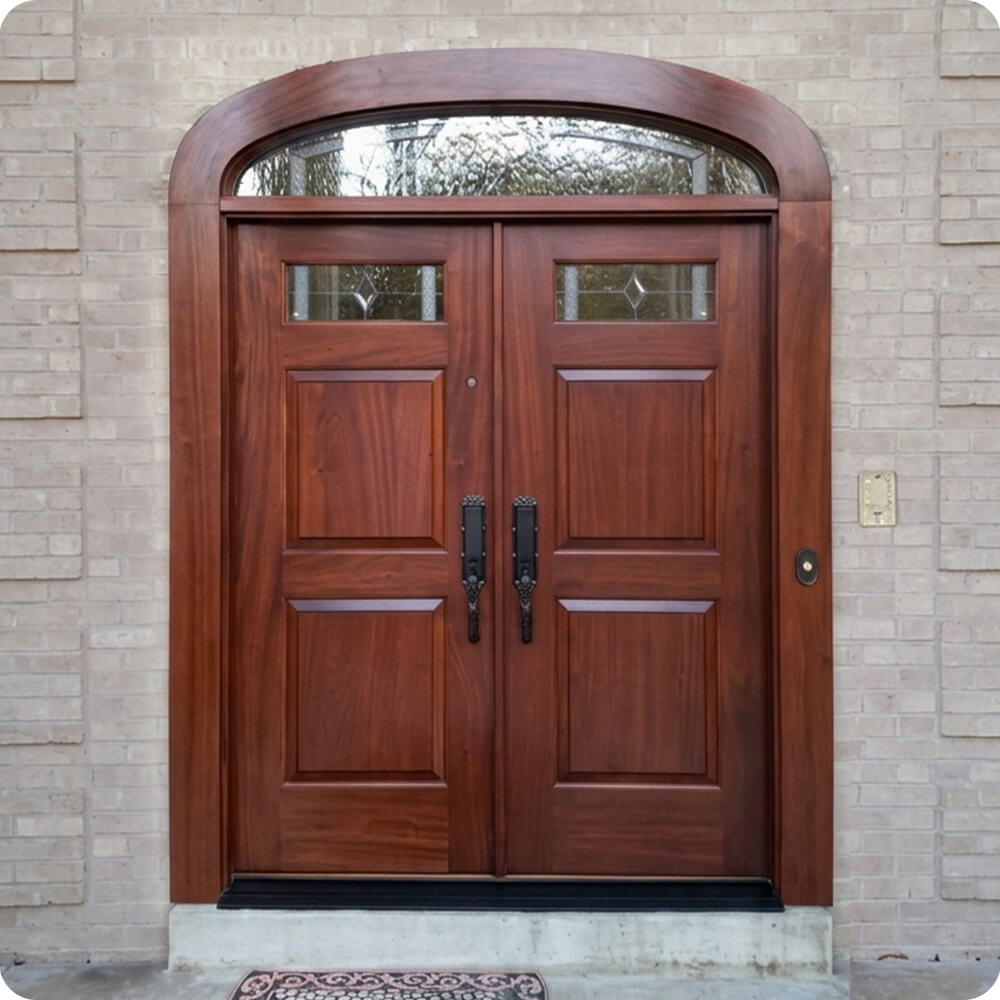
The arched surround and elliptical fanlight were already generous in scale, and a single door under that much glass left the entry feeling top-heavy, an ornate window with a modest door beneath it. Moving to a true double door lets the whole arch function as a proportional entry, matching the scale the fanlight had always suggested. Rather than a painted finish, natural mahogany was chosen to bring warmth and grain to the entry, replacing a flat painted surface with real wood character. Small diamond-accent glass lites were added near the top of each leaf.
The Execution
Built as a double mahogany door filling the full arched opening, with a small rectangular glass lite featuring a diamond-shaped decorative accent set near the top of each leaf. Below the glass, each door carries two raised panels. Finished in a natural, warm mahogany stain rather than paint. Hardware is a matched pair of ornate aged-iron handlesets, mounted on both leaves.
The Result
The entry now matches the scale its own fanlight had always implied — a wide double door filling the arch, with real wood grain replacing a flat painted surface. The small diamond-glass accents and matched iron hardware keep the traditional, formal character of the original while giving the whole opening more presence and craftsmanship.
Specification
Unit Size
6'-0" x 8'-6"
Panel Thickness
1¾"
Joinery
Mortise-and-tenon, no mechanical fasteners.
Glass
Small rectangular glass lite with a diamond-shaped decorative accent, one per leaf.
Finish System
Full strip to bare wood, new mahogany-red stain, marine-grade topcoat, six sides
Hardware
Matched pair of ornate aged-iron handlesets.
Installed By
Scobis
Common Questions
Why replace a single painted door with a mahogany double door?
The arched surround and sunburst fanlight above the original door were generously scaled, but a single door beneath them left the entry looking top-heavy, a grand window over a modest door. A double door matches the proportions the fanlight had always suggested, and natural mahogany brings real wood warmth in place of a flat painted finish.
Why add small diamond-accent glass instead of leaving the doors solid or adding full glass panels?
A small decorative lite near the top of each leaf adds a touch of formal detail without turning the entry into a fully glazed door, which would have shifted the look toward more contemporary. It's a restrained way to bring in a hint of light and craftsmanship while keeping the door's traditional, substantial character.
Why move from a single lion-head knocker to matching handlesets on both doors?
A single decorative knocker made sense on a single door, but two operating leaves need hardware that works as a pair. Matching aged-iron handlesets give both doors equal presence and function, so the entry reads as one coordinated design rather than one primary door and one plain twin.
More Projects Like This