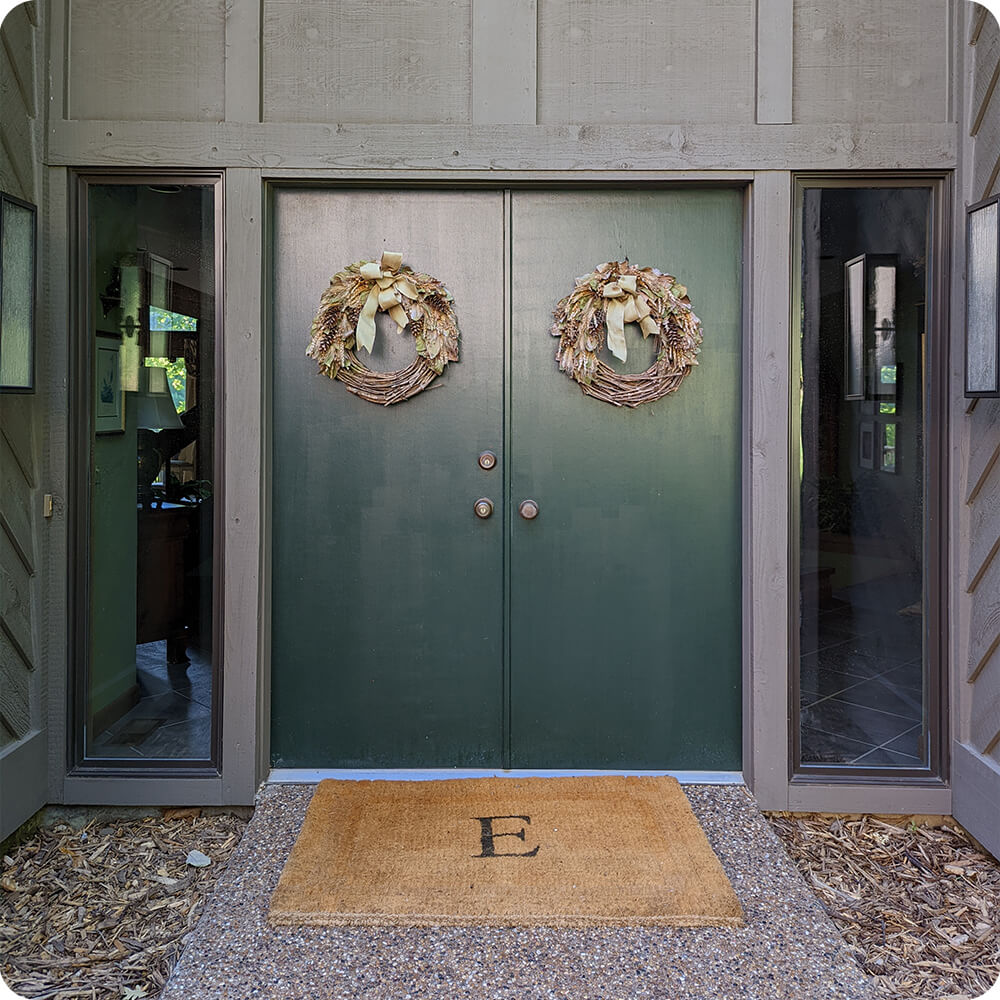
The original entry was a pair of solid, flat-painted doors in a dark forest green, no glass, no panel detail, just a plain painted surface with a single deadbolt and knob per leaf. Set beneath a striking board-and-batten gable with a grid of clerestory windows above, the doors themselves gave no hint of the home's more architectural, craftsman-influenced style.
Project Story
The thinking behind the work
The Starting Point
The Thinking
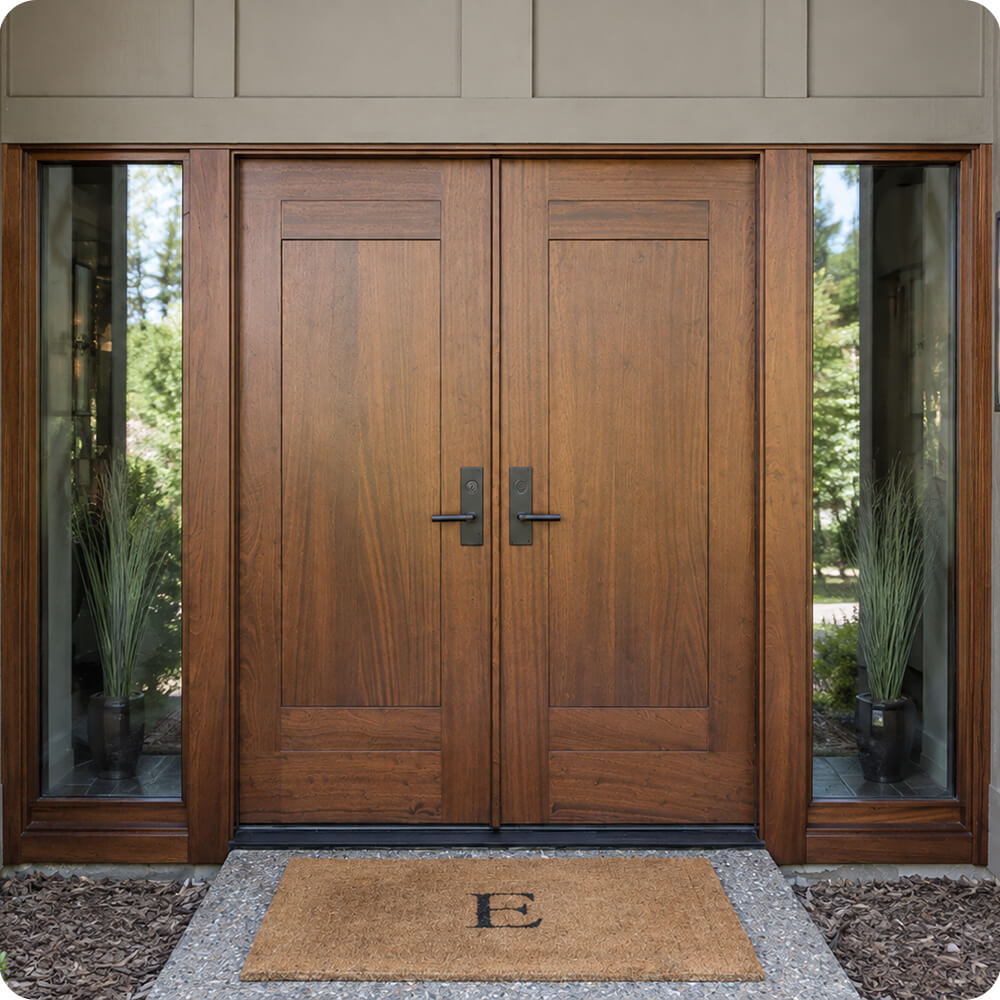
The home's exterior already leans into clean, deliberate geometry. The new design picks up that same language: a single flat recessed panel per leaf, simple and architectural rather than traditional raised moulding, with real wood grain doing the visual work instead of paint. Adding clear-glass sidelights on both sides, where the original had none, brought genuine daylight into the entry for the first time. Matched modern lever handlesets replaced the plain knobs, giving the doors a more current, tactile feel.
The Execution
Built as a double door with a single flat recessed panel on each leaf, flanked by new clear-glass sidelights on both sides. Finished in a rich, warm mahogany-red stain that highlights the wood's natural figure. Hardware is a matched pair of modern lever handlesets with a deadbolt, mounted at a consistent height on both doors.
The Result
The entry now matches the architectural character of the home's board-and-batten facade, real wood grain and a simple, deliberate panel line replace flat green paint, and the new sidelights bring daylight into an entry that previously had none.
Specification
Unit Size
6'-6" x 8'-0"
Panel Thickness
1¾"
Joinery
Mortise-and-tenon, no mechanical fasteners.
Glass
Clear glass, full-height sidelights only
Finish System
Marine-grade exterior finish, six sides
Hardware
Matched pair of modern lever handlesets with deadbolt
Installed By
Scobis
Common Questions
Why add sidelights when the original doors didn't have any?
The original solid green doors let in no daylight at all into the entry. Adding clear-glass sidelights on both sides brings genuine light into the entrance for the first time, without needing glass in the door leaves themselves.
Why choose a single flat panel instead of a more traditional raised-panel design?
The home's exterior already uses clean, geometric board-and-batten siding and a grid of clerestory windows. A single flat recessed panel on each door leaf matches that same architectural language, rather than introducing a more ornate, traditional panel style that wouldn't fit the home's look.
Why move from painted doors to a stained mahogany finish?
Painted doors hide the wood entirely and can show wear or fading over time. A stained finish lets the mahogany's natural grain read as a genuine material choice, giving the entry more warmth and character than flat paint.
More Projects Like This