
How to Make Wood Entry Doors Last Decades, Season by Season
A well-built wood entry door can last for decades, but only if its finish keeps doing its job. The wood itself rarely gives out first. The finish does, and once it fails, sun and moisture go to work on the door underneath.
At Scobis, a weathered exterior door in a St. Louis home doesn’t automatically need replacing. Usually it needs the right care at the right time of year. With winter starting, this is the moment to check your door before freezing weather, snow and ice arrive. Here is how we think about exterior wood door maintenance, season by season.
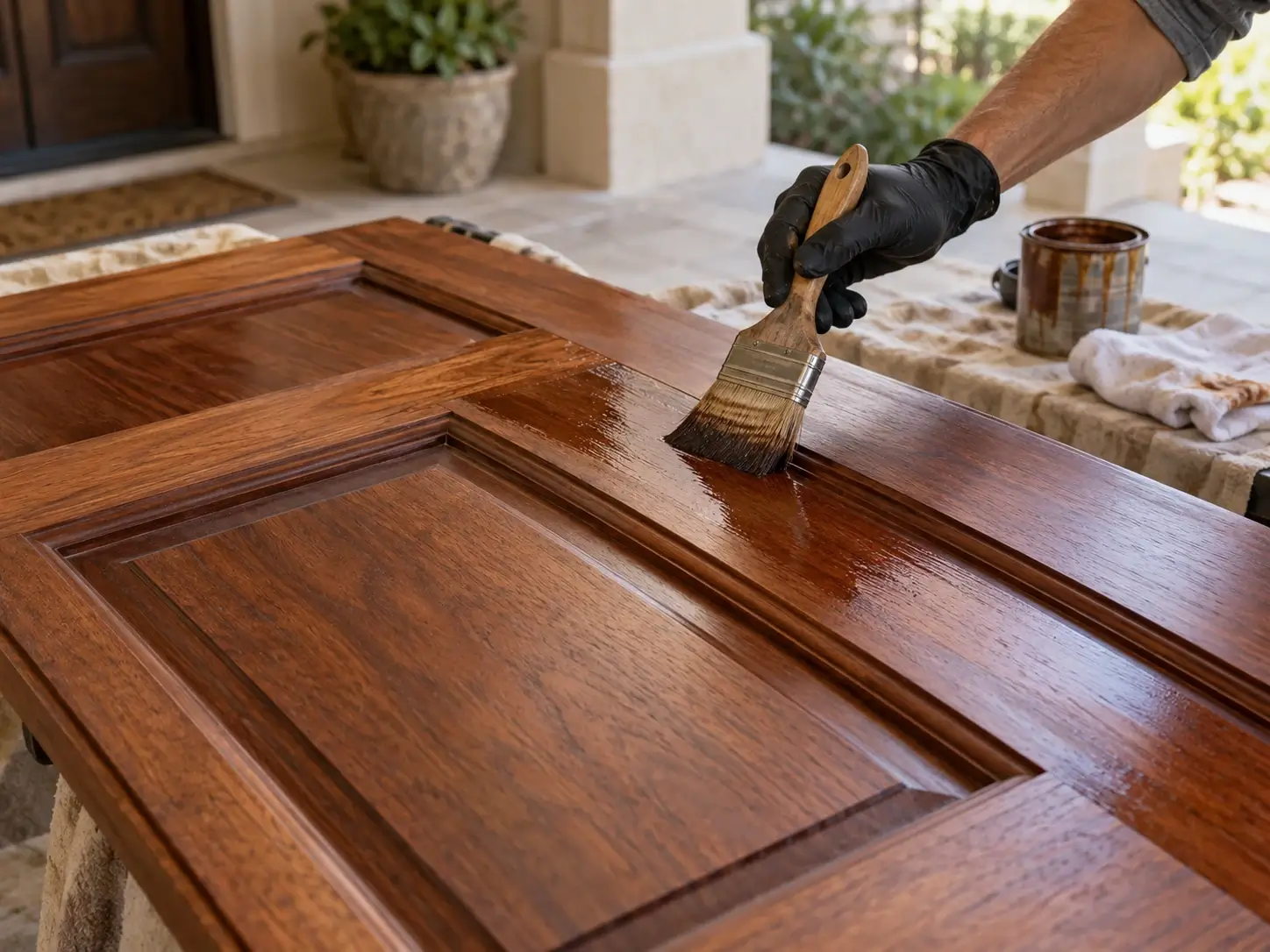
Why do wood entry doors wear out faster in St. Louis?
St. Louis puts a wood door through a true four-season workout. The National Weather Service notes that the area swings between warm, humid Gulf air and cold Canadian air masses. Summers bring roughly 35 to 40 days at 90°F or hotter, and spring is the wettest stretch of the year.
Wood responds to all of it. It swells when humid and shrinks when dry, and UV light breaks down the finish on whatever side faces the sun. Each cycle puts stress on the coating. Once the finish cracks, water gets into the wood. In winter, that moisture can freeze inside the door, and the damage speeds up from there.
What are the early warning signs your wood door needs attention?
Fading is the first thing most homeowners notice, and it’s the most common reason people call us. Where the fading shows matters. When we look at a door, we ask whether it’s only on the sun-facing side or across the whole door. Fading on one side often means a lighter refresh will do. Fading everywhere usually points to a fuller refinish.
Other signs the finish needs attention:
- Dull or chalky areas where the surface used to have a sheen
- Hairline cracks in the top coat
- Peeling, flaking or a spot where the finish has been scraped or worn through
- A change in color, usually lighter or grayer
- A door that starts to stick, drag or let in drafts
Is it the finish or the door itself?
It helps to separate finish problems from structural ones. A faded or cracked finish is a surface issue, and it can usually be renewed. Soft wood, failing joints, damaged panels or real warping are deeper problems. A fresh coat will not fix them. They need repair before any new finish goes on.
Looking for a custom wood door?
Send your specifications, images and your project, and our experts will guide you through the process.
What is the best finish for an exterior wood door?
There is no single best product. The right finish depends on how much sun and rain the door gets, the wood, the coating already on it and the look you want. What matters most is that every layer is rated for exterior use and that the stain, sealer and top coat are designed to work together.
A few points we stand by:
- Stain alone is not protection. Stain gives color. The clear top coats over it do the protecting. On our refinishing jobs, that often means three coats of a premium top coat.
- Marine finishes still need maintenance. A marine-grade finish is tough, but it is not a one-and-done coating. It still has to be inspected and renewed.
- Use exterior paint on both faces. Even the inside face of an exterior door needs exterior-grade paint. The whole door moves with the weather, and exterior paint stays flexible enough to move with it.
- Seal all six sides. The top, bottom and side edges need the same coats as the faces. An unsealed bottom edge pulls in moisture right where snow and water collect.
Can you refinish a wood door a lighter color?
Not always. We don’t ask clients to pick a stain color from a chart ahead of time. We look at the wood and test samples on the door with the homeowner. With a refresh, a door usually stays its current color or goes slightly darker. Going much lighter means stripping it completely, and a heavily weathered or veneered door may not allow that at all.
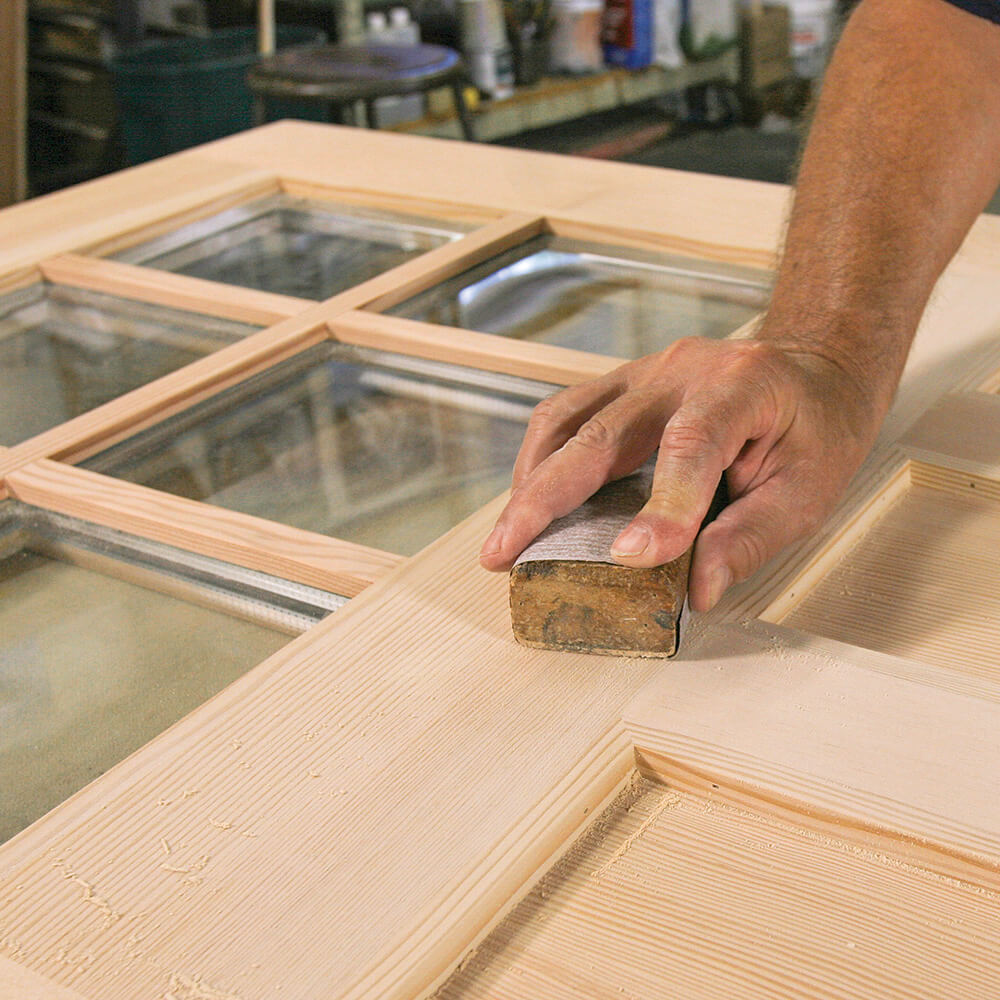
How do you maintain a wood entry door season by season?
A few minutes each season catches small problems before they turn into a restoration. Doors facing south or west get the most sun, so check those more often.
Fall: get your wood door ready for winter
Fall is the most important inspection of the year in Missouri.
- Look over the whole finish, including the bottom edge, for cracks, peeling or bare wood.
- Check the weatherstripping and door sweep. Replace any that are torn, flattened or gapped.
- Inspect the threshold and sill, and fix anything that lets water in before the freeze.
- Make sure the door opens and closes without dragging. A door that drags is wearing through its finish.
- Schedule any refinishing early. Exterior finish work needs dry weather, and many water-based clear coats can’t be applied below 50°F.
Winter: protect the door from snow, ice and water
- Keep snow, ice and wet leaves away from the bottom of the door and the sill.
- Don’t pile shoveled snow against the entry.
- Watch for drafts, condensation on glass, and a door that starts to bind.
Spring: check for freeze and moisture damage
Spring is the wettest season in St. Louis, and it shows what winter did.
- Look for coating failure, especially on the lower rails and panels.
- Check for swelling, open joints and soft or discolored wood.
- Clean the door gently with a soft cloth and mild soap. Avoid harsh or abrasive cleaners.
Summer: guard against sun and heat
- Watch sun-exposed areas for fading and fine cracking.
- Plan any recoat for a stretch of dry weather that meets the product’s temperature range.
- Note whether fading is on one side or the whole door. That tells you how much work it needs.
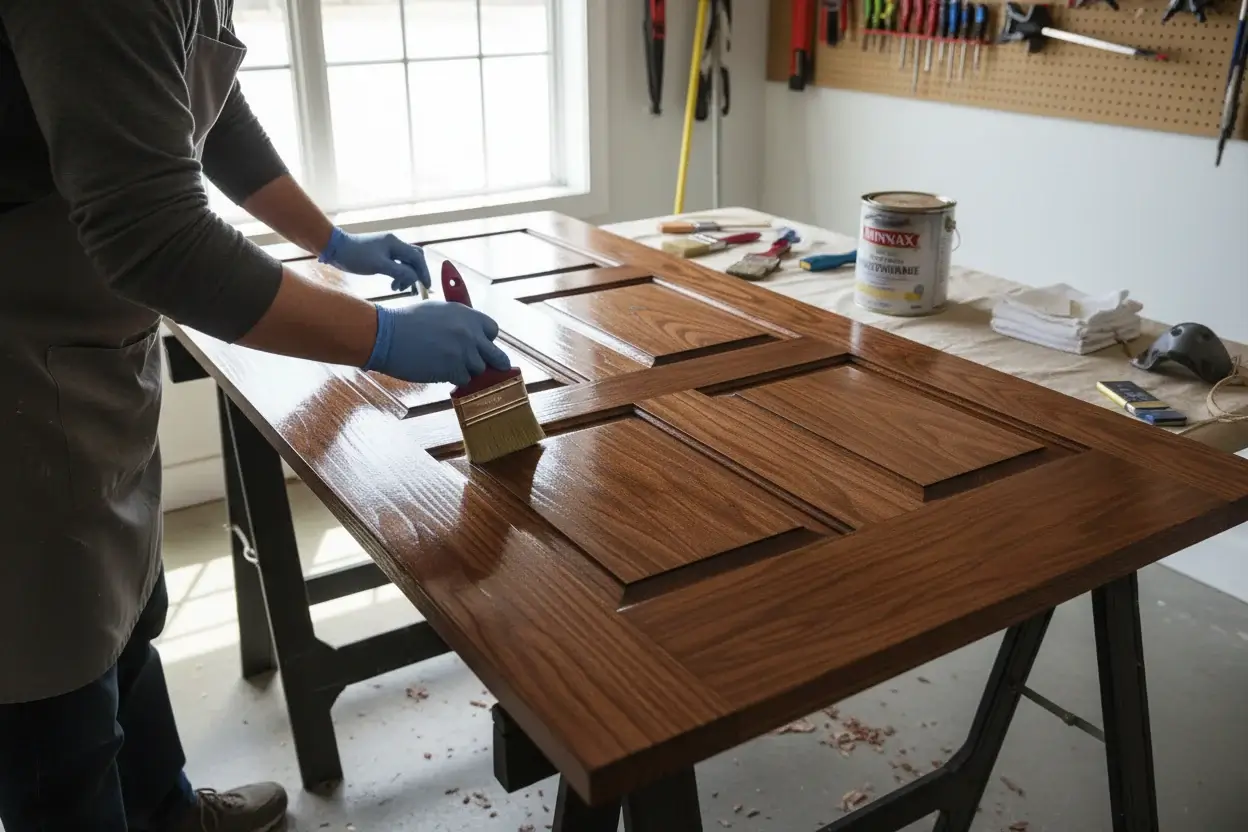
Should you refresh, restore or replace a wood entry door?
A weathered door does not automatically need replacing. For most doors we see around St. Louis, the choice is between two levels of work.
- Refresh. Done on site, usually in about 12 to 30 hours. The door is cleaned, prepped and recoated, and it stays its current color or goes slightly darker.
- Restoration. Usually 24 to 40 hours or more. The door often comes back to our shop to be stripped, while we board up the opening. Damaged panels can be repaired or replaced, and the color can change more.
What happens when a door is more weathered than it looks?
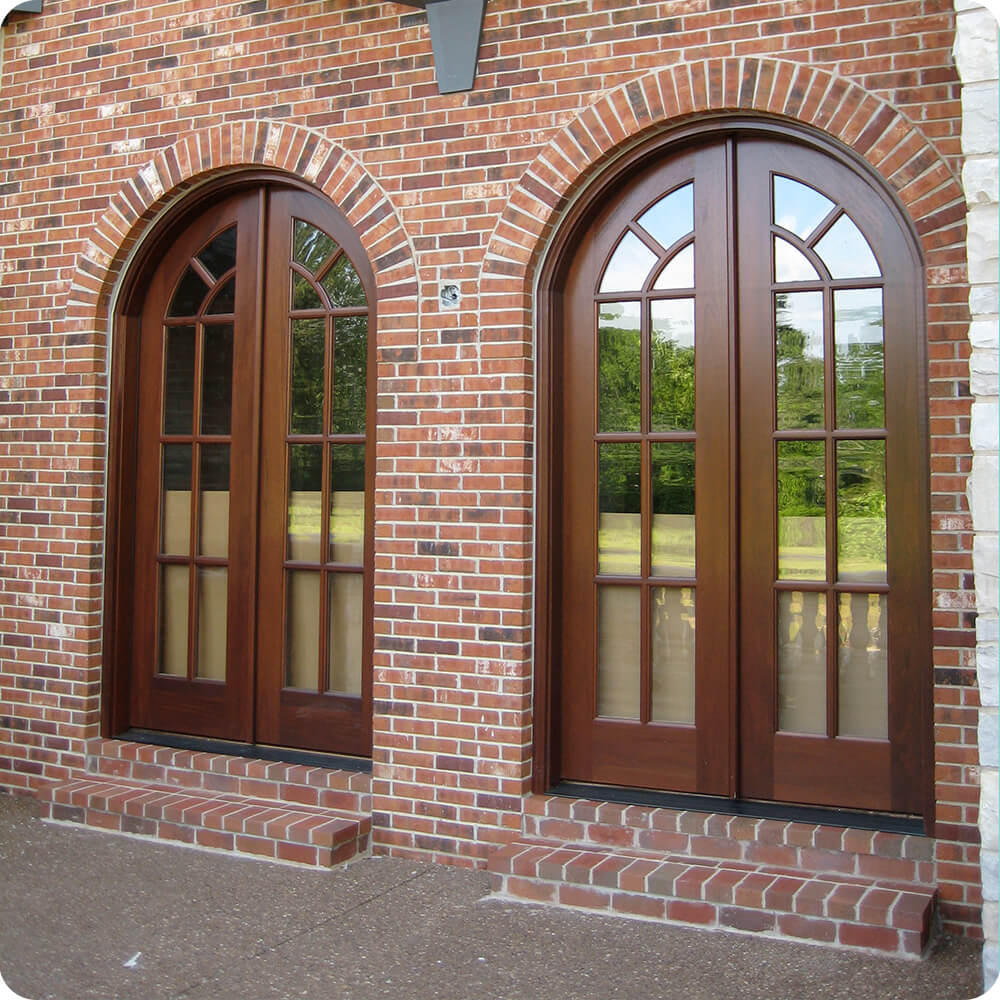
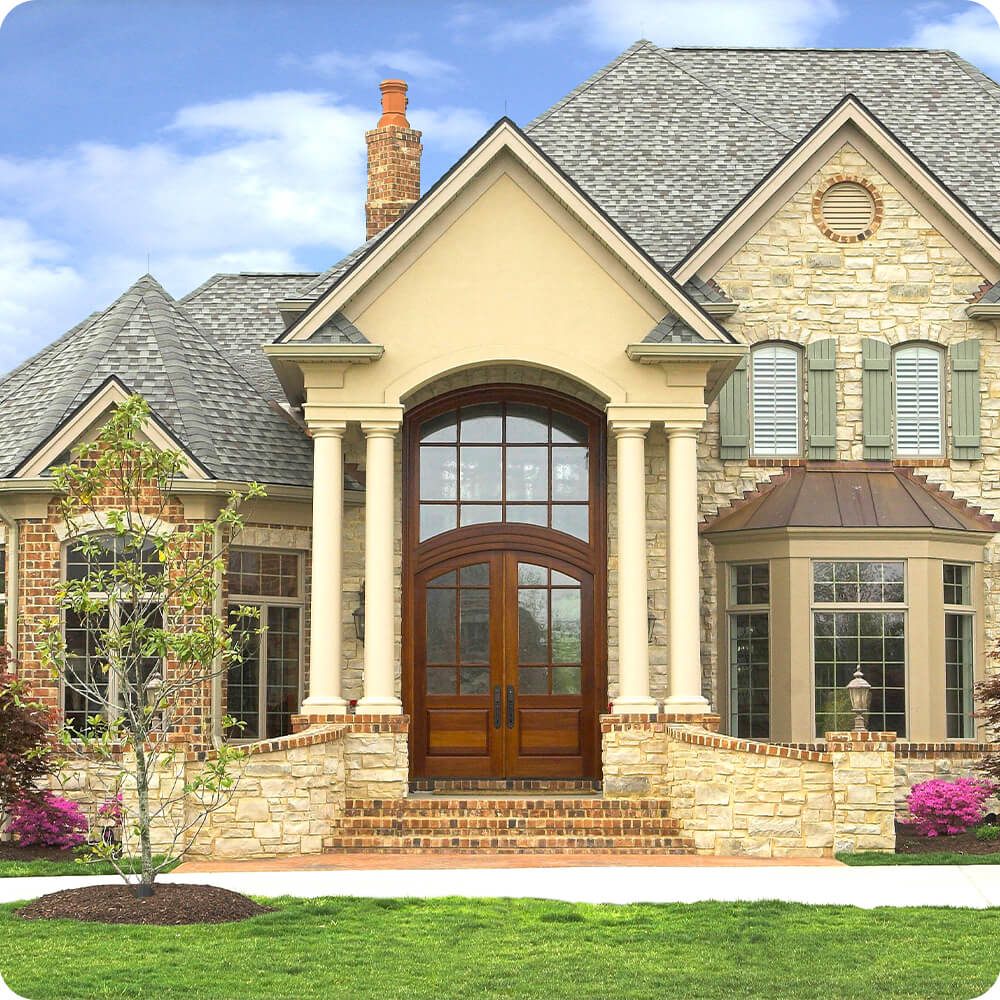
Weathering isn’t always visible from the front step. On one recent project, a pair of arched double entry doors turned out to be more weathered than the original estimate expected, and they were likely veneered. That limited how far they could be stripped.
The work grew from an estimated 24 to 32 hours to about 80. The doors couldn’t go lighter than their existing color, so we brought them to one even tone and finished them with three coats of premium top coat. The lesson for homeowners is simple. The longer a finish is left to break down, the fewer options you have when it’s time to refinish.
When should you call a professional instead of doing it yourself?
Routine cleaning and seasonal inspections are good homeowner jobs. So is swapping a worn door sweep. Bring in a professional when you see any of these:
- Widespread peeling, or finish worn down to bare wood
- A door that needs stripping or a real color change
- Damaged panels, open joints or soft wood
- A door that keeps sticking, dragging or leaking after basic adjustments
In our experience, a fresh coat over an underlying moisture or structural problem only hides it for a season. If you’re in the St. Louis area and aren’t sure which level of work your door needs, a quick assessment before winter can save you a much bigger job in spring.
Looking for a custom wood door?
Send your specifications, images and your project, and our experts will guide you through the process.
FAQs: Wood entry door maintenance
How often should you refinish an exterior wood door?
It depends on the finish, the wood and how much sun and rain the door takes. Instead of following a fixed calendar, inspect the door every season and recoat when you see dullness, fading or hairline cracks. South- and west-facing doors in Missouri usually need attention sooner.
Can you refinish a wood door in winter?
Exterior refinishing needs dry weather and temperatures within the product’s range. Many finishes can’t be applied in cold or damp conditions. In St. Louis, that usually means planning refinishing for fall or spring. A restoration done in the shop can work around the weather.
How do you protect a wood front door from snow and ice?
Keep snow and ice cleared from the sill and the bottom of the door, and never pile shoveled snow against it. Make sure the bottom edge is sealed and the door sweep and weatherstripping are in good shape before winter.
Why is my wood door sticking in winter?
Wood moves with temperature and humidity, so some seasonal change is normal. A door that keeps sticking or dragging may need its jamb and slab sanded and adjusted, new hinges, or new weatherstripping. Dragging also wears through the finish, so it’s worth fixing early.
Is it cheaper to refinish or replace a wood entry door?
For a well-built door, refinishing or restoration is usually the better value, especially for custom or arched doors that are costly to replace. Regular maintenance keeps the job at the refresh level, which takes far fewer hours than a full restoration.
Contact Our Team!