
How to Match Wood Doors in a Historic Renovation
Matching wood doors in a historic renovation means matching four things at once. That is species, panel and joinery profile, the proportions of the opening, and finish or color, not just picking something that “looks old.” The most reliable path is surveying the existing door and opening closely, deciding honestly whether repair is realistic, and if not, having a millwork shop build a reproduction from that survey rather than ordering a stock door and hoping it reads correctly. That process holds whether the building is a private home, a church, or a commercial or institutional structure.
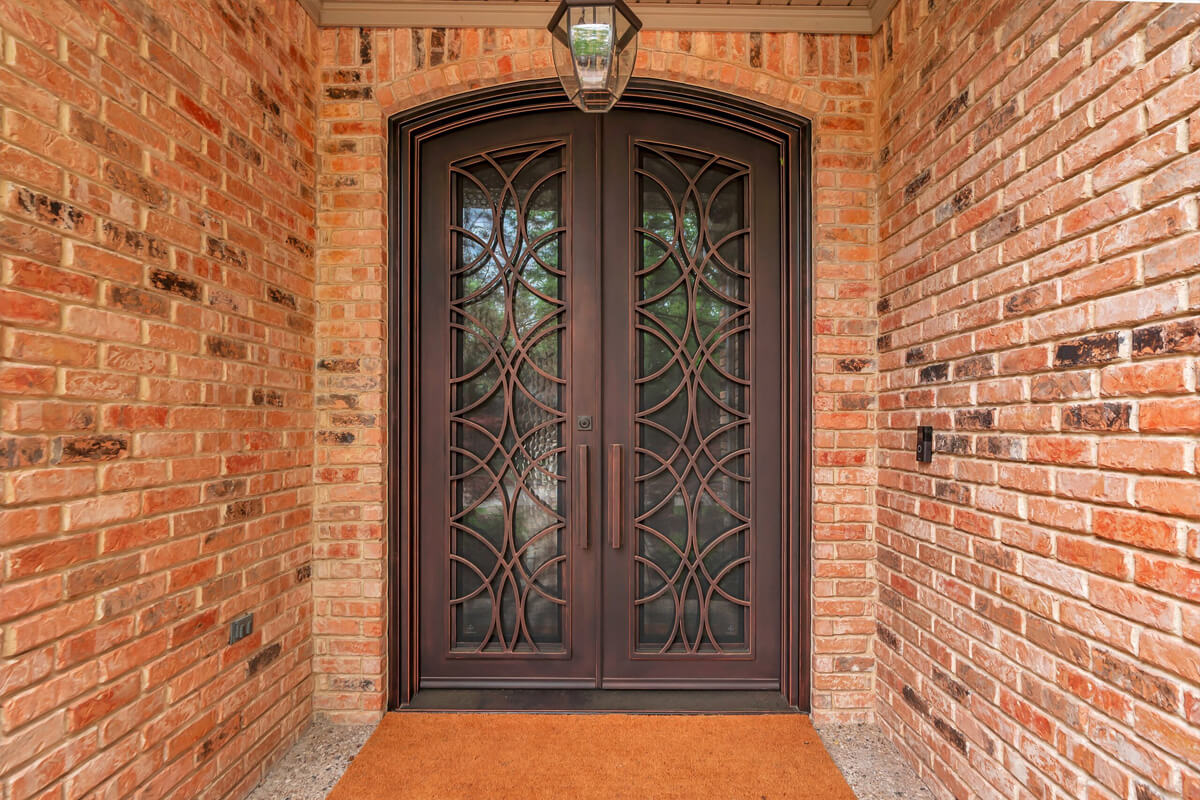
Repair or replace first a historic wood door?
This decision comes before anything else, and it’s the one most people get backwards.
Old solid-wood doors are usually worth saving. Historic doors were built from dense, tight-grained wood joined with mortise-and-tenon construction, which is why a century-old door often outlasts a modern one, the common failure points (a loose panel, a cracked rail, peeling finish, a soft spot at the bottom) are almost always repairable rather than structural. Repair makes sense when the core is sound and the damage is localized, and when the door or frame is original or period-correct to the building.
Replacement makes more sense when the damage runs deeper than the wood like a rotted-through frame, an opening that’s been altered or reframed, or a door that’s already been swapped once for something incompatible. It also applies, obviously, when the original door is missing entirely.
One thing to do regardless of which way you go is to keep the hardware. Historic locksets, hinges, and knobs are almost always solid brass or cast iron, built to be reused, and they do more for authenticity than almost anything else on the door.
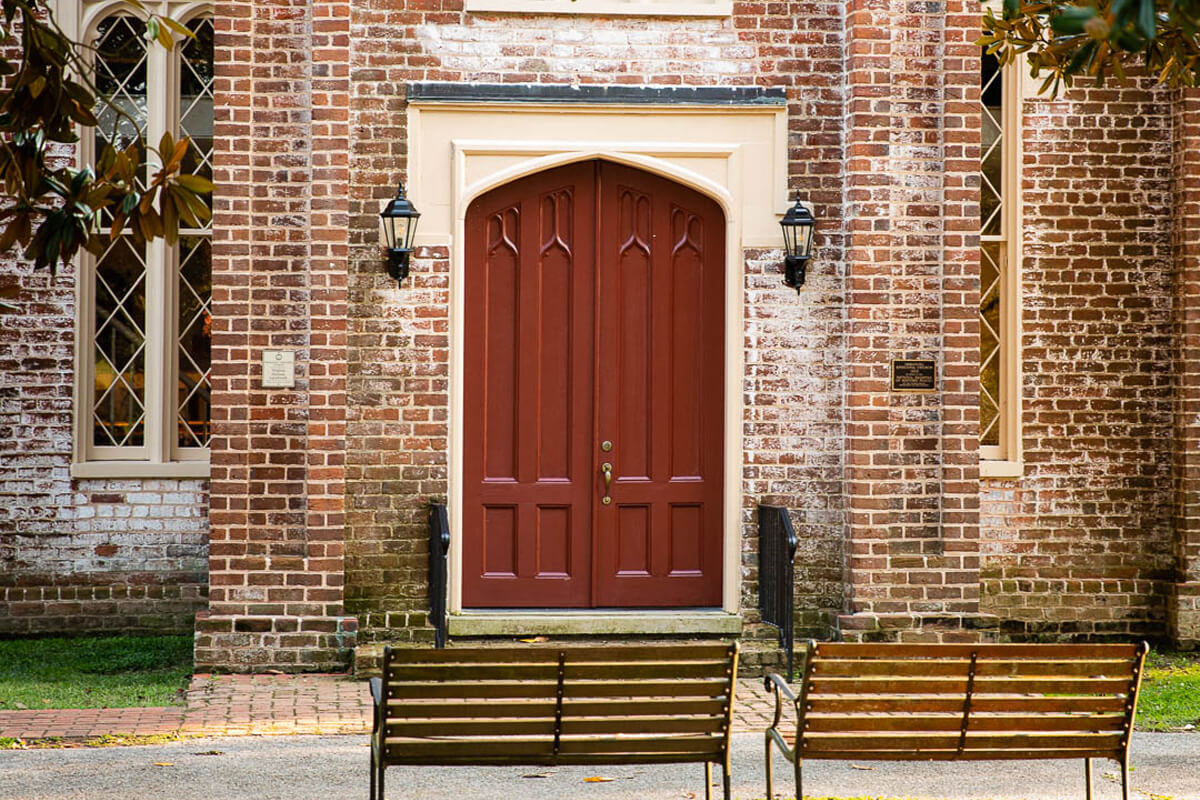
What wood was actually used in historic buildings
Historic doors weren’t built from a particular species for looks, they were built from whatever was dense, stable, and abundant enough to survive decades of seasonal movement inside a mortise-and-tenon frame. That’s also why matching the original species (or the closest modern equivalent) matters more than matching the color. Color can be replicated with stain and finish. Density and grain behavior can’t.
| Species | Why It Was Used | Best Matched Today With |
|---|---|---|
| Old-Growth Heart Pine | Dense, resin-rich, and naturally decay-resistant; old-growth trees grew slower and tighter-grained than anything harvested now | A comparable modern pine or reclaimed stock, true old-growth longleaf pine is essentially unavailable in new lumber |
| White Oak | Hard, heavy, and highly rot- and moisture-resistant; took stain well and showed strong figure when quarter-sawn | New white oak , still commercially available and a close match to most oak doors from this period |
| American Chestnut | Lightweight but strong, straight-grained, and naturally decay-resistant | Reclaimed chestnut only, or a species with similar tone and grain, a blight eliminated the species from American forests by the mid-1900s |
| Walnut | Rich color, fine grain, and good stability; mostly used on interior doors and detail work | New walnut, readily available and a strong match |
| Mahogany | Imported for its tight, uniform grain and natural resistance to rot and moisture; aged into a rich color outdoors | New mahogany, still one of the best-performing choices for exterior reproduction doors |
When a door’s original species can’t be verified, which is common on older buildings with no surviving records, the honest move is to describe what’s actually verifiable like a dense, tight-grained hardwood consistent with the era, rather than guess at a specific species. A shop that’s straight with you about what’s documented versus what’s a best match is one you can trust with the rest of the project.
Want a door matched to your building's actual history
We survey the existing opening and builds to match, whether it’s a single residential entry or a full set of sanctuary doors.
How to identify your door's architectural era
Panel count and proportion weren’t arbitrary. They followed the architectural style of the period, and getting that right matters as much as getting the wood right. Colonial-era doors were often simple planked or batten construction. Federal and Georgian doors settled into symmetrical six-panel layouts, often with fanlights or sidelights. Greek Revival doors simplified that down to four bold panels with wide, flat trim. Victorian-era doors got more elaborate again with arched tops, decorative moldings, more glass. Craftsman and Bungalow doors, by the early 1900s, pared back down to one or two panels, often with a single large glazed section and exposed joinery as a design feature.
Institutional buildings such as churches, generally followed the same stylistic logic as houses of the same period, just scaled up, with arched or pointed-top openings, heavier stiles and rails, and often paired or tripled doors at the main entrance.
This is worth knowing because two six-panel doors from different eras can look similar at a glance but differ meaningfully in proportion and panel size. A shop matching a door needs the era and the specific building, not just old door, six panels.
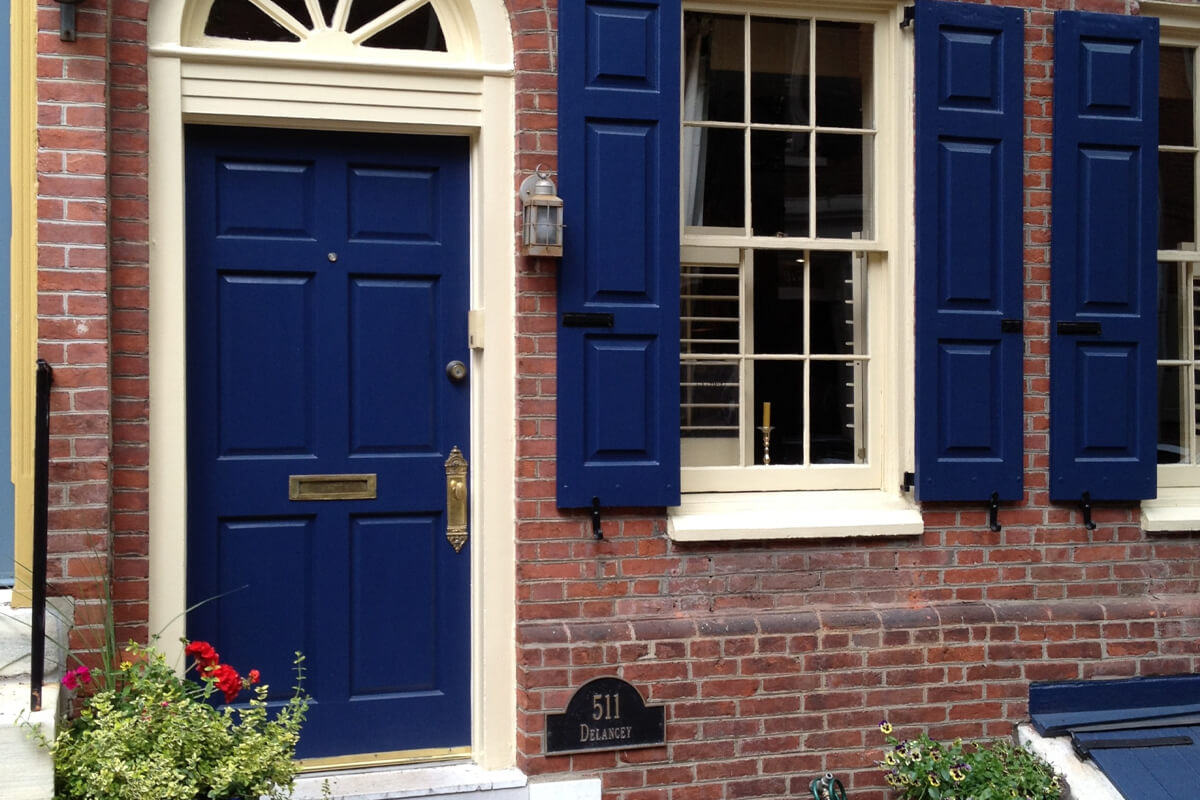
How to match a historic wood door
Start with a thorough survey, not a catalog. Measure the opening at several points, since old walls lean and old floors settle, a single measurement rarely tells the whole story. Photograph the door from both sides, note frame thickness, threshold condition, and swing direction, and pay attention to the joinery such as mortise-and-tenon joints, sometimes pegged with wood dowels, are what let the original survive this long, and a reproduction that skips that construction won’t age the same way.
From there, decide what “matching” actually needs to mean for this specific door. An exact reproduction with same species, same panel profile, same joinery, is a different (and more expensive) job than a sympathetic match, where the visual language is preserved but the construction underneath is more modern. Both are legitimate choices depending on how visible the door is and what the budget allows.
Whichever direction you go, specify the whole door set, not just the panel. Frame, sill, weatherstripping, glazing, and hardware all affect how the finished door performs, and a beautifully matched panel hung in a poorly detailed frame will fail early regardless of how well the wood was chosen.
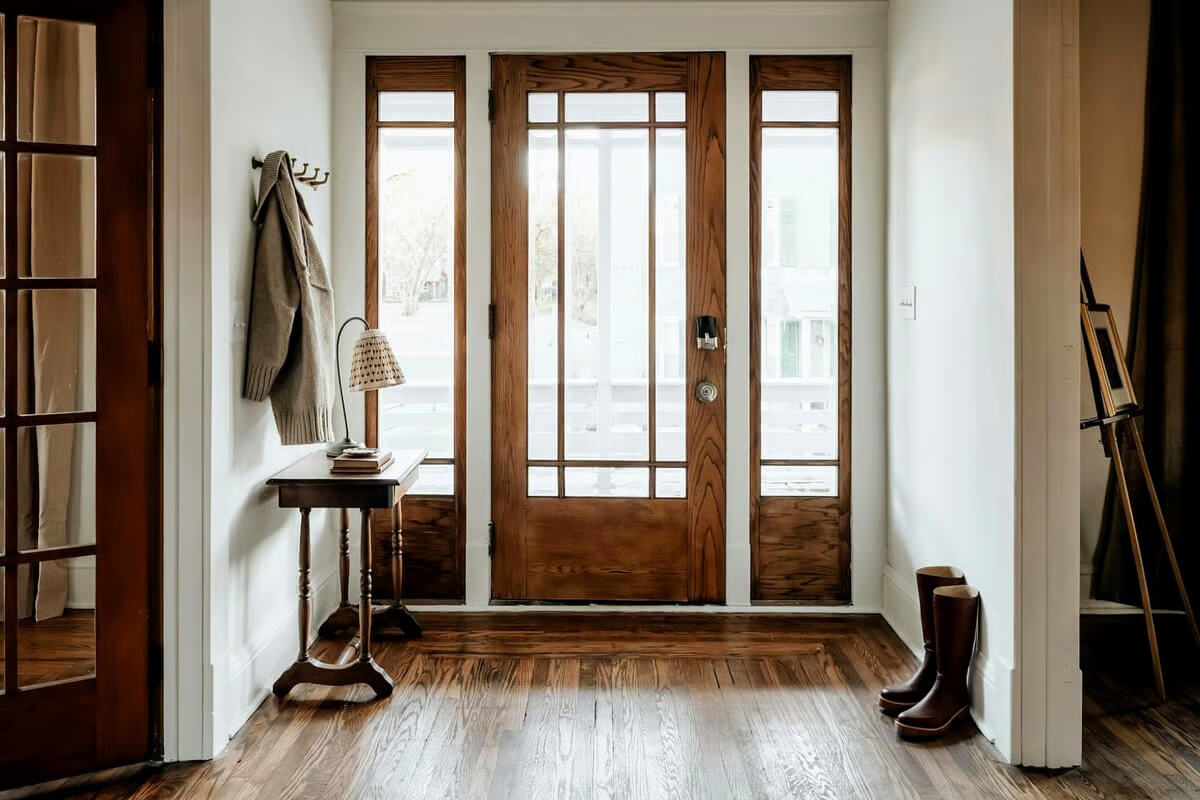
Missouri's climate changes the calculation
St. Louis adds a variable that doesn’t show up in most historic-restoration guides: real humidity swings paired with real freeze-thaw winters. A door here goes from summer humidity in the 70–80% range to bone-dry heated air indoors in January, and the wood expands and contracts through that cycle every single year. That’s exactly the kind of movement mortise-and-tenon joinery with floating panels was designed to survive, but it also means a reproduction door built without that give, or finished on only the visible faces, will crack, cup, or fail at the joints faster here than it would in a milder climate.
This matters most in St. Louis’s older neighborhoods, where a large share of the historic housing and institutional stock actually sits like Lafayette Square, Soulard, the Central West End, and the older sections of Kirkwood, Webster Groves, Clayton, and Ladue all have building stock old enough that an original door, if it survives, is a genuine asset worth protecting rather than replacing on sight. In these settings, three things matter more than they would elsewhere:
- Six-sided finishing. A door finished only on the faces you can see will absorb moisture unevenly through the unfinished edges and top/bottom rails, which is a common cause of warping in this climate specifically.
- A finish system built for exterior exposure, not just an interior-grade stain, since St. Louis doors face direct sun, driving rain, and winter freeze in the same year.
- Species selection that accounts for local performance, not just historical accuracy — mahogany and white oak both hold up well here, which is part of why they remain the default choices for reproduction exterior doors in this region.

FAQs: Historic wood doors
How do you match a wood door to an old house or building?
Survey the existing door and opening first like species, panel layout, joinery, and exact dimensions, rather than shopping for a stock door that looks similar. A millwork shop can then build a reproduction to that survey, matching proportions and finish to the original.
Can you replicate a historic door exactly?
Usually yes for the visible design like species, panel layout, dimensions, joinery style. Original hardware finish or a specific product used decades ago often can’t be verified, and a good shop will say so rather than guess.
Should I repair or replace a historic wood door?
Repair when the core structure is sound and damage is localized, like a cracked panel or soft bottom rail. Replace when the door is missing or extensively rotted, or the opening itself has been altered. Keep and reuse original hardware either way.
What wood was used in old doors?
Most commonly old-growth heart pine, white oak, American chestnut, walnut, and mahogany, chosen for density and rot resistance rather than looks. Chestnut and true old-growth pine aren’t available in new lumber, so matching those today means selecting the closest-performing modern species.
Will a matched wood door hold up in Missouri's climate?
Yes, if it’s built for it, six-sided finishing, an exterior-grade finish system, and a species suited to freeze-thaw and humidity swings. The historic joinery methods were already designed to handle seasonal wood movement; the finish and species selection are what make that hold up in St. Louis specifically.
Contact Our Team!