A Millwork Shop's Guide to St. Louis Doors by Neighborhood
Every St. Louis entry tells you something before anyone touches it: the height of the opening, the shape of the brick arch, whether a transom survives, how the panels line up with the glass. At Scobis Millwork + Design, we read those details first, whether the house is a Victorian townhouse in Lafayette Square or a newer home in Frontenac.
This guide covers the door styles we see across St. Louis city neighborhoods, how we decide between restoring and replacing, and five custom entry doors we’ve built around the St. Louis area.
A building’s age and architectural style tell us more than its neighborhood. St. Louis homes often blend several styles, so treat the neighborhood notes below as patterns to check against your own house, not rules.
What style are the original doors in Lafayette Square homes?
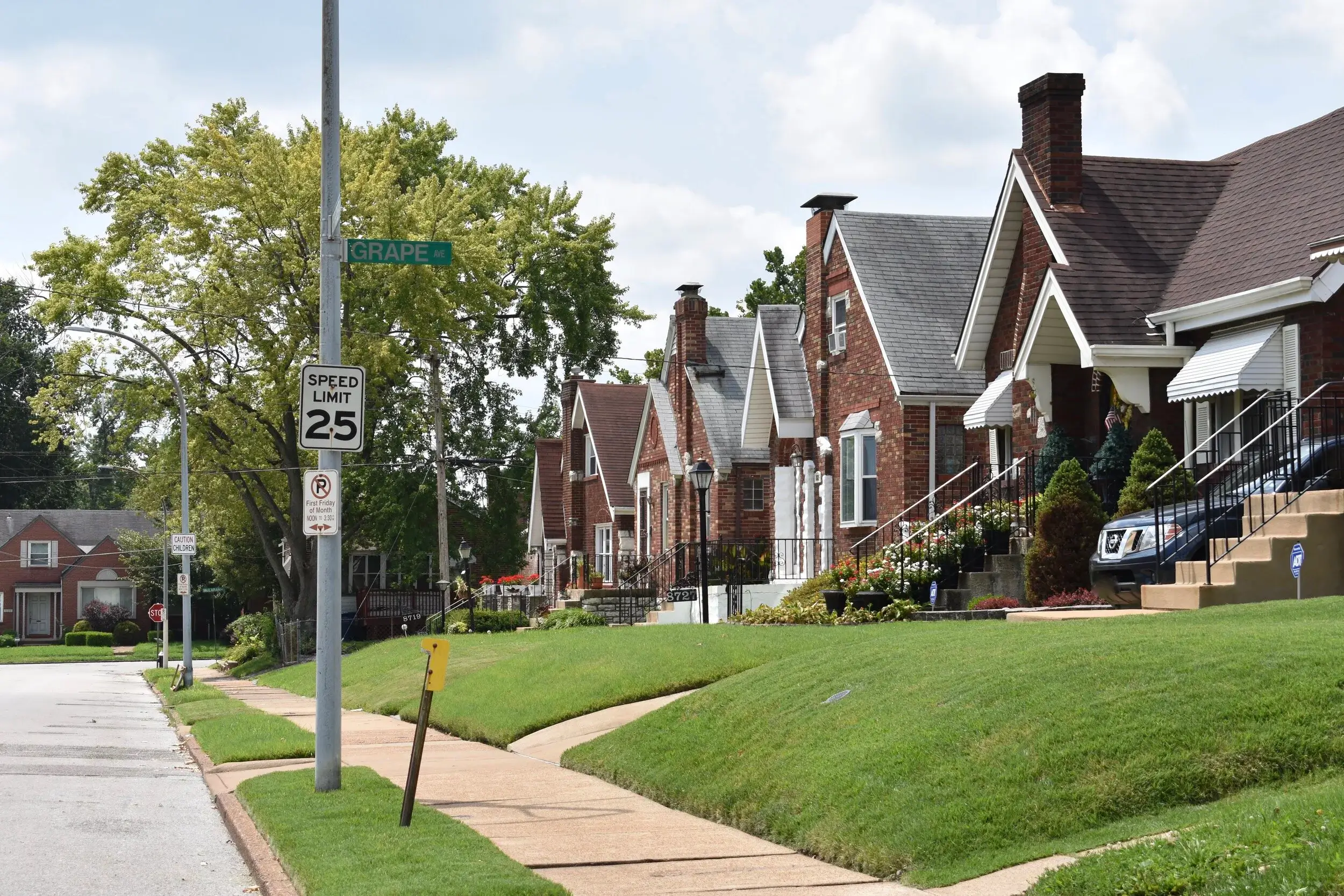
Lafayette Square is known for its Victorian townhouses, many of them Second Empire. In these houses, vertical proportion is everything. Original entries tend to be tall paneled doors, sometimes a pair of narrow leaves set beneath a transom. When we assess one, we look at the door together with the stonework around it and the full height of the entrance, because a replacement with the wrong panel proportions will look off even if it fits the opening.
Lafayette Square is also a local historic district. The City of St. Louis Cultural Resources Office reviews exterior work, including door replacement, against the district’s standards, so plan for that review before anything is ordered.
Soulard
Soulard’s brick homes range from fairly simple entrances to elaborate Victorian ones. The evidence is in the opening itself: the panel arrangement, the transom, and any outer vestibule doors. Soulard’s published standards require existing transoms to remain part of the entry, so removing or covering one isn’t just a design choice.
Compton Heights
Compton Heights has larger houses and a wider architectural vocabulary, including Queen Anne and Richardsonian Romanesque. Deeply recessed entrances, heavy arches, and elaborate surrounds mean the right door can be very different from one house to the next on the same street.
Central West End
The large homes of the Central West End often carry substantial interior woodwork alongside the front door: casings, stair parts, pocket doors. If you’re looking for someone to restore woodwork in a Central West End house, look for a shop that can match an existing profile, not just refinish it. Our historic work includes reproducing trim, stair components, and missing architectural details from surviving examples or old photographs.
Looking for a custom wood door?
Send your specifications, images and your project, and our experts will guide you through the process.
How can you tell what's original on a St. Louis entry?
A trained eye looks past the overall size of the door to:
- The width of the stiles and rails
- Panel proportions and molding depth
- Where the hardware sits
- How the door sits in its opening
For glass, we document what survives, whether clear, textured, beveled, or stained, and how its divisions line up with the panels and the transom. Inside, we check for matching features such as pocket doors, stair parts, and casing profiles.
We also identify the wood from the actual piece before recommending a match. Oak, walnut, and mahogany all turn up in older St. Louis homes, and no species should be assigned to a house just because of the neighborhood it’s in.
Should you restore, replicate, or replace an old door?
We start with the original material and how the door works. Is the damage confined to the finish or a few repairable sections? Are the joints sound? How much usable wood is left? Is the frame, threshold, or hardware causing the problem?
- Restore when enough sound original material remains to support a lasting repair. That can mean repairing sections, tightening joinery, correcting the fit, and refinishing.
- Replicate when a significant original feature is missing or too far gone to repair. The surviving door, photographs, and surrounding millwork guide the new proportions and details.
- Replace with a new design when the existing door was never right for the house, such as a builder-grade unit in an opening that deserves better.
New work can still protect what’s historic. At St. Mary’s Catholic Church in Alton, we built new doors for three historic entrances while keeping the original stained-glass tracery transoms and designing the doors around them.
What do custom entry doors look like around St. Louis?
Not every door we build goes into a historic house. The five projects below are all new custom doors designed to fit the architecture already there, and three of them start from a brick arch.
St. Louis: An arch the old doors ignored
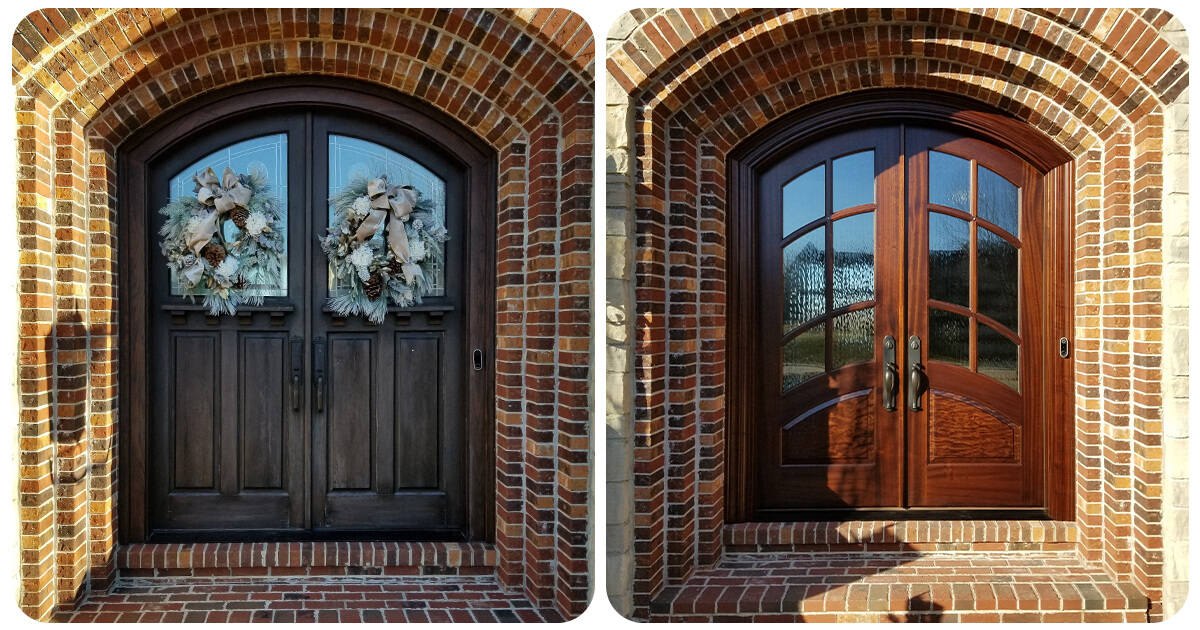
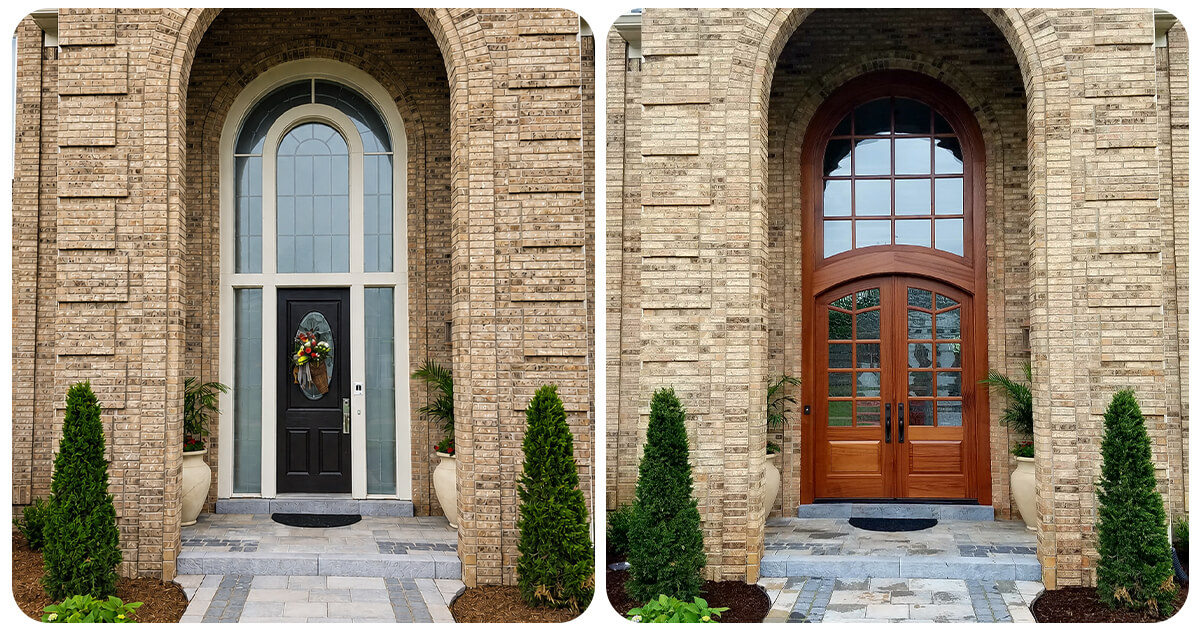
At the Wexford residence, the brick opening was arched but the old doors were rectangular, and full afternoon sun had weathered them badly. We built a Sapele double door that carries the arch through the whole design: curved muntins, an arched lock rail, and arch-topped panels, with rain glass for soft daylight. The pair and its arched frame went in as one assembly, finished with a clear topcoat rated for full sun.
Webster Groves: one door for the whole archway
The Hudson residence had a faded single door with sidelights and an arched transom. We replaced it with a mahogany double door that fills the entire brick archway, using textured divided-lite glass and a marine-grade finish on all six sides.
Kirkwood: simpler and brighter
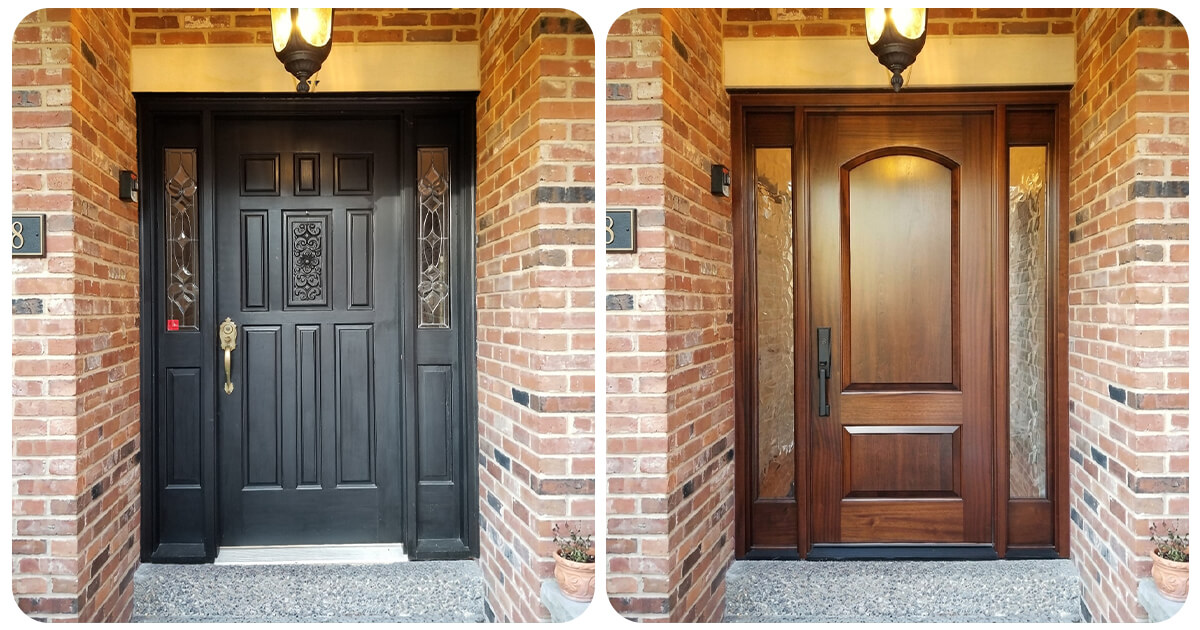
At the Kingsley residence, a busy nine-panel door painted black, with a carved medallion, gave way to a two-panel door with an arched upper panel. Full-height textured glass in the sidelights now brightens a deep, shaded vestibule without giving up privacy.
Ladue: from fiberglass to leaded glass
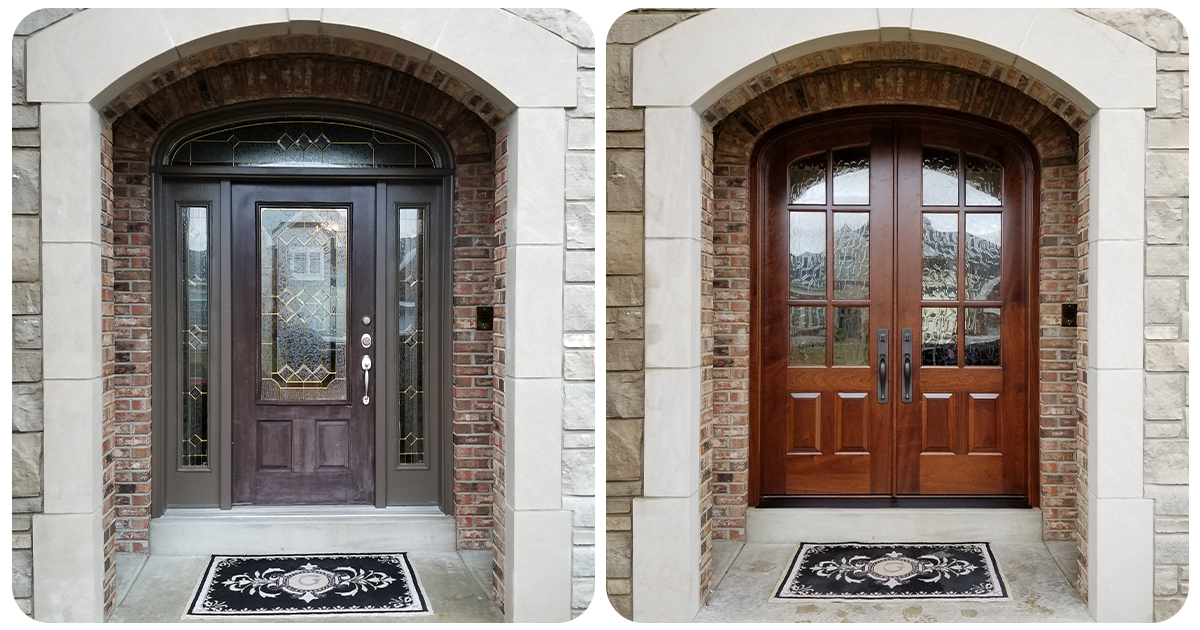
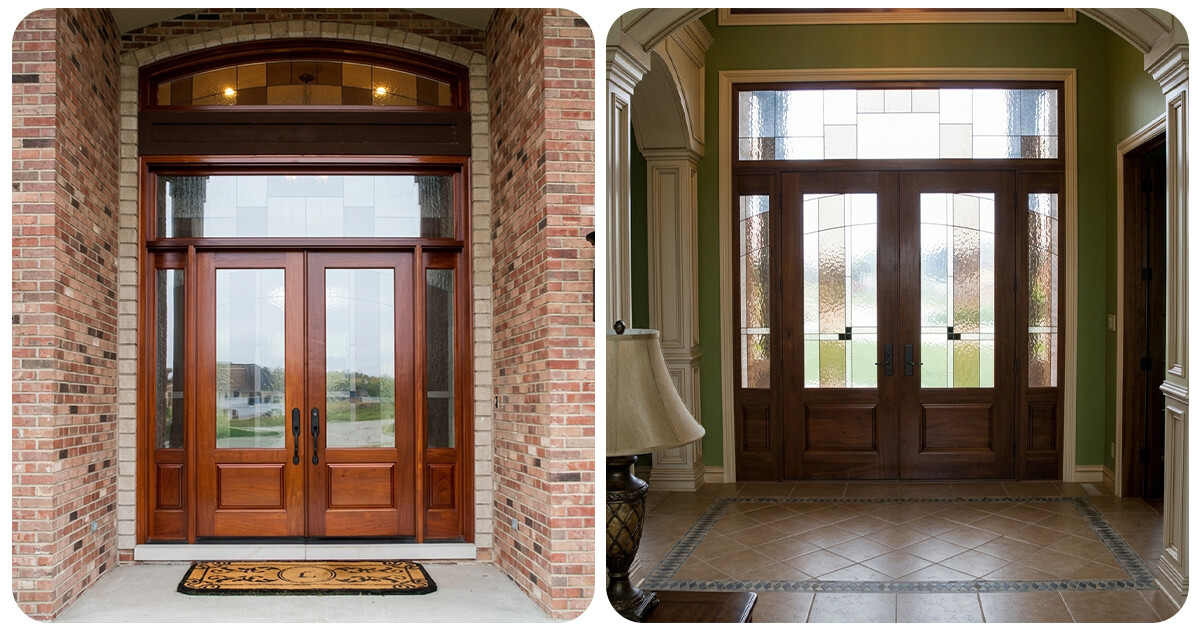
The Hart residence had a builder-grade fiberglass door with sidelights. We made the full opening the entrance with a solid mahogany double door, each leaf carrying a tall leaded-glass panel, and kept the tall transom above.
Frontenac: a 16-foot arched entry
The Davenport entry sits under a columned portico with a half-round fanlight. We divided the 16-foot opening into arch-top Sapele doors below and a 16-lite arched transom above. Clear glass in the transom lights a two-story foyer, while textured glass in the doors keeps privacy at ground level.
What mistakes damage old doors and woodwork?
- Aggressive stripping or sanding. Harsh methods soften decorative profiles. The National Park Service recommends the least damaging treatment that suits the coating’s condition.
- Treating a moisture problem as a finish problem. New finish won’t stop water getting in around the glass, at a failing threshold, or through open joints. With Missouri’s humid summers and freeze-thaw winters, drainage, weatherstripping, and the sill matter as much as the finish.
- Choosing a replacement by size alone. Panel proportions, profiles, glazing, and grain decide whether new work belongs on the house.
- Removing or covering transoms. It changes the entry’s proportions and can conflict with historic district standards.
What should you know before calling a millwork shop in St. Louis?
Historic review comes first. If you’re in Lafayette Square, Soulard, or another local historic district, confirm the requirements for your address before ordering anything. We can provide drawings, profile documentation, and material specifications for Cultural Resources Office review.
Plan for time. Custom doors typically take 8 to 12 weeks from approval. The projects above ran 9 to 14 weeks, with the largest arched units taking longest. Historic replicas can take longer depending on detail and approvals, and refinishing schedules depend on the repairs needed and whether the work can happen in our shop.
Pricing depends on scope. For restoration, the main factors are size, number of doors, finish removal, repairs, glass and hardware work, and removal and reinstallation. For new custom entry doors, the five projects above ranged from $14,000 to $43,000.
Starting is simple. Send photos of both sides of the door, close-ups of any damage, rough dimensions, your address, the look you want, and your timing. More involved conditions may need a site visit before we price the work.
Looking for a custom wood door?
Send your specifications, images and your project, and our experts will guide you through the process.
FAQs: St. Louis Doors by Neighborhood
Who restores woodwork in Central West End houses?
Scobis Millwork + Design restores and reproduces doors, trim, stair parts, and other architectural woodwork for homes in the Central West End and across St. Louis. We assess what survives, identify the wood, and match profiles from existing pieces or photographs.
Do I need approval to replace a front door in Lafayette Square or Soulard?
Both are local historic districts, and the City’s Cultural Resources Office reviews exterior work, including door replacement. Check the requirements for your address before ordering.
How long does a custom wood entry door take in St. Louis?
Typically 8 to 12 weeks from approved drawings. Large arched units and historic replicas can take longer.
How much does a custom entry door cost in St. Louis?
Five custom entry doors we’ve built in the St. Louis area ranged from about $14,000 to $43,000, depending on size, configuration, glass, and arch work.
Can a new door keep my original transom or arch?
Yes. Several of the projects above were designed around an existing brick arch or transom, and at St. Mary’s in Alton we kept the original stained-glass transoms.
Contact Our Team!
More articles like this
How to Choose a Custom Wood Door in St. Louis? (2026 Guide)
Read article →