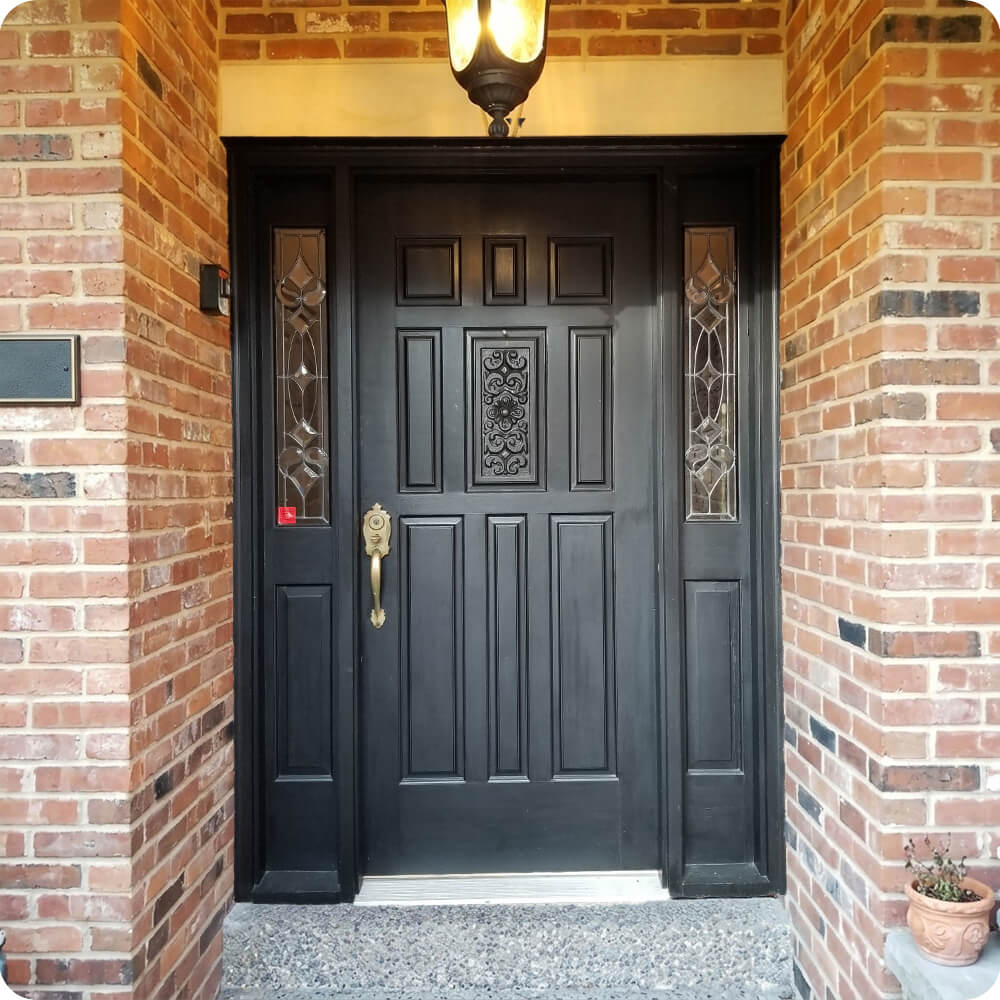
The entry sits at the back of a deep brick vestibule under a stone lintel, a sheltered spot where a hanging lantern stays lit even in daytime. The door and sidelights had layered on more ornament than the space could carry. The black-painted door had nine panels, with an applied carved medallion of scrolls and rosettes at its center. The narrow sidelights held beveled leaded glass in the upper half only, over solid panels. An antique-brass handleset completed the look. In a shaded recess, all that black paint and detail read as one dark, busy mass.
Project Story
The thinking behind the work
The Starting Point
The Thinking
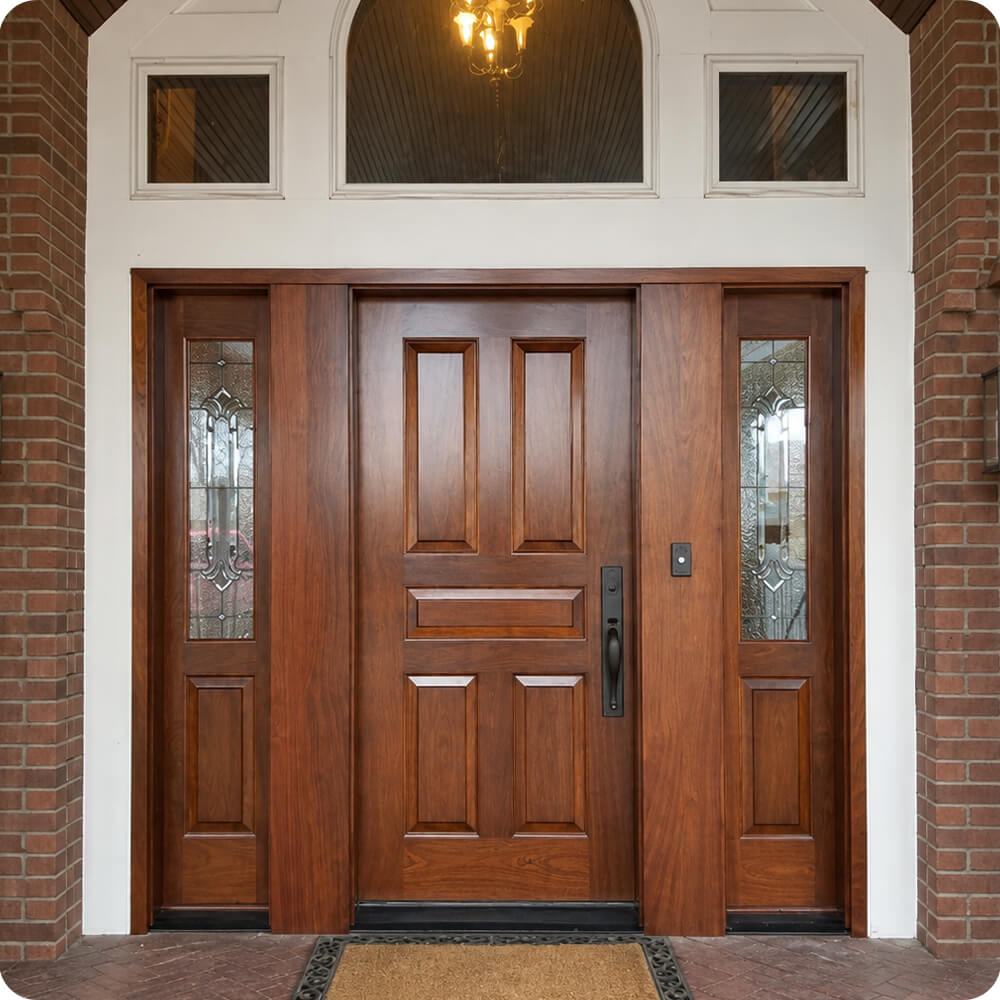
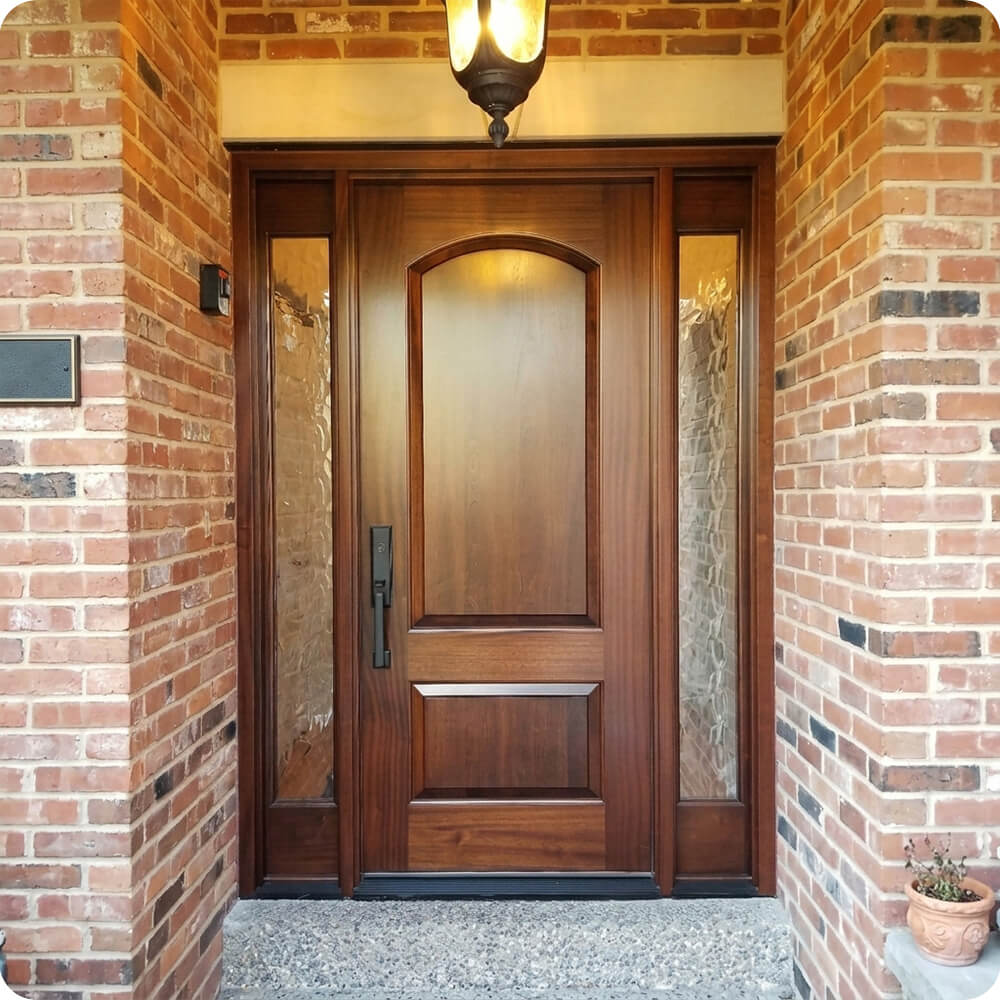
The vestibule needed two things: light and calm. The glass moved first. Instead of short leaded panels at the top of each sidelight, the new sidelights carry glass nearly from head to sill, so daylight reaches the foyer at every height. Textured glass keeps those tall panes private. The door went the other way, toward simplicity: two raised panels in place of nine, with an arched head on the tall upper panel as the only curve in the composition. It's a classic, quiet design that lets the wood itself be the ornament.
The Execution
The unit is built in solid mahogany, 1¾" thick, with mortise-and-tenon joinery. It's stained a warm reddish-brown and sealed with an exterior clear topcoat that shows the cathedral and ribbon figure. The 3'-0" × 7'-0" door has a tall arch-top raised panel over a shorter rectangular raised panel, divided by a wide lock rail. Each 1'-0" sidelight carries a single full-height lite of textured insulated glass over a short bottom rail. The door, sidelights, mullions, and frame are built as one mahogany assembly sized to the brick opening, set over dark bronze thresholds.
The Result
The vestibule is brighter and calmer. Two tall bands of textured glass now frame the door, so the recess fills with soft daylight. The two-panel door, with its single arched panel, brings a sense of order that the busy carved door never had. The warm mahogany glows against the brick and the stone lintel, and the black hardware gives it a crisp, modern edge. A dark, cluttered entry has become a simple, handsome one.
Specification
Unit Size
5'-6" × 7'-9"
Panel Thickness
1¾"
Joinery
Mortise-and-tenon, no mechanical fasteners.
Glass
Textured insulated glass, full-height single lite per sidelight; door solid
Finish System
Multi-coat stain with exterior clear topcoat
Hardware
Matte black full-plate handleset with thumb latch and keyed deadbolt
Installed By
Scobis
Common Questions
Why simplify from nine panels to two?
In a shaded vestibule, a door with many small panels and carved ornament reads as visual clutter. Two large raised panels, with a single arch at the top, give the door a calm, classic presence and let the mahogany grain carry the design.
Why full-height glass in the sidelights?
The old sidelights had glass only in the upper half, which left the recess dim. Running the glass nearly from head to sill brings daylight into the foyer at every height, which matters most in a deep, covered entry like this one.
Why textured glass instead of clear?
Full-height clear glass beside the door would put the foyer on display. Textured glass passes daylight while blurring the view, so the sidelights brighten the entry without giving up privacy.
More Projects Like This