
How to Pick a Craftsman, Colonial, or Modern Entry Door
The best entry door repeats what your house is already saying. A Craftsman door on a 1920s bungalow looks like it was always there. Put the same door on a brick Colonial and it looks borrowed from the neighbors. So it’s very important to understand how to pick a craftsman, colonial, or modern entry door for your home.
This guide compares the three entry door styles St. Louis homeowners ask about most: Craftsman, Colonial, and Modern. For each one, you’ll learn what defines the look, which homes it suits, and when a stock door is enough versus when a custom door earns its cost.
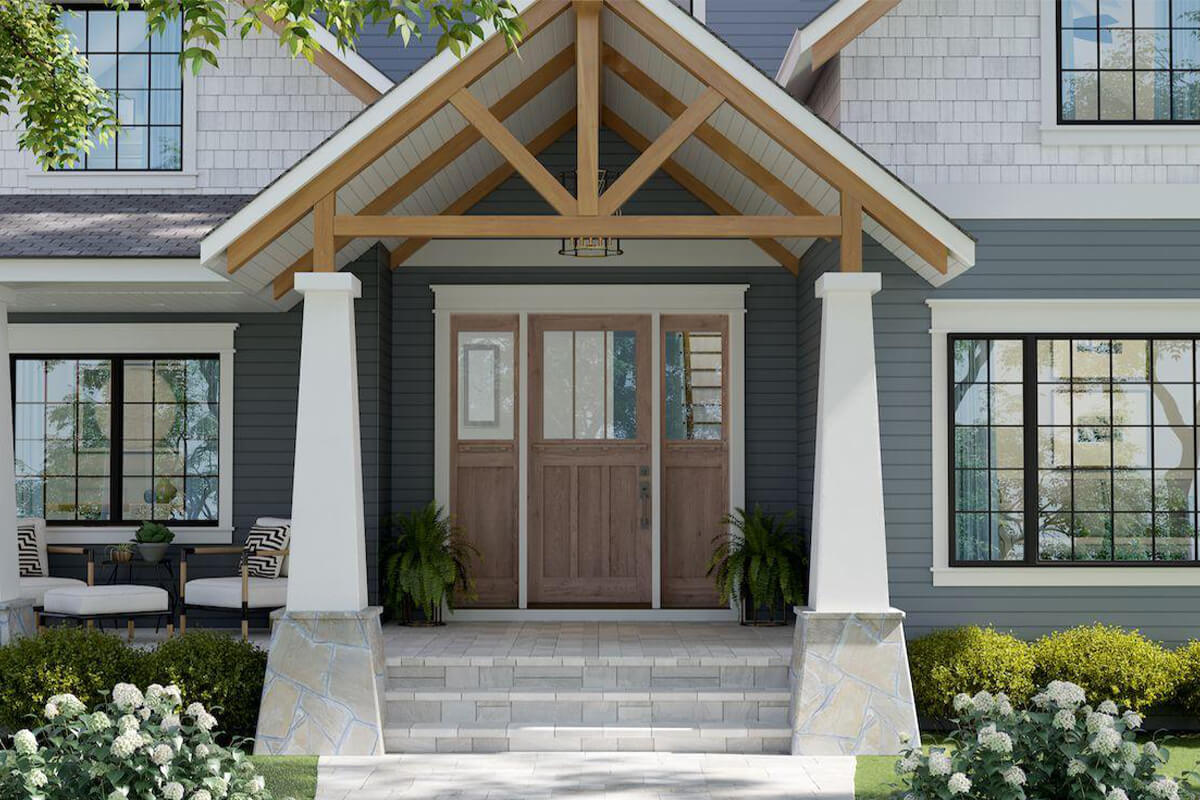
Compare craftsman, colonial, and modern doors
Each style is defined by its proportions, where the glass sits, and how the door is finished. Use this table to spot which column already describes your house.
| Door style | Overall feel | Panels | Glass | Hardware | Finish | Best home styles |
|---|---|---|---|---|---|---|
|
Craftsman
|
Handmade, warm, sturdy | Vertical panels below a small shelf | Upper third of the door | Simple, in bronze or black | Stained wood in warm browns | Craftsman, bungalow, Prairie, Four Square |
|
Colonial
|
Formal, balanced, stately | Six raised panels, or four | Fanlight, transom, or sidelights | Brass or dark bronze with curves | Painted black, navy, red, or green | Colonial Revival, Georgian, Federal, Cape Cod |
|
Modern
|
Minimal, open, sculptural | Flush slab or simple grooves | Full-height strips or full glass | Long bar pulls in matte black or steel | Natural walnut or oak, black, or one bold color | Mid-century modern, contemporary, ranch |
Many homes blend styles, so use the row that best matches your facade.
Here in St. Louis, Craftsman bungalows are common in Webster Groves, Maplewood, Kirkwood, and South City. Colonial Revival homes line many streets in Ladue, Clayton, University City, and Kirkwood. Modern doors suit the mid-century pockets of Kirkwood, Crestwood, and Ladue, as well as many new builds across St. Louis County.
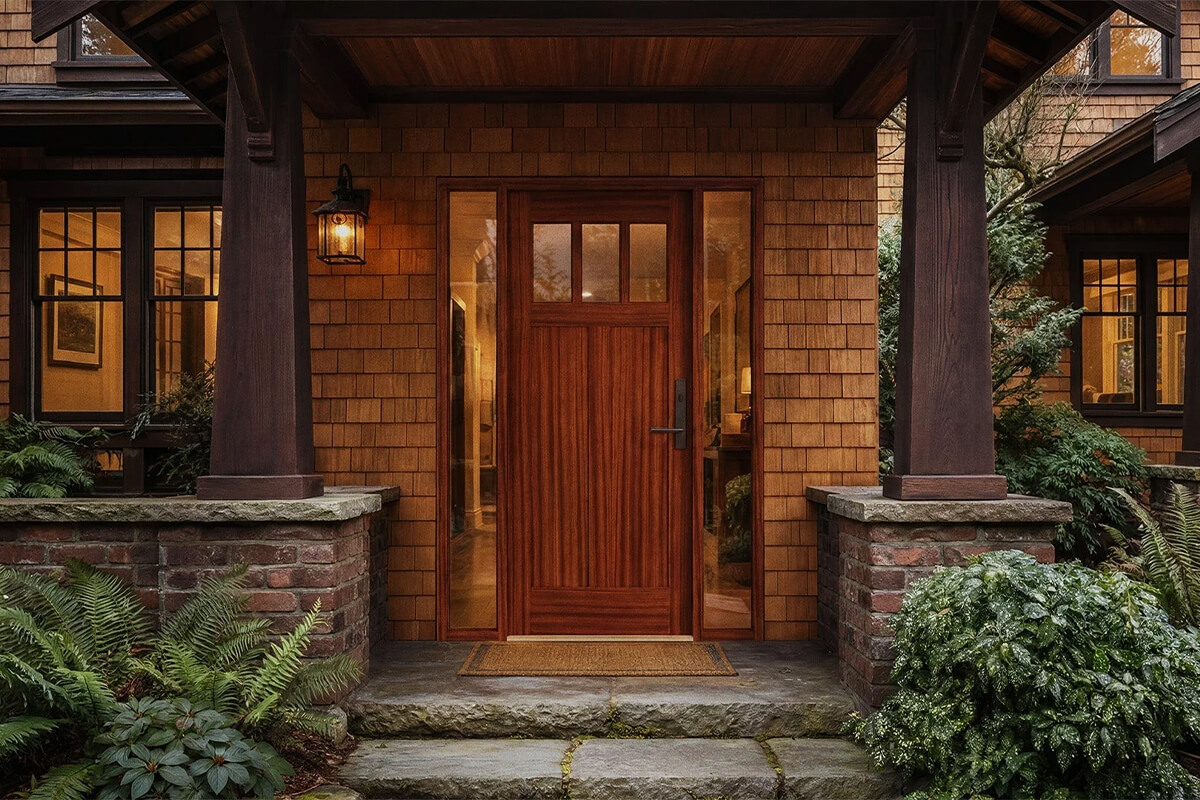
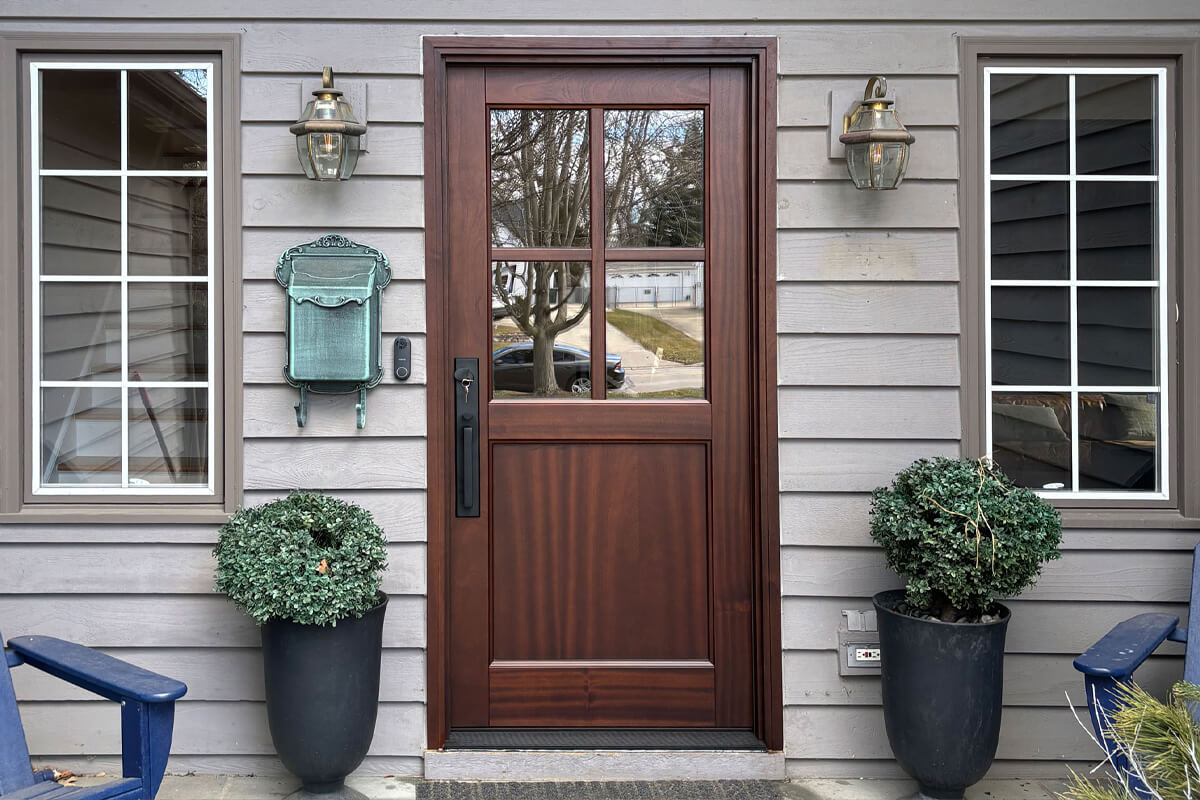
Choose a door if your home has a deep porch
Craftsman doors grew out of the Arts and Crafts movement, which valued honest materials and visible handwork. If your house has a low gabled roof, tapered porch columns, and wide wood trim, this is your style.
What defines the look
- Glass in the upper third, often divided into vertical panes or set with art glass.
- A small shelf (called a dentil shelf) under the glass, with tall vertical panels below.
- Stained wood rather than paint. Quartersawn white oak and mahogany are the classic choices, finished in warm browns.
- Sidelights on one or both sides, matching the door’s glass pattern.
- Plain, sturdy hardware in oil-rubbed bronze or black. Avoid polished brass.
Stock or custom? Stock Craftsman doors are easy to find, mostly in fiberglass with a wood-grain finish. Custom pays off in older St. Louis bungalows, where openings are often non-standard sizes and the door has to match existing interior trim, art glass, or a surviving original sidelight.
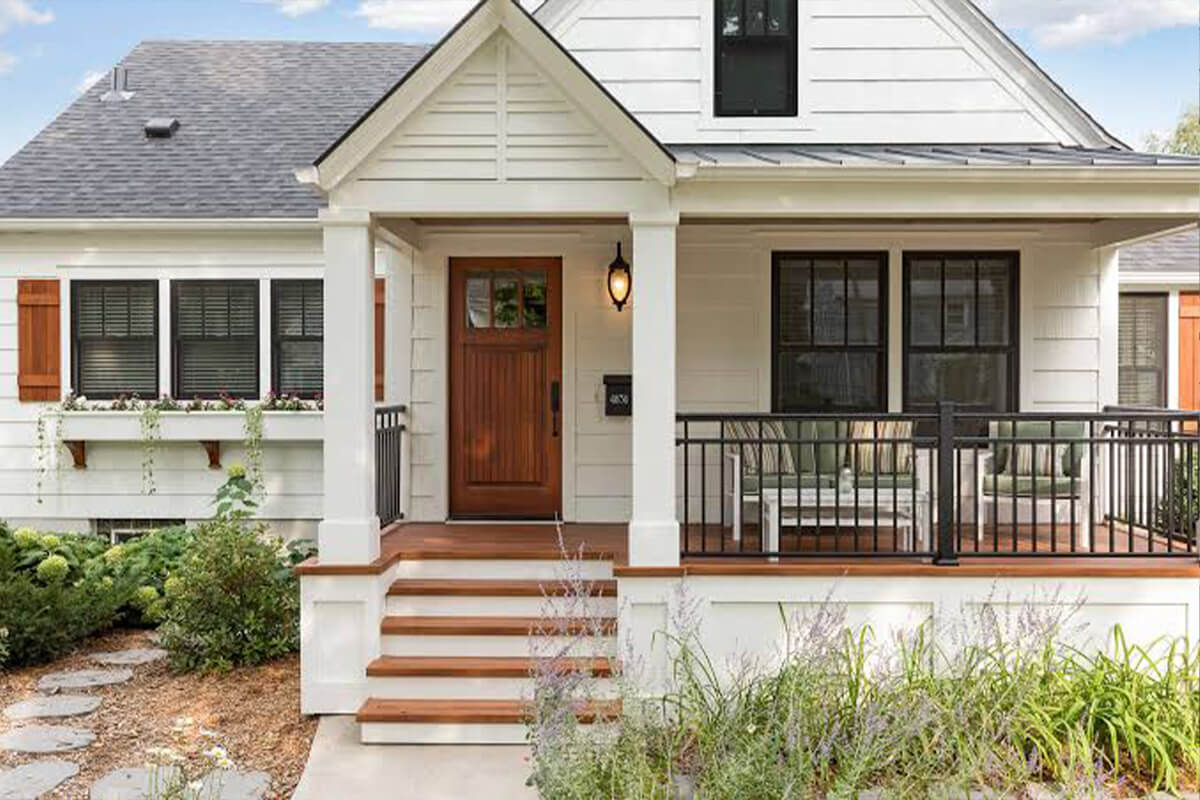
Choose a colonial door if your facade is symmetrical
Colonial doors belong on houses built around a strong center line: a door in the middle, matching windows on each side, often brick or clapboard. Many Colonial Revival homes in Ladue, Clayton, and University City follow this pattern.
What defines the look
- Raised panels, usually six, with crisp, deep profiles.
- Glass above or beside the door rather than in it, such as a half-round fanlight, a rectangular transom, or narrow sidelights.
- A trimmed surround with pilasters (flat columns) and sometimes a pediment overhead.
- Painted finishes in traditional colors like black, navy, deep red, or forest green.
- Classic hardware in brass or dark bronze, with curves and a knocker if you like.
Stock or custom? Six-panel stock doors are everywhere, but most have shallow, stamped panels that look flat up close. Custom makes sense when you want true raised panels, a matching arched fanlight, double doors, or a door that matches the proportions of a historic home.
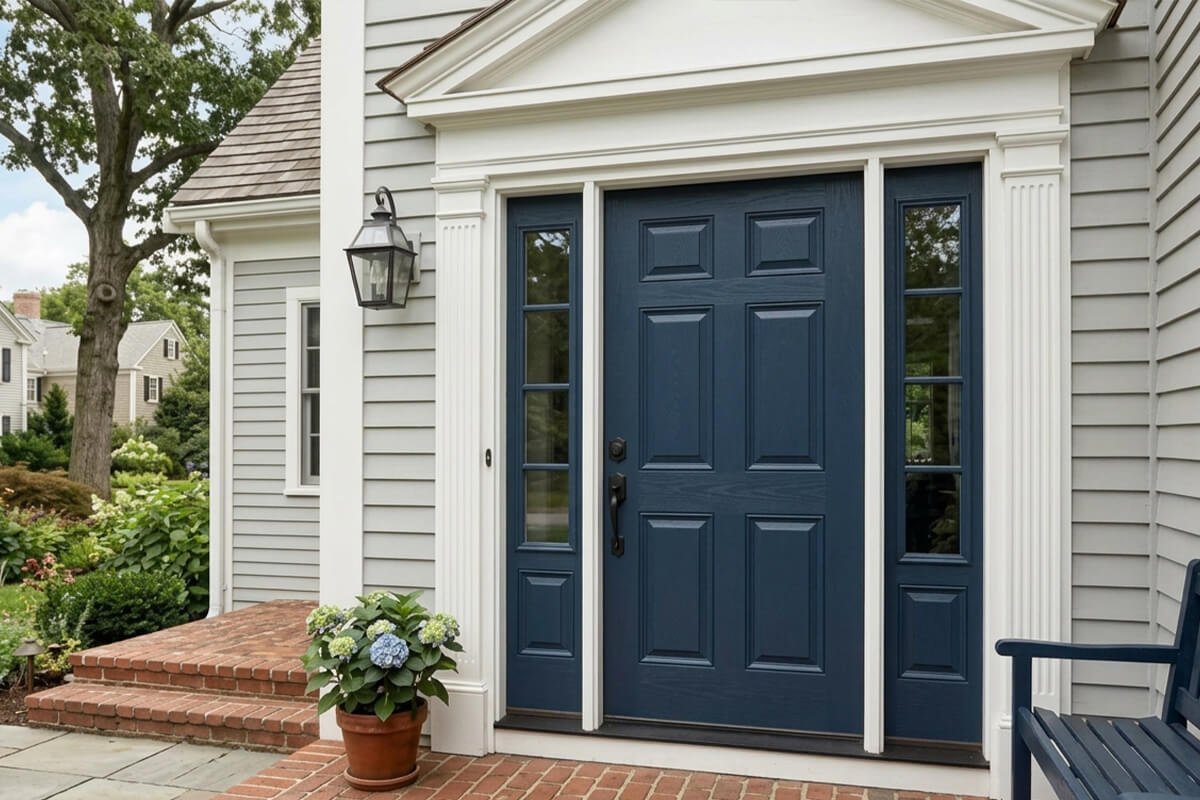
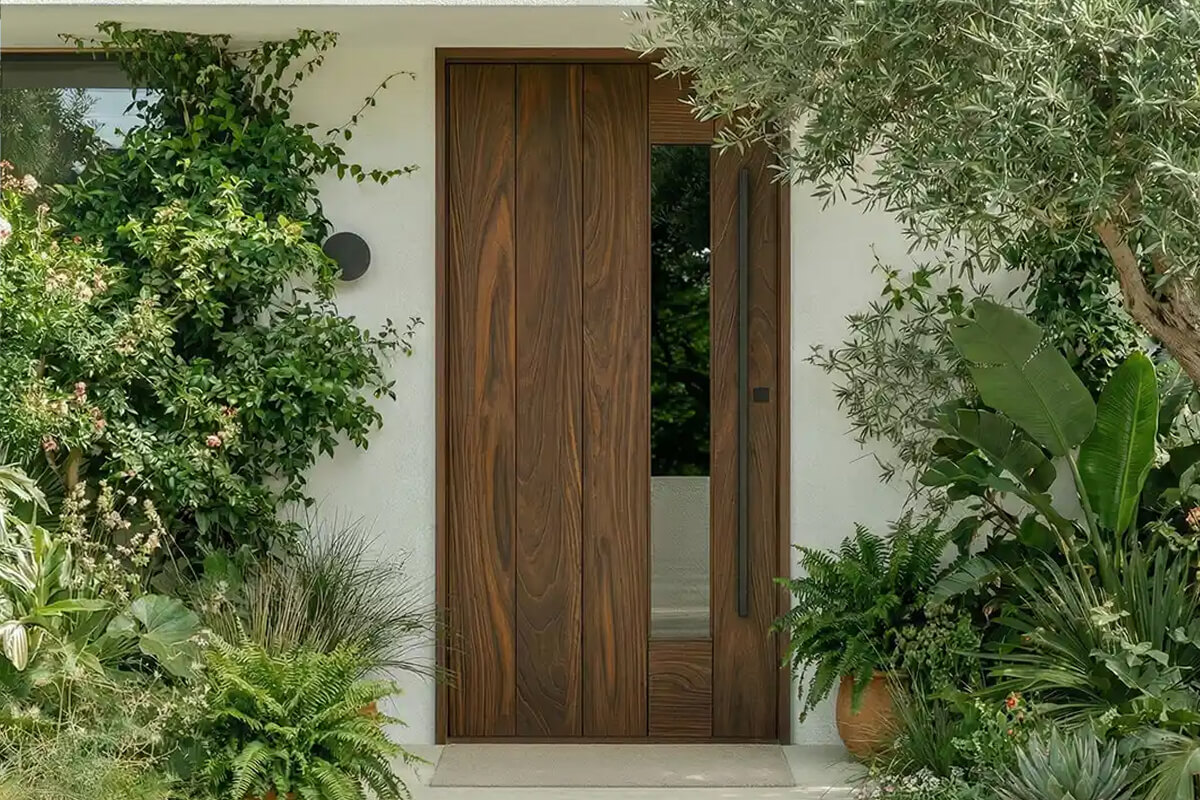
Choose a modern door if your home favors clean lines
Modern doors work on mid-century ranches, contemporary new builds, and renovations that strip a facade down to simple shapes. The door often becomes the main design feature of the house.
What defines the look
- Tall proportions. Many modern doors run 8 feet or taller.
- Flush or slab panels with no raised detail, or simple horizontal grooves for a mid-century feel.
- Glass as a design element, such as an offset vertical strip, stacked horizontal lites, or a full-glass door with a black frame.
- Natural wood like walnut or white oak, or a solid color. Black, charcoal, and one bold accent color are all common.
- Long bar pulls in matte black or stainless steel instead of a knob.
Stock or custom? Stock modern doors exist, but options shrink fast at larger sizes and in real wood. Custom is usually needed for pivot doors, oversized openings, exact groove spacing, or a specific wood species that matches your siding or interior.
Want to Bring Green Into Your Home?
We can help you choose the right wood, profile, and finish so the color looks its best for decades.
Decide between a stock and a custom entry door
A stock door is the right call when your opening is a standard size and the catalog already has the look you want. Custom is worth it when the door has to fit something specific: an odd opening, a historic detail, or a design no catalog offers.
| Factor | Stock door | Custom door |
|---|---|---|
|
Upfront cost
|
Lower | Higher |
|
Lead time
|
Days to a few weeks | Often two to four months |
|
Sizes
|
Standard widths and heights | Built to your exact opening |
|
Materials
|
Mostly fiberglass and steel, some wood | Any wood species, glass, and hardware |
|
Detail quality
|
Molded or shallow panels | True raised panels and hand-fitted joinery |
|
Repairability
|
Usually replaced when damaged | Wood can be refinished and repaired for decades |
|
Best for
|
Newer homes, tight budgets, quick swaps | Historic homes, statement entries, odd sizes |
One rule of thumb holds across all three styles. The more a style depends on fine detail, the more you’ll notice the difference between stock and custom. Colonial and Craftsman doors show it up close, while a simple modern slab hides it until you go big.
Which entry door trends will last?
The strongest trends right now borrow from the past rather than chase something new. Each one below fits at least one of the three styles.
- Warm natural wood. Stained oak, walnut, and mahogany are replacing gray and white painted doors. This fits Craftsman and Modern best.
- Arched and round-top doors. Soft curves are back, especially in old-world and transitional homes. This pairs well with Colonial.
- Oversized and pivot doors. Taller doors that swing on a center pivot turn the entry into a focal point. This is a Modern trend.
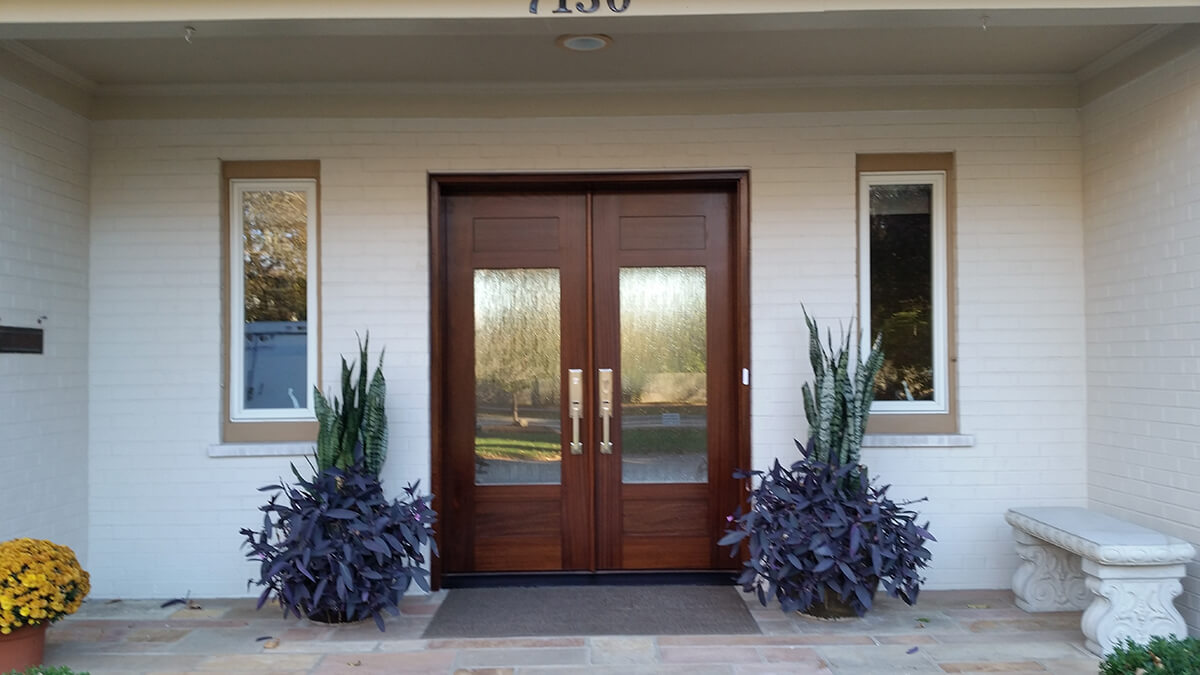
- Textured and reeded glass. Ribbed or frosted glass lets light in while keeping the interior private. This works across all three styles.
- Transitional blends. Traditional panel layouts finished in black paint with slim hardware bridge Colonial and Modern for homeowners who like both.
Pick the right entry door in 6 steps
Work through these in order. Each step narrows the options so the final choice feels obvious rather than overwhelming.
- Name your home’s style. Look at the roofline, porch, windows, and siding, then match them to a column in the comparison table. If your home mixes styles, follow the facade rather than the interior.
- Measure the opening. Note the width, height, and any existing sidelights or transom. Older homes often need a custom size.
- Decide how much glass you want. A door facing a busy street usually needs less clear glass. Textured glass or a transom adds light without giving up privacy.
- Choose a material for Missouri weather. St. Louis summers are hot and humid, and winters bring repeated freeze and thaw. Wood performs well when it’s properly sealed on all six sides and protected by a porch or overhang. Fiberglass is the lower-maintenance option for doors in full sun.
- Match the hardware to the style. Curved, polished hardware reads traditional, while straight, matte hardware reads modern. Satin nickel and oil-rubbed bronze work on almost anything.
- Check local rules before you order. Homes in historic districts, including parts of Kirkwood, Webster Groves, and the City of St. Louis, may need design approval for a new front door.
FAQs: Custom entry door styles
What is the difference between a Craftsman and a Colonial front door?
A Craftsman door has glass in the upper third, vertical panels below, and a stained wood finish. A Colonial door has six raised panels, little or no glass in the door itself, and a painted finish. Craftsman feels handmade and warm, while Colonial feels formal and symmetrical.
Can I put a modern door on a traditional house?
Yes, if you keep the proportions and color in step with the house. A transitional door, such as a simple panel layout in black with slim hardware, often works better than a full modern slab. A fully modern door can look out of place on a strongly traditional facade.
Is a wood entry door a good choice in St. Louis?
Yes, when it’s built and finished for the climate. A wood door sealed on all six sides and protected by a porch or overhang can last for decades in Missouri weather. Doors in full southern or western sun need more frequent refinishing.
When is a custom entry door worth the cost?
Custom is worth it when your opening isn’t a standard size, when you’re matching historic details, or when you want a design or wood species no catalog offers. It’s also a better long-term value for wood doors, since they can be repaired and refinished instead of replaced.
How long does a custom entry door take?
Most custom entry doors take two to four months from approved drawings to installation. The timeline depends on the design, the wood species, the glass, and the shop’s schedule. Stock doors usually ship in days to a few weeks.
What is the most popular entry door style right now?
Warm natural wood doors are among the most requested, in both Craftsman and Modern designs. Arched tops, oversized pivot doors, and textured glass are also growing. The safest choice is still the style that matches your home’s architecture.
Contact Our Team!