What to Expect When We Measure for Replacement Doors
If you have scheduled a measuring visit for replacement doors, you may be surprised when we start taking the trim off your existing door. It looks like the job has already begun, but it is part of the estimate. A replacement door is built to fit the opening in your wall, not the door that happens to be hanging in it now. The only way to see that opening clearly is to look behind the casing.
Here is what happens during a replacement door measurement at Scobis Millwork + Design, why we remove trim, and what you can expect from the first visit through the written estimate. It applies to homes across St. Louis and greater Missouri.
What happens during a replacement door measuring visit?
A measuring visit is where we gather everything needed to price your doors accurately. That means photos, measurements, and a clear picture of what you want the finished door to look and feel like.
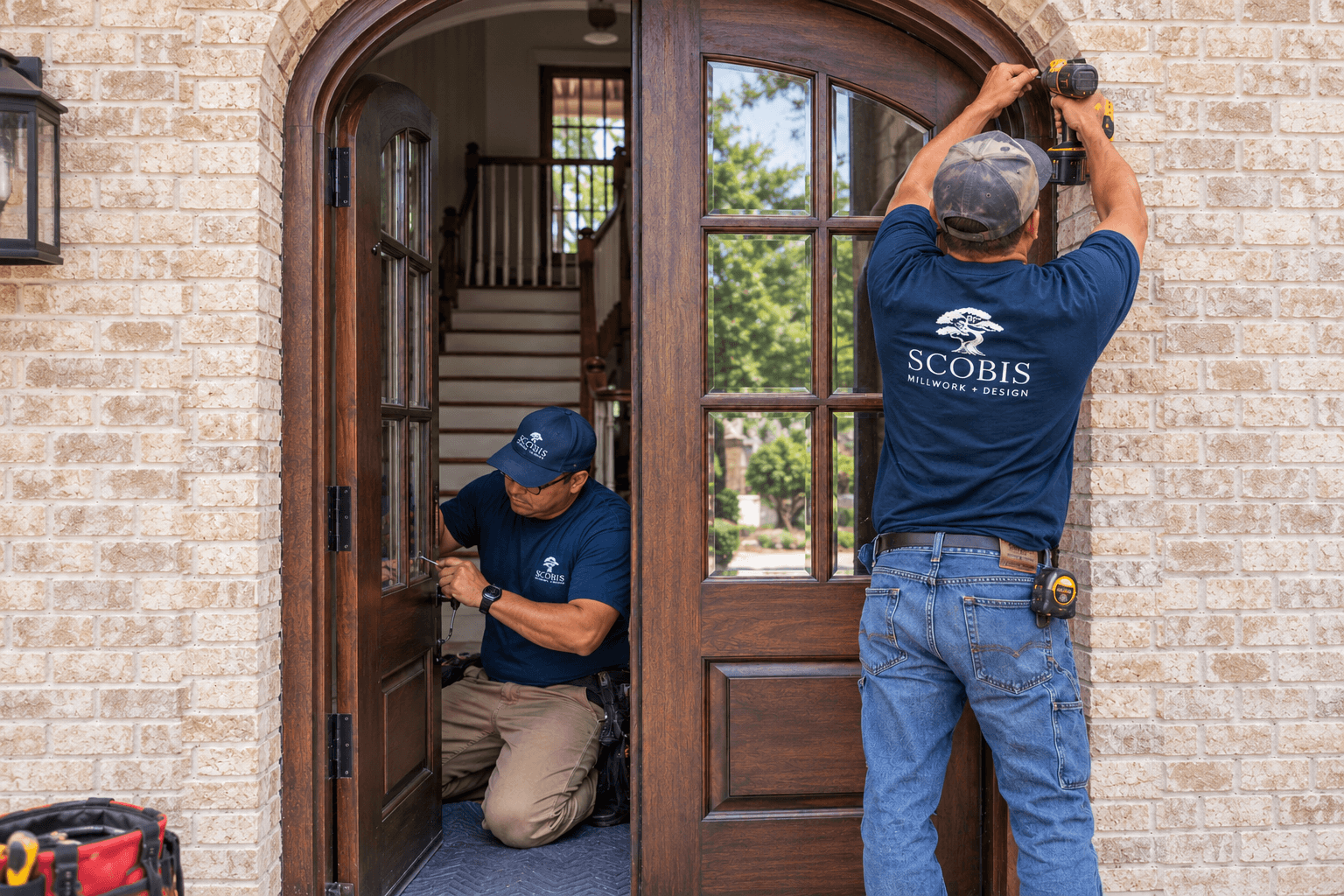
Your visit is handled by one of our door specialists or a member of our sales team. They take the photos and measurements and note what you are hoping for. Our estimator then prices the work from those notes, so every project gets the same careful review no matter who visits.
An initial consultation typically takes 30 to 60 minutes. For complex projects, such as arched openings, double entry doors or doors with sidelites, we may schedule a follow-up visit to take precise measurements and go through detailed specifications.
During the visit, expect us to:
- Photograph each door, the surrounding trim and the condition of the opening
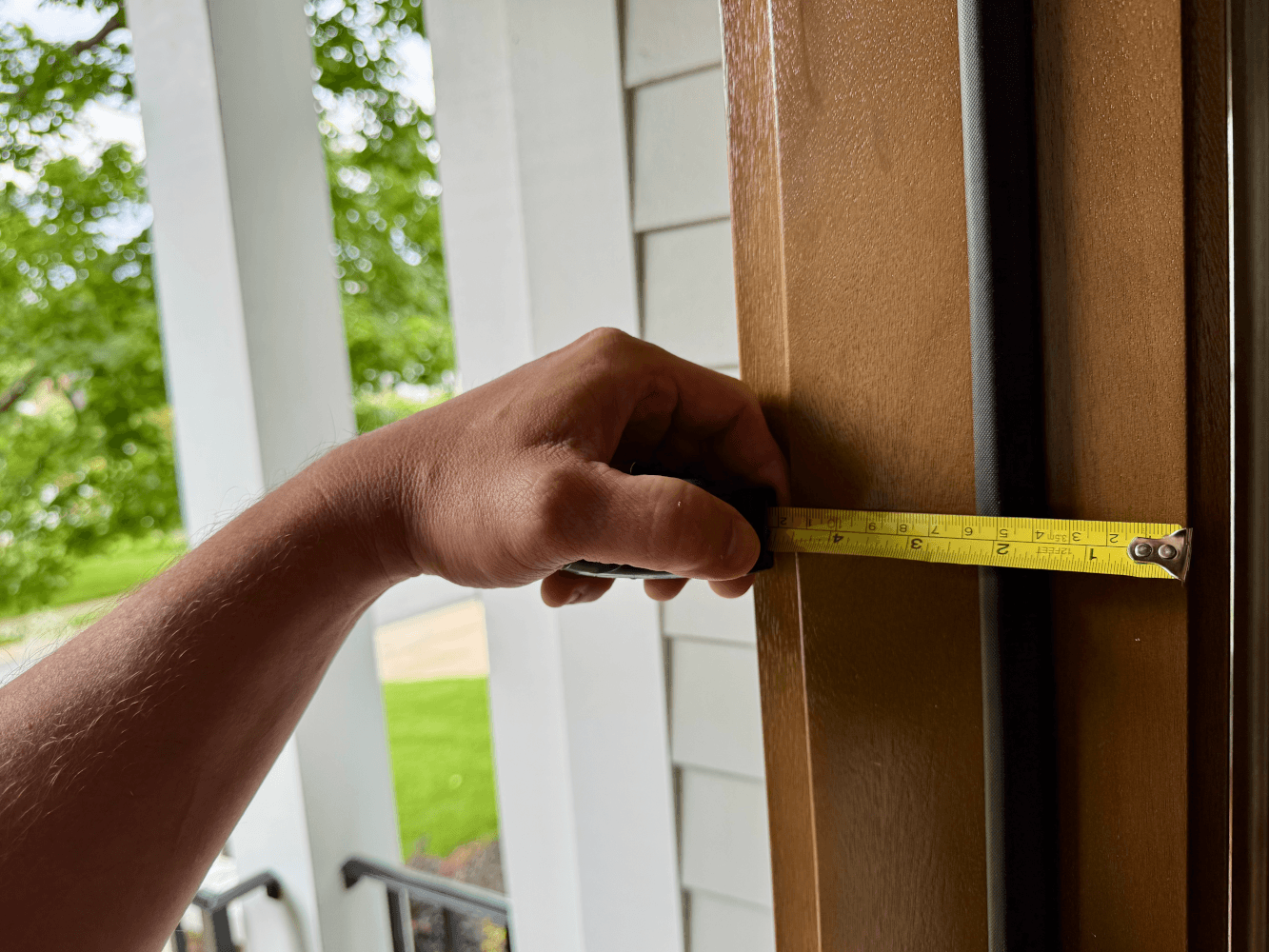
- Measure the door, the jamb and the opening it sits in
- Ask how you use the door and what you want to change, from style and wood species to glass and hardware
- Note anything that could affect the scope, such as damage, old repairs or the age of the home
Why do you have to remove the trim to measure for a replacement door?
The trim, or casing, is the decorative molding around the door. Its job is to cover the gap between the door jamb and the wall framing. That gap is exactly what we need to measure.
Measuring over the trim tells us how big your current door is. It does not tell us how much room there is to fit a new door and jamb, or whether the opening is square. A custom door built from trim-to-trim numbers can arrive too large to fit, or too small to seal properly.
What does door trim hide?
Once the casing is off, the real conditions of the opening are visible. Behind the trim we are typically looking for:
- The rough opening, which is the actual framed space in the wall that the new door and jamb must fit into
- Whether the opening is square and plumb, or has shifted over time
- Shims, spacers and old filler that tell us how the current door was set
- Rot, water damage or insect damage, especially on exterior doors and around the sill.
- Previous repairs or DIY installs that changed the opening
What does door trim hide?
The most common problem is an opening that is not the size it appears to be. If the framing is out of square, a door built to a perfect rectangle will bind, gap or refuse to close. If there is hidden damage, the opening may need repair before any door can go in.
Finding those issues at the estimate stage means they are priced and explained up front. Finding them on installation day means delays, change orders and a door that may have to be remade. With custom doors, that can mean waiting through another production cycle.
Looking for a custom wood door?
Send your specifications, images and your project, and our experts will guide you through the process.
What should you expect when measuring doors in older St. Louis homes?
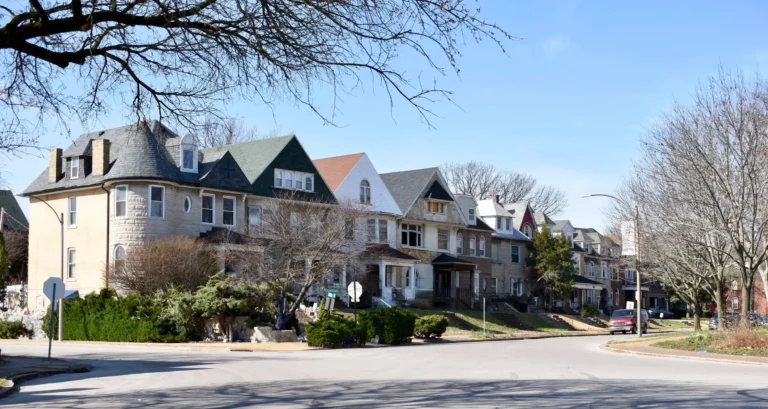
St. Louis has a deep stock of older homes, from historic city neighborhoods to early suburbs across St. Louis County. Older houses are where measuring behind the trim matters most.
Over decades, framing settles and openings drift out of square. Many older doors were built to sizes that are no longer standard, so an off-the-shelf door rarely fits without cutting down the opening or filling the gaps. Plaster walls behave differently from drywall when trim is removed, and past owners may have reworked an opening more than once.
None of this is a reason to avoid replacing an older door. It is a reason to measure carefully. As a St. Louis custom door maker, we build each door to the opening we find, which is often the only way to get a proper fit in an older house.
Do you check for lead paint before working on older doors?
Yes. For any home built before 1978, a lead check is part of our estimate review. Lead-based paint was common on doors and trim in older homes, and disturbing it creates dust that is hazardous, especially for children.
If lead is found, work stops and the office is contacted before anything else happens. Scobis does not work on lead-painted surfaces. We would rather tell you that during the estimate than discover it with the trim halfway off. If your home was built before 1978 and you already know about lead paint, mention it when you schedule your visit.
What does a replacement door estimate include?
Every estimate is built on a written scope for that specific project, so what is included varies from job to job. As an example, a recent replacement door estimate for a St. Louis homeowner covered:
- Delivery and installation of the new doors
- New jamb, threshold and interior casing
- Removal and disposal of the old door, jamb and trim
The custom doors themselves were quoted as a separate line. That way the homeowner could see exactly what the doors cost and what the installation work cost.
This is why the measuring visit matters so much. Whether the old jamb stays or goes, whether the casing is replaced, and whether the opening needs repair all show up in the scope. Your written estimate also spells out how long the price is valid and the payment schedule, so there are no surprises once you approve.
How long does it take to get an estimate and new doors?
We provide proposals within 5 to 7 business days of the consultation. If a follow-up measuring visit is needed, the proposal follows that visit.
Once you approve the proposal, custom doors typically take 8 to 12 weeks to build. Larger millwork projects can take 12 to 16 weeks. Every proposal includes a specific timeline for your project, and you are welcome to visit our workshop at 10793 Midwest Industrial Blvd. in St. Louis to see your doors in progress.

How can you prepare for a replacement door measurement?
A little preparation makes the visit faster and the estimate more accurate:
- Clear furniture, rugs and decor away from each door so we can reach the trim on both sides
- Know which doors you want replaced, and whether you are open to changes in size, swing or style
- Gather photos or inspiration images of doors you like
- Know roughly when your home was built, especially if it is before 1978
- Mention any known issues, such as drafts, sticking, water stains or past repairs
Looking for a custom wood door?
Send your specifications, images and your project, and our experts will guide you through the process.
FAQs: Measuring for replacement doors
How long does a door measuring visit take?
An initial consultation typically takes 30 to 60 minutes. Complex projects may need a second visit for precise measurements and detailed specifications.
Can you give me a door price from photos alone?
Photos help us understand the style and scope, and they are useful when you first contact us. A final price for a replacement door depends on the measurements taken at the opening, so an on-site measurement is still needed.
Will removing the trim damage my walls?
Removing casing can leave marks, especially on older plaster walls. How the trim, paint and wall surfaces are handled is part of the written scope for your project, so ask us about it during the visit.
How soon will I get my estimate?
We provide proposals within 5 to 7 business days of the consultation. Custom doors typically take 8 to 12 weeks to build after approval.
Do you measure for replacement doors outside St. Louis?
We serve homeowners throughout the greater St. Louis region. For significant projects, we also work throughout Missouri, Illinois and beyond.
Contact Our Team!
More articles like this
7 Simple Ways to Upgrade Your Front Entrance
Read article →
How to Choose a Custom Wood Door in St. Louis? (2026 Guide)
Read article →