
Should I Choose Solid Wood or Veneered Doors?
If you want a door that lasts for decades, can be refinished again and again, and adds real character to your home, choose solid wood. A veneered door costs less up front and has its place, but it was built for a different job.
At Scobis, we’ve been building custom doors in St. Louis since 2001 and have completed more than 1,200 projects. The solid wood versus veneer question comes up constantly, usually because a homeowner is comparing a custom door to something they saw at a big-box store. Here’s how we think about it, and how to decide what’s right for your home.
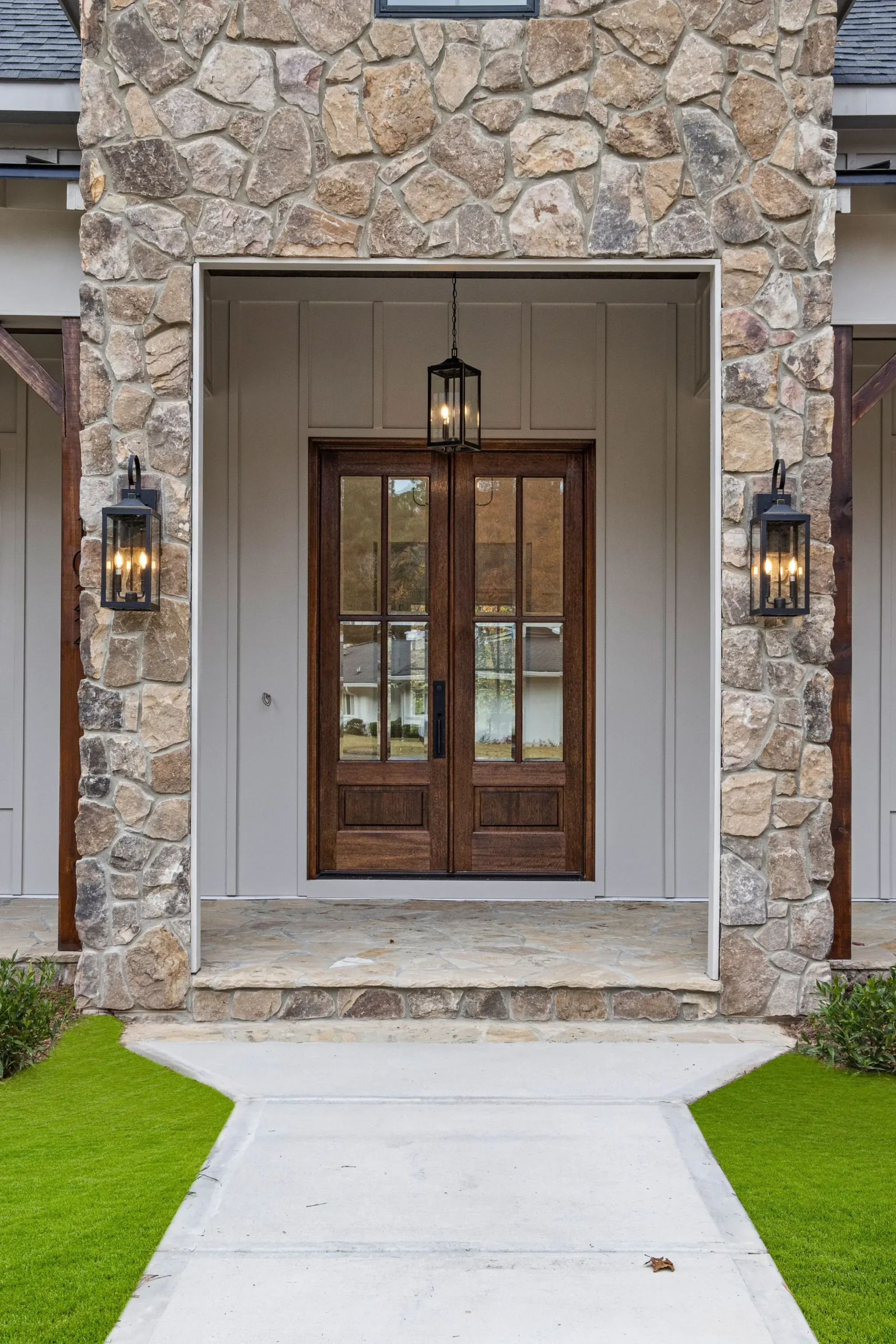
What's the difference between solid wood and veneered doors?
A solid wood door is made of real wood all the way through. A veneered door has a core of engineered material, such as particleboard, MDF or laminated wood, covered with a thin outer layer of real wood.
From across the room, the two can look alike. The difference shows up over time, in how the door feels when you close it, how it handles wear, and what happens when it needs repair.
It’s worth knowing that most doors sold today are engineered. Industry sources estimate that engineered doors make up as much as 90 percent of production. They’re popular because they’re cheaper to mass-produce and the core resists movement. That’s exactly why so many homeowners never see a true solid wood door unless they go custom.
What does "solid" actually mean?
Not every door marketed as solid is the same. Some manufacturers call a door solid when it has a solid wood core made of glued-up strips (often called a stave core) with a wood face on top. Others use “solid core” to describe a dense engineered core that only feels heavy.
When you’re shopping, ask exactly what’s inside the door, not just what’s on the surface.
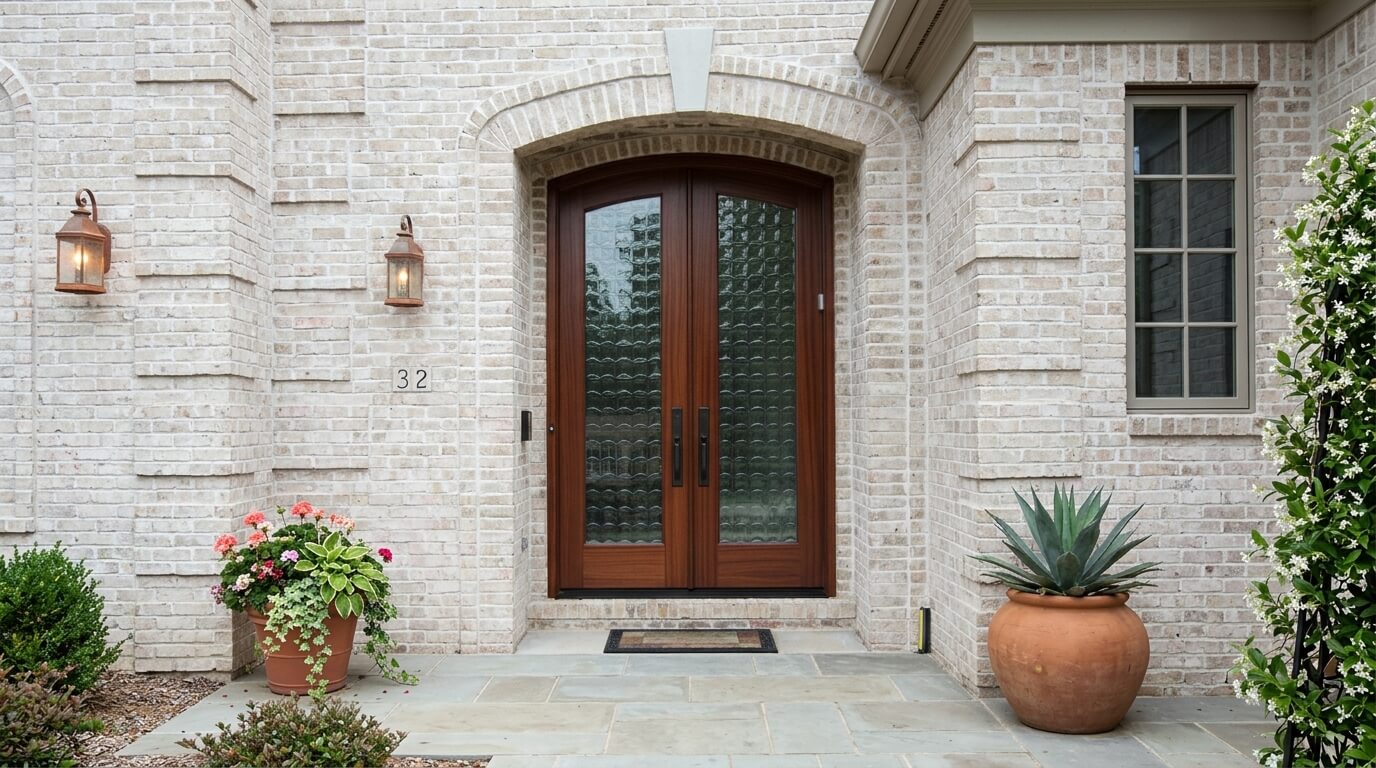
Why we recommend solid wood doors
Our position is simple. If the door matters to how your home looks and feels, solid wood is the way to go. A well-built solid wood door is real wood from core to surface, and that changes how long it lasts and what you can do with it later.
Looking for a custom wood door?
Send your specifications, images and your project, and our experts will guide you through the process.
Solid wood can be refinished again and again
This is the biggest practical difference. A veneer layer is thin, so once it chips, peels or takes on water, there’s very little material to work with. You can’t sand it back repeatedly the way you can with solid wood.
We see the proof every week in our refinishing work. We offer two deeper levels of door refinishing:
- Level 2 restores the existing finish on the door.
- Level 3 strips the door completely and brings it back to our shop to be taken down to bare wood and refinished.
That kind of restoration is only possible because the door is solid wood. Many of the doors we refinish are decades old and still structurally sound.
It feels and looks like a premium door
A solid wood door has weight and presence. It closes with a solid sound, and the grain runs naturally through every edge and moulding. For an entry door, that’s a big part of curb appeal.
It adds value to your home
In our experience, a quality solid wood entry door is one of the most visible upgrades a homeowner can make. It’s the first thing visitors and potential buyers notice, and it signals that the home has been cared for. We believe it’s one of the best ways to raise both curb appeal and the perceived value of a house.
Will a solid wood door warp in St. Louis weather?
This is the most common concern we hear, and it’s a fair one. Solid wood naturally expands and contracts with changes in temperature and humidity. St. Louis gives wood plenty to react to, with humid summers and dry, heated winters.
The answer isn’t to avoid solid wood. It’s to build and finish the door so it can handle that movement.
How a well-built solid wood door manages movement
- Stile-and-rail construction. A traditional door is built from separate frame pieces with panels set inside. Because the parts aren’t one big slab, they can expand and contract without bending the whole door out of shape.
- Sealing every surface. Industry best practice is to seal all six sides of a door, including the top and bottom edges, so moisture can’t sneak in where no one looks.
- Acclimating the wood. Letting wood adjust to its environment before and during installation reduces movement once it’s hung.
- The right paint in the right place. In our shop, any surface that faces the outdoors gets exterior-grade paint, even the inside face of an exterior door. Wood moves, and exterior paint is made to flex with it instead of cracking.
Veneered doors resist movement because of their engineered core, but they trade that for a thinner surface that’s harder to repair. A properly built and finished solid wood door gives you both stability and longevity.
Is a solid wood door worth the extra cost?
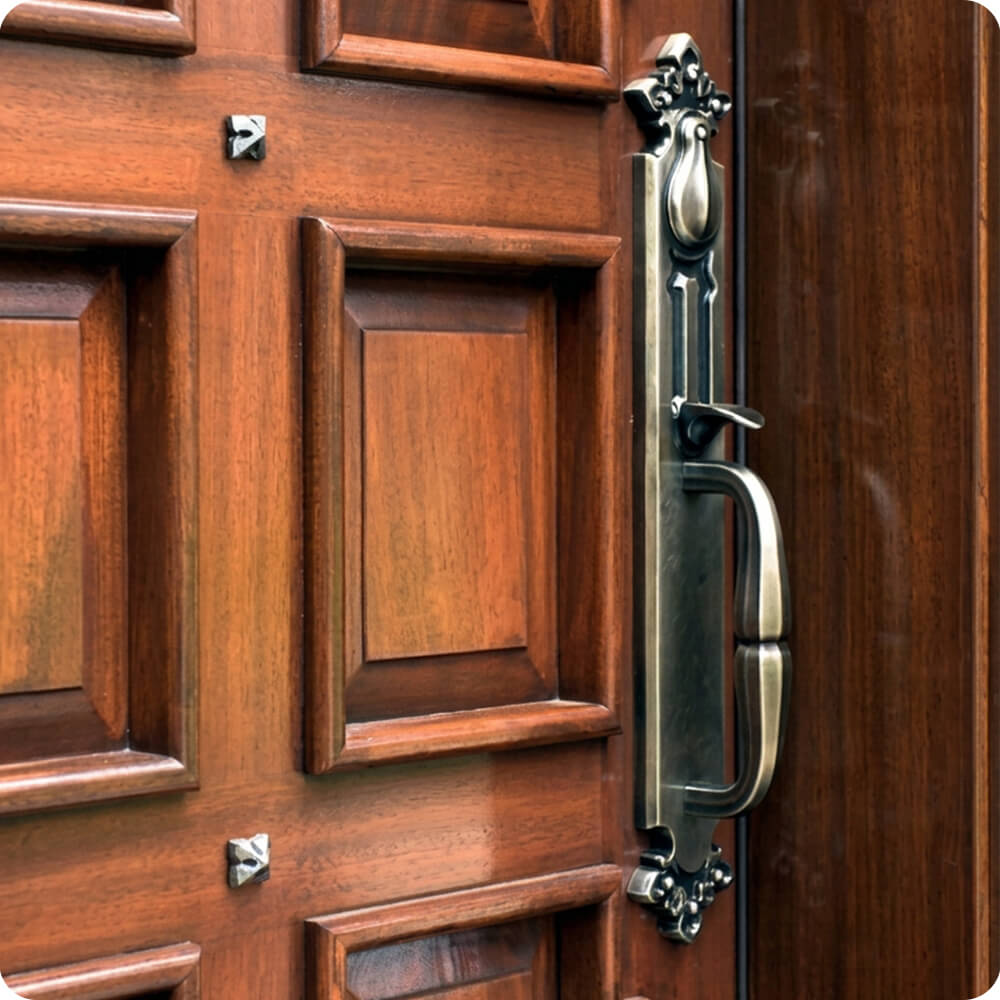
Solid wood costs more up front, and we won’t pretend otherwise. Our custom doors average around $20,000 each, with the final price depending mostly on size and design.
The better way to look at it is cost over the life of the door. A veneered door that chips, peels or delaminates usually has to be replaced. A solid wood door can be refinished, and refinishing costs far less than replacement. Over 20 or 30 years, that difference adds up.
When you’re comparing quotes, ask yourself a few questions:
- How long do you plan to stay in the home?
- Is this an entry door that defines your curb appeal, or a closet door no one sees?
- Will the door be exposed to weather, sun or heavy daily use?
- Would you rather replace the door later or restore it?
When does a veneered door make sense?
Veneer isn’t a bad product. It’s a different one, designed to keep costs down and stay stable in predictable conditions. It can be a reasonable choice for:
- Interior doors in climate-controlled rooms that see light use
- Rental properties where budget matters more than longevity
- Large projects where many matching interior doors are needed on a tight budget
Where veneer falls short is anywhere the door needs to make a statement, last for generations, or fit something that isn’t standard. That’s where a custom solid wood door earns its price.

Why historic St. Louis homes usually need solid wood
St. Louis is full of older homes and churches with doors that don’t come in standard sizes. Stock veneered doors are made for standard openings, so they often won’t fit a historic doorway, and they rarely match the period details.
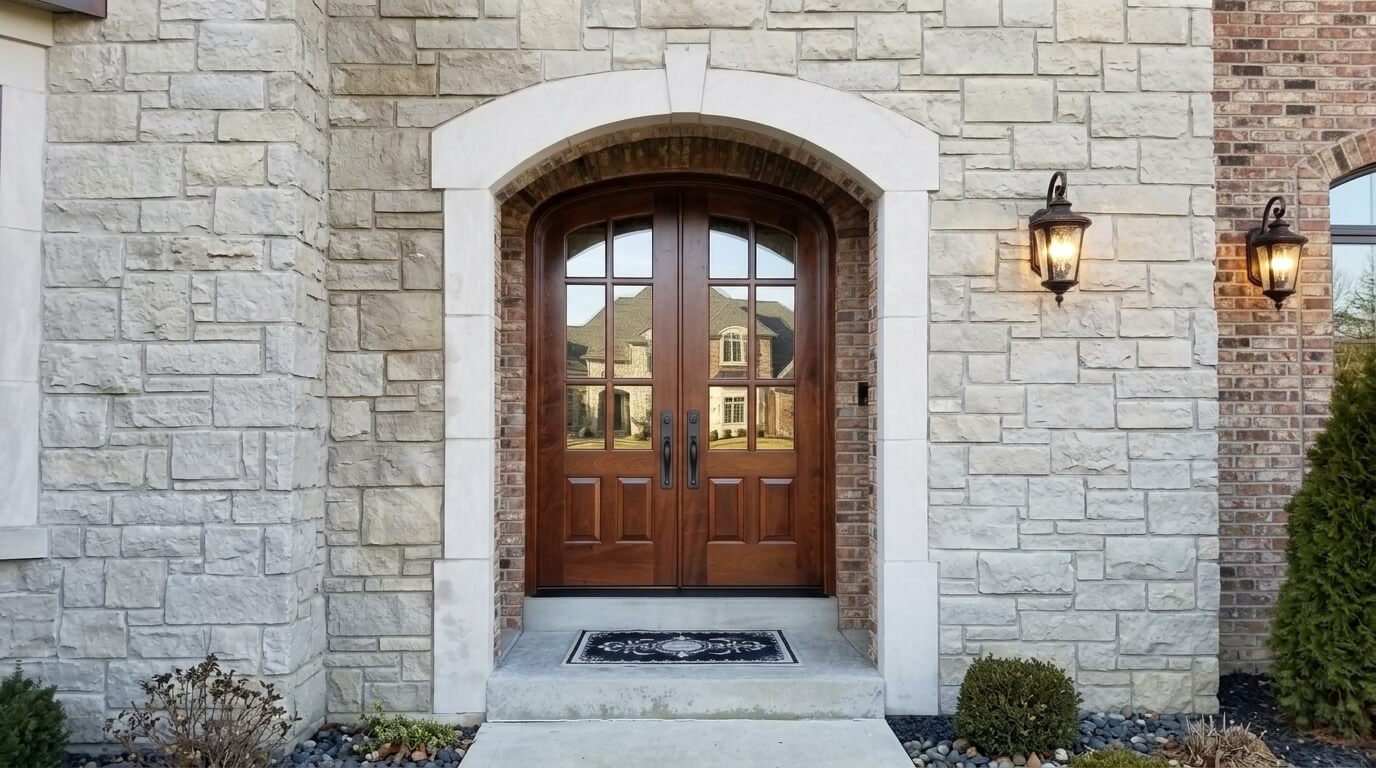
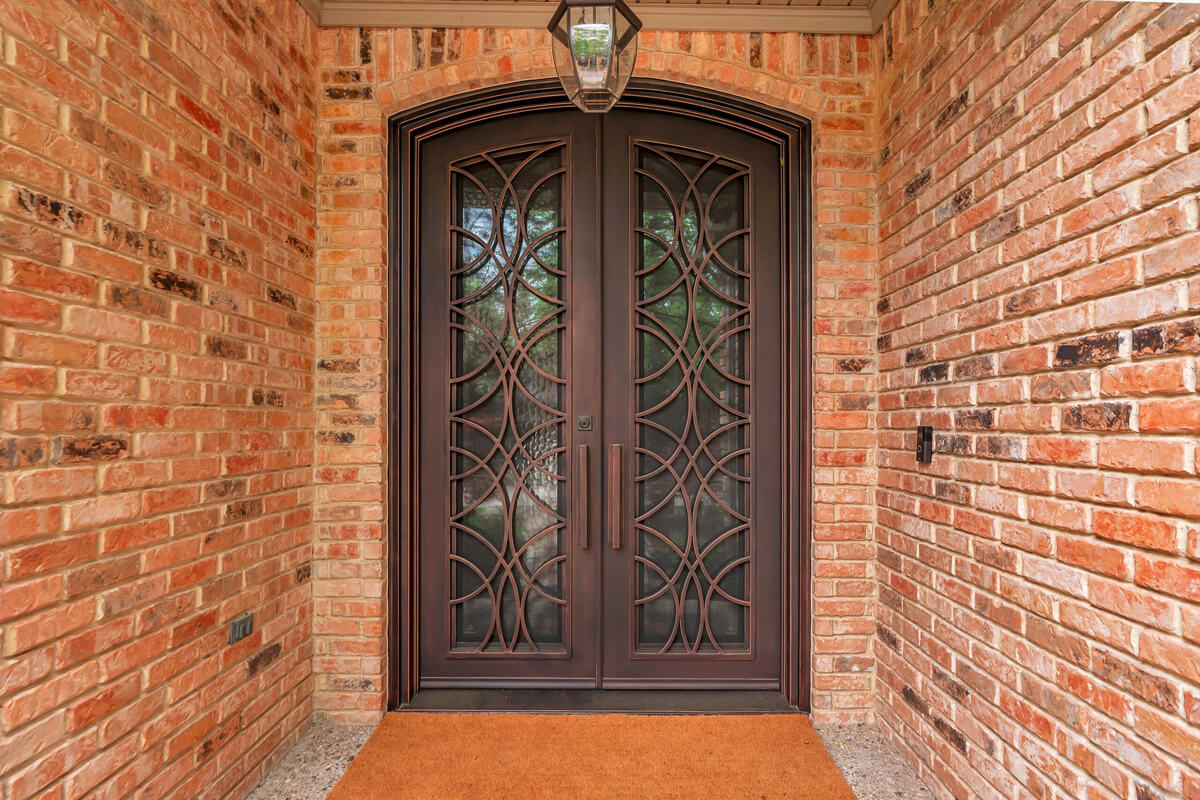
Every Scobis door is custom built, with no catalogue limitations. That matters when the opening is an arch, an oversized entry or a pair of doors in a 100-year-old frame. Arched front doors in particular are a real local style here, and many of the homeowners who call us for refinishing have them.
A Recent Example: An 1892 Victorian
One recent inquiry came from the owner of an 1892 Victorian whose front door needed substantial work. His first question wasn’t solid versus veneer. It was whether to refinish the existing door or replace it, and how to protect the home’s historic character either way. He wanted an in-person assessment before deciding.
That’s the right instinct. With an original solid wood door, refinishing is often possible. If replacement is needed, a custom solid wood door can be built to match the period instead of forcing a modern stock door into a Victorian opening.
On the newer end, we recently built a pair of Sapele mahogany entry doors, a dense, richly grained hardwood that’s a popular choice for clients who want a classic look with real durability.
How to choose the right door for your home
Choose solid wood if:
- It’s an entry door or a feature door that shapes how your home looks
- Your home is historic or has non-standard openings
- You want a door that can be refinished rather than replaced
- You plan to stay in the home or want to raise its curb appeal
Veneer may be enough if:
- It’s a basic interior door in a low-traffic room
- Budget is the top priority
- The opening is a standard size and the look is simple
What working with Scobis looks like
When you reach out, we gather photos, project details, location and timing, then our sales and estimating team reviews what you need. You’re welcome to share inspiration images and specifications.
Before anything is built, we confirm the design, dimensions, wood species, finish, glass and hardware. Every project comes with 3D renderings and shop drawings, so you see the door before we make it, plus a one-year craftsmanship warranty.
If you’re in St. Louis or anywhere in Missouri and weighing your options, contact us for an assessment. We’ll tell you honestly whether your current door can be saved or whether a new solid wood door is the better investment.
Looking for a custom wood door?
Send your specifications, images and your project, and our experts will guide you through the process.
FAQs: Solid Wood Doors vs Veneer Doors
Are solid wood doors better than veneer doors?
For entry doors, historic homes and any door you want to last for decades, yes. Solid wood can be refinished many times, while veneer is thin and usually needs replacing once it’s damaged. Veneer can be a fine budget choice for simple interior doors.
Do solid wood doors warp?
All solid wood moves with humidity and temperature. A door built with stile-and-rail construction, sealed on all six sides and finished with the right paint or stain is designed to handle that movement in a climate like St. Louis.
How long does a solid wood door last?
With proper care and occasional refinishing, a solid wood door can last for generations. Many of the doors we restore in St. Louis are decades old.
Can a veneered door be refinished?
Only lightly. The real wood layer is thin, so heavy sanding or repeated refinishing can break through to the core.
How much does a custom solid wood door cost in St. Louis?
At Scobis, custom doors average around $20,000 each. Price depends mainly on size, design, wood species, glass and hardware.
Can you build a door for an arched or non-standard opening?
Yes. Every Scobis door is custom built, so arched, oversized and historic openings are part of our everyday work.
Contact Our Team!